


The regulation of your blood sugar level is a fascinating and absolutely crucial process in your body. Imagine it simply as the intelligent energy management in a modern house. It ensures that exactly the right amount of electricity is always available – never too much and never too little.
What your blood sugar level really is
You've probably heard the term "blood sugar" countless times. But what does it really mean? It's actually quite simple: whenever you eat something that contains carbohydrates – whether a slice of bread, an apple, or a sweet muffin – your digestive system breaks them down into their smallest unit: glucose.
This glucose is the universal fuel for your entire body. From your brain, working at full speed, to the muscles that carry you through your day, every single cell needs this sugar as an energy source. The blood sugar level simply indicates how much of this fuel is currently circulating in your bloodstream.
The main players in energy management
To ensure that energy reaches the right places at the right time and that you feel fit and balanced, your body employs two ingenious managers: the hormones insulin and glucagon. They are a perfectly coordinated team operating from your pancreas.
-
Insulin: After eating, blood sugar levels skyrocket. This is where insulin comes in. It acts like a key, unlocking the doors of your cells so that glucose can enter and be used immediately for energy. What's left over is cleverly stored in the liver and muscles for later.
-
Glucagon: If your blood sugar level drops between meals or during physical exertion, that's glucagon's cue. As a direct antagonist to insulin, it ensures that stored glucose is released again to keep your energy levels stable.
Imagine it like a heater with a thermostat: insulin cools the system down when it gets too hot (lowers blood sugar), while glucagon heats it up when it gets too cold. This constant, delicate balancing act is the art of blood sugar regulation.
This clever system is the basis for your daily energy, your ability to concentrate, and your feeling of satiety. As long as it runs smoothly, you feel awake, balanced, and capable. However, if it gets out of sync, the consequences are often cravings, constant fatigue, and, in the long term, perhaps even weight problems. If you want to know more about how harmful sugar can really be, this will help you make better decisions for your health.
Why stable blood sugar levels can change your life
A balanced blood sugar level is not just for diabetics – it is rather the invisible force that significantly influences your daily energy level, your mood, and even your success in losing weight. Who doesn't know it? The classic midday slump, the sudden craving for sweets in the afternoon, or the moments when concentration simply wanes.
All of these are often direct consequences of a blood sugar roller coaster. If your blood sugar level rises rapidly after a meal and crashes just as quickly, your body reacts with fatigue, irritability, and cravings. A vicious cycle that robs you of energy and constantly tests your willpower.
The consequences of unstable blood sugar levels
If this state becomes habitual, more serious problems can develop. Constantly elevated blood sugar forces your pancreas to work overtime – it has to constantly release insulin. Over time, your cells can become desensitized to this important hormone. We call this condition insulin resistance.
Insulin resistance makes losing weight incredibly difficult. Although there is actually enough energy in the form of sugar in the blood, it no longer properly reaches the cells. Your body gets the signal that it is starving and demands more food – while at the same time tending to store the energy as fat.
The following diagram clearly shows how unstable blood sugar levels directly affect three of the most common everyday complaints.
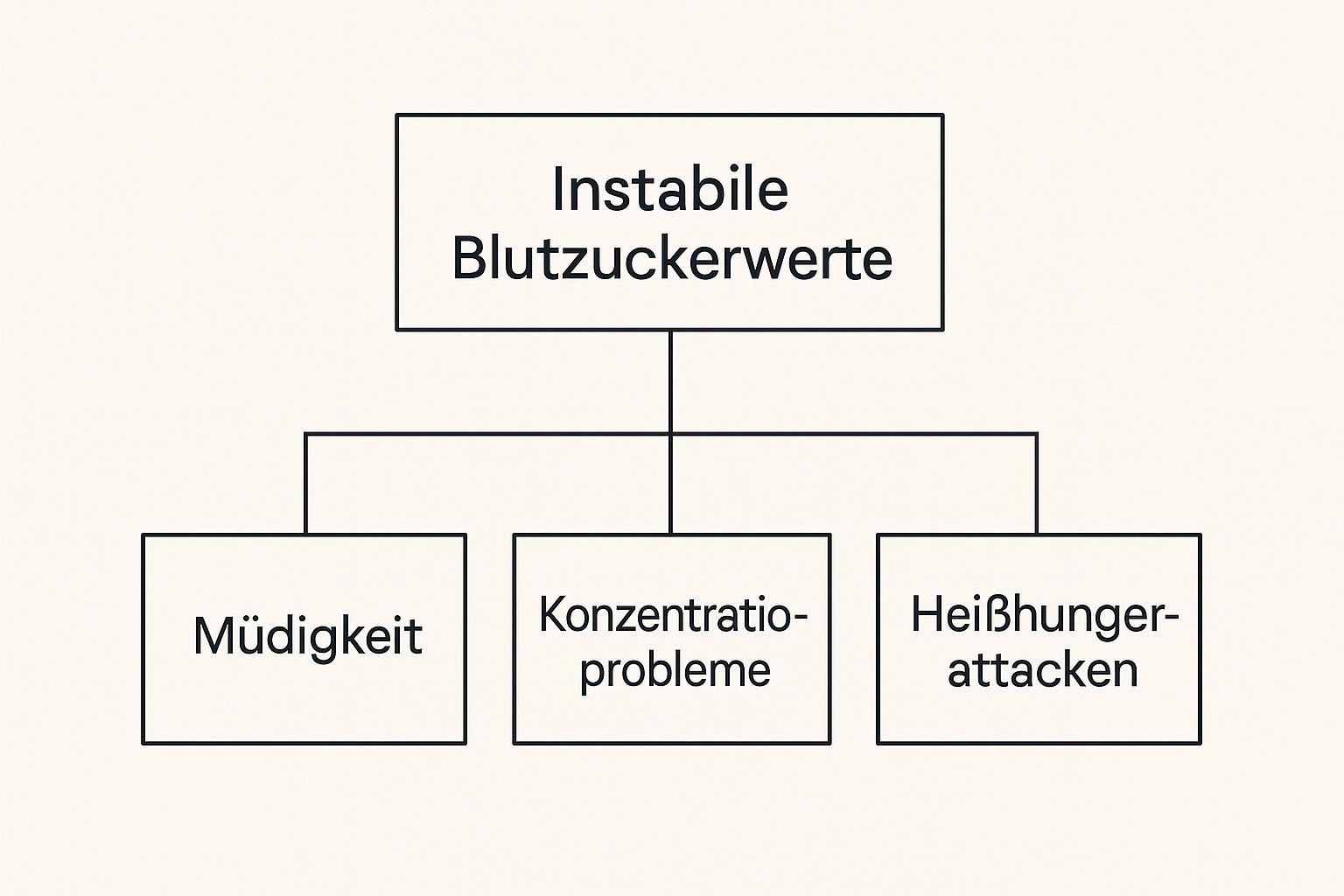
You can see at a glance the direct connection: blood sugar fluctuations almost inevitably lead to noticeable symptoms such as fatigue, concentration problems, and cravings.
The enormous benefits of stable values
A stable blood sugar level, on the other hand, is the foundation for your well-being. Just imagine: you have even energy throughout the day, without sudden dips. Your head is clear, your mood remains balanced, and cravings are a thing of the past. This is precisely the goal of effective blood sugar regulation.
Stable blood sugar not only boosts your mental and physical performance, but it is also key to successful weight management. The importance of this topic is immense: according to the German Health Report Diabetes 2022, already around 11% to 12% of adults in Germany are affected by diabetes, with the estimated number of undiagnosed cases being at least 2 million people. You can find detailed figures and facts in the Health Report.
By actively stabilizing your blood sugar, you are directly investing in your long-term health, preventing metabolic problems, and laying the groundwork for a life full of energy. If you suspect that your metabolism is out of balance, you can find information about signs of a metabolic disorder in our article.
The four pillars of your blood sugar regulation

Perhaps when you think of blood sugar, you immediately think of sweets and sugar. But that's only half the truth. In reality, blood sugar regulation is a complex interplay that depends on your entire lifestyle.
You can imagine it like a table with four legs. Only when all four pillars are stable is the table secure. If one wobbles, the entire system quickly becomes unbalanced. Let's take a closer look at these four pillars so you know what adjustments you can make yourself.
1. Nutrition: The clever basis for everything
Of course, nutrition is the most obvious and perhaps most important lever. But it's not about frantically avoiding carbohydrates. Much more crucial is the quality and the right combination of what you eat.
Focus on complex carbohydrates from whole grains, vegetables, and legumes. They are your best friends because they contain plenty of fiber. These act like a natural brake, ensuring that sugar only trickles slowly and gently into the blood.
If you then combine these clever carbs with high-quality proteins (like quark, fish, or lentils) and healthy fats (from avocados or nuts), you slow down the absorption even further. The result? No steep blood sugar spikes, no cravings, and you stay full for much longer. If you need more inspiration, you can find a list of foods that can boost your metabolism here.
2. Exercise: The natural sugar magnet
Exercise is a real miracle cure when it comes to your blood sugar. As soon as you move, your muscles cry out for energy – and their favorite food is glucose. They literally suck the sugar out of the blood, and the best part is: they hardly need any insulin for this.
Imagine your muscles like small sponges. Through activity, they are, so to speak, "wrung out" and can then absorb the excess sugar from the bloodstream. This not only relieves your pancreas but also makes your cells more receptive to insulin again.
Even a short walk of 10 to 15 minutes after eating can make a huge difference. It helps to flatten the dreaded blood sugar spike after a meal and also helps you with weight control.
3. Stress: The secret disruptor
Stress is the factor that most people completely underestimate. When you're stressed, your body releases the hormone cortisol. From an evolutionary biology perspective, this is great because cortisol prepares you for a "fight or flight" situation by providing energy in a flash.
How does it do that? It tells your liver to release stored sugar into the blood. Suddenly, your blood sugar level rises, even though you haven't eaten a single bite. If this condition becomes chronic, it leads to constantly elevated blood sugar levels and can promote insulin resistance in the long term.
4. Sleep: Your nightly reset program
Good and sufficient sleep is absolutely fundamental for your metabolism. Even a single night with too little sleep can make your cells less sensitive to insulin – your body reacts to sleep deprivation similarly to stress.
At night, important repair and regeneration processes take place in the body, which also restore your entire hormone system to balance. Try to get seven to nine hours per night. This is not wasted time, but a direct investment in stable blood sugar the next day.
Practical strategies for your daily life
Theory is all well and good, but now it's getting practical. You now know why a stable blood sugar level is so important for your energy, your weight, and your general well-being. In this chapter, we'll pack your toolbox together – full of simple tricks you can implement immediately to take control.
It's not about turning your life upside down. Rather, I'll show you small adjustments with a big impact. That's our goal.
The power of the right meals
You lay the foundation for stable blood sugar with every meal. Forget the feeling of deprivation! It's about cleverly composing your plate so that you stay full and satisfied for a long time.
A very simple trick is the "plate rule." Just imagine your plate like this:
- Half the plate: Vegetables and salad. They are your foundation. The many fibers, for example from broccoli, lentils, or a fresh salad, slow down sugar absorption from the intestine. This prevents the dreaded blood sugar spikes after eating.
- A quarter of the plate: High-quality proteins. Whether chicken, fish, tofu, or a spoonful of quark – protein is incredibly satiating and hardly affects your blood sugar.
- The last quarter: Complex carbohydrates. This is where whole grain pasta, quinoa, or sweet potatoes belong. They release their energy slowly and evenly, which protects you from cravings.
This simple structure ensures that you not only get all the important nutrients, but your blood sugar also remains relaxed in the green zone after eating. If you are unsure how many carbohydrates you need for your goals, check out our guide. There you will find valuable tips on the right amount of carbohydrates.
Pro-Tip: Order matters! Always start your meal with vegetables or salad. The fiber acts as a natural buffer in the stomach and slows down the digestion of carbohydrates that come after.
To make your selection at the supermarket easier, we have put together a small overview. It shows you which foods only gently raise your blood sugar and which ones you should enjoy in moderation.
Blood sugar-friendly foods at a glance
| Low GI (recommended) | Medium GI (in moderation) | High GI (enjoy rarely) |
|---|---|---|
| Green leafy vegetables (spinach, lettuce) | Whole wheat bread | White bread, baguette |
| Berries (blueberries, strawberries) | Brown rice | White rice, cornflakes |
| Legumes (lentils, chickpeas) | Sweet potatoes | French fries, mashed potatoes |
| Nuts and seeds | Pineapple, mango | Sweets, sugary drinks |
| Avocado, olive oil | Oatmeal (not instant) | Dried dates, raisins |
| Fish, poultry, tofu | Whole wheat pasta | Cakes and pastries |
This table is intended as a guide, not a rigid set of rules. It's about balance and making the right choices for you.
Cleverly incorporate exercise into your day
Don't worry, you don't have to become a marathon runner. Even small exercise units can work wonders for your blood sugar.
A short walk directly after eating is particularly effective. Just 10 minutes of leisurely walking after lunch helps your muscles burn sugar directly from the blood for energy. The result? The blood sugar curve flattens out, the typical afternoon slump doesn't occur, and you also support your weight management.
Keep target values in mind
To illustrate the importance of good blood sugar control, let's look at some numbers. The German Diabetes Society (DDG) has defined clear target values. The HbA1c value, which reflects the average blood sugar over the last few months, should ideally be below 6.05%.
Even though awareness of sugar is growing in Germany – per capita consumption recently fell from 33.9 kg to 30.4 kg – diabetes remains a major challenge. In 2023, approximately 8.9 million people in Germany were affected by type 2 diabetes. More information on the background and statistical data on diabetes mellitus can be found here.
These figures clearly show how important it is to take action yourself. With the simple strategies in this chapter, you can specifically promote your health and take control of your blood sugar regulation yourself.
How the Meta-Shake intelligently supports you

Conscious nutrition is crucial for a stable blood sugar level. But let's be honest: in the hustle and bustle of everyday life, between work, family, and appointments, it's often a real challenge to plan every meal perfectly. It is precisely for these moments that we have developed the Meta-Shake by Bodysperfect as a clever solution.
It's so much more than just a quick drink on the go. Imagine it as your intelligent partner that helps you cut blood sugar spikes and pursue your weight loss goals – all without sacrificing enjoyment.
The clever composition for stable values
The secret of the Meta-Shake lies in its well-thought-out recipe. We have specifically selected each ingredient so that your body is supplied with energy slowly and evenly. This way, the dreaded blood sugar roller coaster has no chance.
Let's take a closer look at the most important components:
- High-quality protein: Protein is the undisputed champion when it comes to satiety. It naturally slows down digestion, so carbohydrates enter the blood slowly. The result? You feel full for longer and your blood sugar level remains stable.
- Important fiber: Similar to protein, fiber acts as a natural brake for sugar. It swells in the stomach, which provides a pleasant, long-lasting feeling of fullness and also keeps your digestion going.
- Minimal sugar content: Unlike many shakes from the supermarket shelf, we deliberately avoided added sugar in the Meta-Shake. This prevents your blood sugar from skyrocketing from the outset, thus preventing nasty cravings.
One could say that the Meta-Shake is a perfectly balanced meal in a glass. It gives you everything you need for stable energy and a good feeling of fullness, without overwhelming your body with a flood of sugar.
Easily integrated into your daily routine
The application is child's play and totally flexible. Whether as a quick, nutritious breakfast when time is short, as a satisfying lunch in the office, or as a light meal after sport – the shake adapts to your life, not the other way around. It helps you avoid unhealthy snacks and gives you the security of optimally nourishing your body even on stressful days.
The combination of protein and fiber is unbeatable for sustainable blood sugar regulation. If you want to dive deeper into why a sugar-free shake is so beneficial, be sure to read our article on protein shakes without sugar. This way, the Meta-Shake becomes your reliable partner for increased well-being and balanced energy levels throughout the day.
Frequent Questions About Blood Sugar
Now that we've delved into the topic, I'd like to conclude by addressing the questions that repeatedly arise in practice. Here, you'll get clear and simple answers that will hopefully dispel any remaining uncertainties and give you more confidence in dealing with your body.
Do I have to completely cut out carbohydrates now?
No, absolutely not! That would even be counterproductive. Your body, and especially your brain, needs carbohydrates as a primary energy source. It's not about eliminating them, but about choosing the right ones.
The trick is to focus on complex carbohydrates that are full of fiber. Think of:
- Whole grains like oats or quinoa
- Legumes, such as lentils and chickpeas
- Starchy vegetables like sweet potatoes
The fiber in them, along with proteins and healthy fats, ensures that sugar enters the bloodstream slowly. The result: Your blood sugar level remains much more stable, you feel full longer, and cravings hardly stand a chance. So, a complete renunciation is neither necessary nor healthy in the long run.
What role does stress really play in my blood sugar?
An absolutely crucial one. Many underestimate how massively stress affects our metabolism. When you're under pressure, your body releases stress hormones like cortisol. This hormone signals your liver to release stored sugar into the blood.
So your blood sugar level rises, even though you haven't eaten anything. What was vital for survival in dangerous situations quickly becomes a burden in everyday stress. Chronic stress can thus promote insulin resistance and make weight loss significantly harder.
Relaxation techniques are therefore not a nice extra, but a central component for stable blood sugar. Even short walks in nature, a few conscious breaths in between, or gentle yoga can work wonders to lower cortisol levels and bring your system back into balance.
Do I feel it when my blood sugar fluctuates?
Yes, in most cases, your body sends fairly clear signals. Do you often feel suddenly tired after eating? Do you have trouble concentrating or are you overcome by an uncontrollable craving for sweets? These are all typical signs of a blood sugar roller coaster.
Unexplained irritability or a shaky feeling can also indicate this. A small diet and symptom diary is invaluable here. With it, you can easily recognize patterns and establish connections between certain meals and how you feel.
Does intermittent fasting help stabilize blood sugar?
For many people, this is indeed a very effective method. By taking longer breaks between meals, your body gets the chance to keep insulin levels low for several hours.
This can make the cells more sensitive to insulin again, thus improving what is known as insulin sensitivity. As a result, the entire regulation of blood sugar levels works more smoothly again. However, it is important that you focus on nutrient-rich and balanced meals during the phases when you are eating. Only then can you fully exploit the positive effects and supply your body with everything it needs.
Would you like to support your blood sugar and weight management in a simple and delicious way? BODY'S PERFECT products were developed precisely for this purpose. Discover our clever solutions for a balanced lifestyle now at https://bodysperfect.com.













































Share:
Top 8 Low-Calorie Filling Foods for Successful Weight Loss
Mastering Calorie Tables for Weight Loss: Your Path to a Healthy Weight