

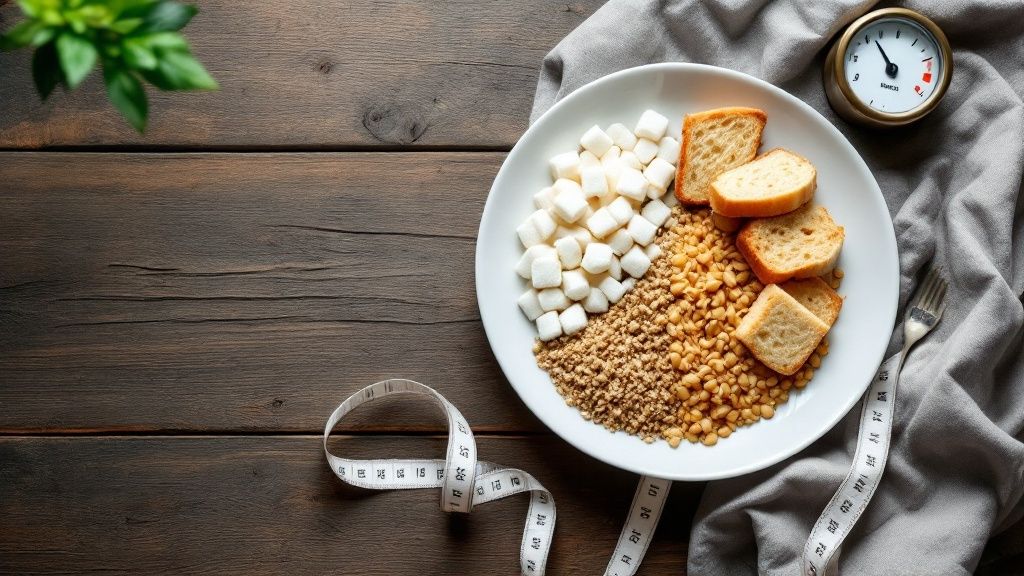
How many carbohydrates are ideal for weight loss is one of the most frequently asked questions. While there's no one-size-fits-all answer, a great starting point for most people is 100 to 150 grams per day.
This moderate amount helps you achieve the necessary calorie deficit without your body immediately switching to energy-saving mode or making you constantly feel sluggish.
Why the right amount of carbohydrates is crucial
You're probably wondering now how many carbohydrates are right for you. The honest answer? It's completely individual. The optimal amount depends on so many things: your daily routine, how often you exercise, and how your metabolism works.
The alpha and omega of weight loss remains a healthy calorie deficit. Carbohydrates are not your enemy, but an important piece of the puzzle. Instead of completely eliminating them from your plate, it's about finding a balance that works for you – one where you're full, have energy, and stay consistent.

Different approaches for your goals
Depending on which dietary path you choose, the recommended amount of carbohydrates can vary greatly. For comparison: The German Nutrition Society (DGE) recommends that over 50% of daily energy should come from carbohydrates in a normal mixed diet.
As soon as you fall below that, it's considered a reduction. This can happen very gently or in the form of a strict low-carb diet.
To give you a better idea, I have summarized the most common approaches in a table for you.
Guidelines for daily carbohydrate intake
This table provides clear guidelines for daily carbohydrate intake, divided into different dietary approaches, to help you get started.
| Dietary Approach | Daily Carbohydrates (in grams) | Who it's suitable for |
|---|---|---|
| Slight Reduction | approx. 150-200 g | For active individuals who want to lose weight slowly and maintain their performance. |
| Moderate Low-Carb Diet | approx. 100-150 g | The most popular middle ground that is manageable for most people and shows results. |
| Strict Low-Carb Diet | approx. 50-100 g | For those who want faster results and are willing to make a bigger change. |
| Ketogenic Diet | under 50 g | A very strict approach that trains the body to use fat as its primary energy source. |
As you can see, the range is huge. It's not about choosing the most extreme path, but the one that fits your life.
Your path to success begins not with rigid rules, but with understanding your own body. Find out what amount of carbohydrates brings you closer to your goal without taking away the joy of eating.
Understanding the role of carbohydrates in your body

Before we hastily ban all pasta and bread from our diet, let's first look at what carbohydrates actually do in our bodies. They are often demonized as the big villain in weight loss, but the truth is far more complex – and interesting.
Imagine your body as a high-performance car. In this analogy, carbohydrates are the super fuel. They are the preferred and most efficient energy source that your engine – your body – needs for almost everything. Every movement, every thought, and even your heartbeat costs energy. And for all of that, your body prefers to draw on the quickly available energy from carbohydrates.
Your brain runs on sugar
Your brain, in particular, is a real energy guzzler. Although it only accounts for about 2% of your body weight, it easily consumes 20% of your total daily energy. Its absolute favorite food is glucose, the sugar produced when carbohydrates are broken down.
A good supply is therefore not a luxury, but crucial for your concentration, memory, and mental fitness. Have you ever noticed how tired, unfocused, or even irritable you become when you skip a meal? That's often a clear sign that your brain is running out of fuel.
Carbohydrates are not your enemy. They are the most important fuel your brain and muscles need for everyday life. It's not about eliminating them, but about choosing the right ones and cleverly managing the amount.
Your muscles are also big fans of carbohydrates. They store glucose as glycogen reserves. With every exertion, whether during an intense workout at the gym or simply during a walk, your muscles tap into these reserves to get energy lightning fast.
If these reserves are empty, you feel sluggish and your performance drops. A reasonable intake of carbohydrates therefore ensures that you have enough power for your training. This, in turn, boosts calorie consumption and protects your muscles – both absolute keys to successful weight loss.
The difference between sprint and marathon
But why do carbohydrates have such a bad reputation? It's simple: it depends on which type you're fueling with. You have to distinguish between "good" and "bad" carbs.
- Simple carbohydrates (the sprint): These are found in sugar, white flour products, and sweets. They give you an extremely fast energy kick, but also make your blood sugar level drop just as quickly. The result? A nasty energy slump and cravings for the next sugar rush.
- Complex carbohydrates (the marathon): These are found in whole grain products, oatmeal, legumes, and vegetables. Your body digests them slowly. This provides you with a steady supply of energy for hours and keeps you feeling full for a long time.
When it comes to weight loss, you should definitely focus on the marathon runners. They stabilize your energy level and help you maintain your calorie deficit without constantly having a growling stomach. If you teach your body to use its energy more efficiently, you can also specifically switch your metabolism to fat burning, which is essential for long-term success.
How to find out how many carbohydrates you personally need
No more guessing, now it's getting specific! The question "How many carbohydrates are ideal for me for weight loss?" unfortunately cannot be answered with a single number for everyone. But don't worry, there is a simple method with which you can quickly determine your personal guideline yourself.
Let's go through this step by step. In the end, you'll have a clear gram amount at hand, which is a great starting point for your weight loss journey.
Step 1: Your daily calorie requirement
Before we dive into carbohydrates, we first need to know how much energy your body consumes per day. This value is made up of two components: the basal metabolic rate and the active metabolic rate.
- Basal metabolic rate: This is basically your "idle mode." The amount of energy your body needs just to exist – for breathing, heartbeat, and all other vital processes.
- Active metabolic rate: This is where movement comes into play. Everything you do, from walking the dog to a sweaty workout, burns additional calories.
If you add both values together, you get your total daily calorie requirement. To lose weight healthily, you subtract a moderate deficit of about 300 to 500 calories from this. That's your new goal.
Step 2: Cleverly distribute macros
Once you know your target calorie count for the day, we'll distribute it among the three main nutrients: carbohydrates, proteins, and fats. For beginners, a moderate low-carb distribution has proven effective, which often looks like this:
- 40% carbohydrates
- 40% protein
- 20% fat
This distribution gives you enough energy for everyday life, protects your muscles from breakdown with plenty of protein, and provides you with healthy fats that are essential for many bodily functions.
Of course, this is just a starting point. Every body is different. Some feel fitter with a little less carbohydrates, others need a little more. It can also help if you determine your metabolic type to fine-tune your diet even further.
Step 3: To the scale – calculate the gram amount
Now it's time to calculate, but don't worry, it's quite simple. To get from percentages to a tangible gram amount, you just need to know: carbohydrates and proteins each have 4 calories per gram. Fats have a bit more, with 9 calories per gram.
Let's do an example calculation: Let's say your daily calorie goal for weight loss is 2,000 calories.
-
Calculate carbohydrates:
- 2,000 calories x 0.40 (i.e. 40%) = 800 calories from carbohydrates.
- 800 calories ÷ 4 calories per gram = 200 grams of carbohydrates per day.
-
Calculate protein:
- 2,000 calories x 0.40 (40%) = 800 calories from protein.
- 800 calories ÷ 4 calories per gram = 200 grams of protein per day.
-
Calculate fat:
- 2,000 calories x 0.20 (20%) = 400 calories from fat.
- 400 calories ÷ 9 calories per gram = approximately 44 grams of fat per day.
In this example, your personal starting point would therefore be a daily intake of approximately 200 grams of carbohydrates.
Consciously deciding where these nutrients come from is a huge step towards a healthier lifestyle.
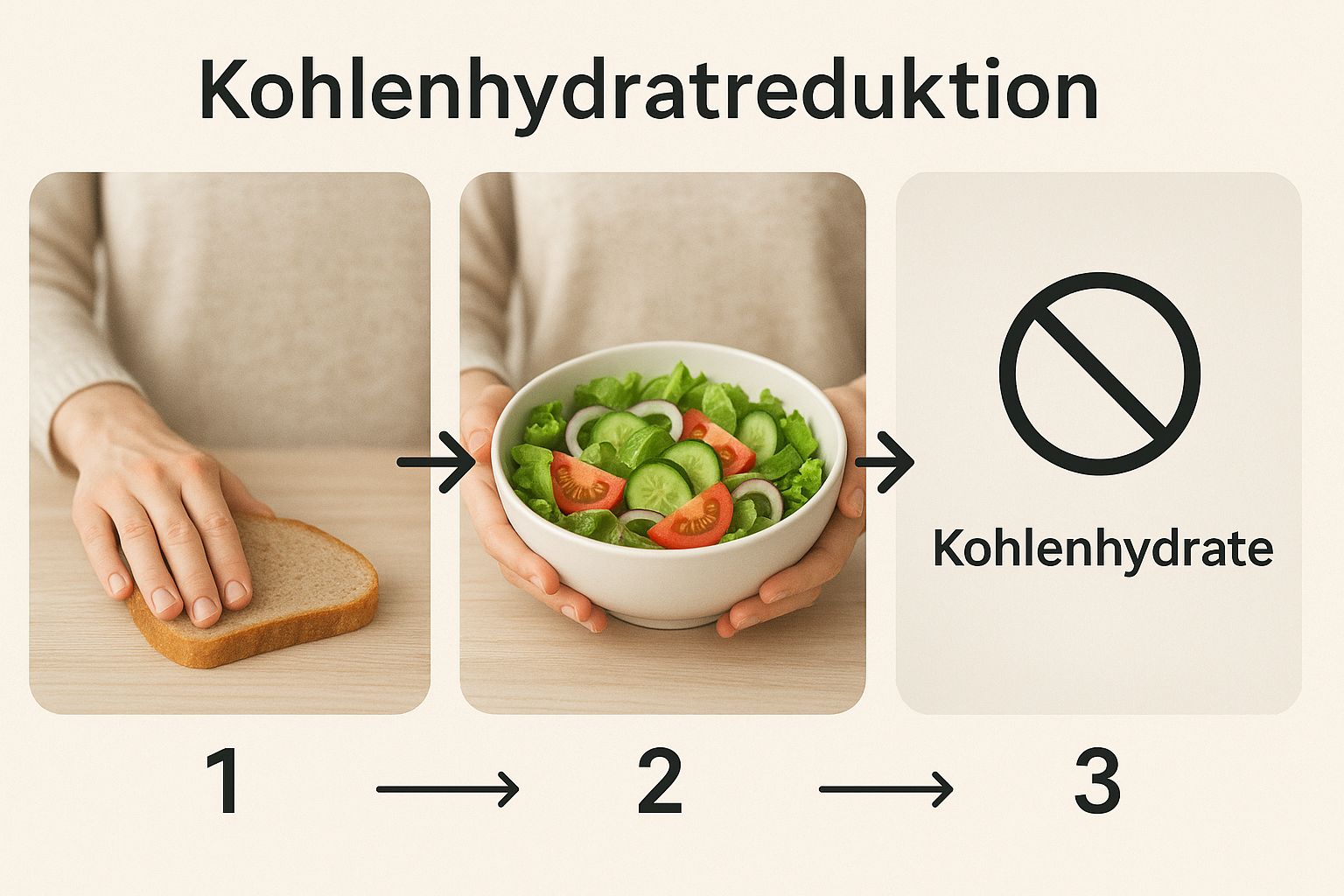
However, this number is not a law set in stone, but rather your personal compass. See how you feel about it and how your body reacts. Adjust the amount slightly if necessary. This way, you take control of your weight loss success yourself.
Good Carbs, Bad Carbs: What you should really eat
You should frame the sentence "Not all carbohydrates are created equal." It is perhaps the most important key to finally losing weight successfully. It's high time to dispel the old myth that carbs are generally taboo. That's not what it's about at all. Rather, it's about making a smart choice – and distinguishing between your friends and enemies.
The big distinction lies in the question: complex or simple carbohydrates? It's best to imagine them as two different employees in your body. One works slowly, steadily and delivers reliably. The other provides a brief high, causes chaos and then disappears just as quickly.
Complex Carbohydrates: your reliable helpers
Complex carbohydrates are the marathon runners among nutrients. You find them in foods like whole grain products, oatmeal, quinoa, lentils, and most vegetables. Your body takes a while to break down and process their long sugar chains.
This gives you two crucial advantages:
- Long-lasting satiety: Your blood sugar level rises slowly and gently, keeping you full and satisfied for hours. This is your absolute secret weapon against nasty cravings.
- Stable energy: Instead of a short sugar rush, you get a steady supply of energy. The typical midday slump that overtakes you after a sugar-rich meal has no chance.
Another hero in this group is fiber. These are indigestible plant fibers that not only keep your digestion going, but also further enhance the feeling of fullness.
Simple Carbohydrates: the unreliable sprinters
Simple carbohydrates are the exact opposite – the sprinters. They are found in white bread, sweets, sugary sodas, and many highly processed products. As the name suggests, they consist of short sugar chains that your body quickly sends into the blood.
The result is a blood sugar roller coaster: a rapid rise followed by an equally rapid crash. You know the consequences all too well: sudden fatigue, concentration problems, and an almost uncontrollable craving for the next sugar fix. These constant ups and downs make it incredibly difficult for you to maintain your calorie deficit.
The focus should not be on prohibitions, but on smart decisions. By learning to prefer high-quality carbohydrates, you take control of your hunger and energy levels – and not the other way around.
This new way of thinking has now also gained acceptance in science. For example, the German Diabetes Society (DDG) has moved away from rigid carbohydrate limits. Instead, it recommends individually adapted meal plans that are based on personal preferences. If you want to delve deeper, read more about the current weight loss strategies on ddg.info.
Good vs. Bad Carbohydrates: a comparison
To make your decision at the supermarket even easier, we have put together a small overview for you. This table will help you to see at a glance which carbohydrate-rich foods support your weight loss goals and which you should rather avoid.
| Good Carbohydrates (Complex) | Bad Carbohydrates (Simple) | Why it's a good/bad choice |
|---|---|---|
| Whole grain bread, pasta, rice | White bread, white pasta, polished rice | Fiber keeps you full for a long time and provides stable energy. |
| Oatmeal | Sugary breakfast cereals | High fiber content, prevents blood sugar spikes. |
| Quinoa, buckwheat, millet | Cookies, cakes, pastries | Packed with nutrients and protein, satiating. |
| Lentils, beans, chickpeas | Sweets, chocolate | Ideal combination of complex carbs and plant-based protein. |
| Sweet potatoes, potatoes | Fries, potato chips | Provide vitamins and minerals, keep you full for a long time. |
| Vegetables (all kinds) | Sugary sodas, juices | Many nutrients and fiber with few calories. |
| Fruit (e.g. berries, apples) | Fruit concentrates, syrup | Natural sweetness combined with valuable vitamins and fiber. |
So you see: it's about consciously choosing the right sources. Learn which foods help with weight loss by specifically focusing on high-quality carbohydrates. Fill your shopping cart with the helpers from the left column and leave the opponents on the shelf.
Avoiding Common Mistakes in a Low-Carb Diet
A low-carb diet can be a fantastic tool to reach your ideal weight. But like any good tool, you need to know how to use it correctly. There are a few classic pitfalls that almost everyone falls into at the beginning. But if you know them, you can easily avoid them.
Probably the biggest mistake many people make: carbohydrates are radically cut, but not replaced. The logic behind it seems simple: fewer carbs equal fewer calories, so I'll lose weight faster. But unfortunately, the math isn't that simple. Your body needs energy. If you take away its main fuel and don't provide an alternative, it goes into energy-saving mode. The result? You feel tired, unfocused, and experience cravings.
What you should do instead
The solution is actually quite simple. You need to consciously replace the missing carbohydrates with high-quality proteins and healthy fats. These two are your new best friends, because they keep you full for a long time and keep your blood sugar level stable.
Your goal is to lose weight long-term and without constantly fighting hunger, right? That's exactly what you can achieve with a cleverly constructed low-carb diet. Proteins also have a huge advantage: they protect your muscles. This is extremely important to avoid the dreaded yo-yo effect.
Don't imagine your body as a machine that you can simply shut down. Give it the right fuel – meaning protein and healthy fats. Then it will remain efficient and attack your fat reserves instead of going into emergency mode.
Another point that is often forgotten is social life. What do you do when you're invited to dinner, go to a restaurant, or have a family celebration coming up? Many people abandon everything out of insecurity precisely at those times.
Tips for everyday life
Here are a few simple tricks to stay on track in such situations:
- At the restaurant: Take a look at the online menu beforehand. There are almost always meat or fish dishes with vegetables. You can almost always ask to swap side dishes like fries or pasta for an extra salad or more vegetables.
- With friends: Be honest and simply say that you are currently paying attention to your diet. Most people are very understanding about this. Or even better: offer to bring a delicious low-carb salad for everyone yourself.
- Preparation is key: Before going to a party, eat a small, protein-rich snack at home. This way, you won't arrive completely famished and can decide much more calmly what to eat and what not to eat.
The number of overweight people in Germany has risen sharply in recent decades – this is often directly related to changed eating habits. According to the Federal Statistical Office, 62.4% of men and 42.5% of women are overweight. You can read more about the background of this development at Statista. These figures show how important it is to find a diet that really fits into everyday life and that can be maintained long-term.
Now what? How to put your knowledge into practice
Let's get straight to the point: The key is not to give up everything, but to understand what you are doing. You have now seen that your path to your desired weight stands on three very simple pillars.
Imagine these three points as your personal toolbox, with which you build a path that is healthy and truly suits you:
- A moderate calorie deficit: You now know that you need to eat a little less than you consume. But only a little, without starving.
- Choosing the right carbohydrates: You can now distinguish the "good" long-distance runners from the "bad" sprinters. You choose those that keep you full for a long time and give you energy.
- Listening to your body: Instead of clinging to rigid rules, you learn to pay attention to your body's signals. This way you remain flexible and adjust your plan when necessary.
See this knowledge as your personal instruction manual. You are in control and make conscious decisions that bring you closer to your goal – without losing the joy of eating.
Your easy start with the right support
Especially at the beginning, when you cut back on carbohydrates a bit, it can be a huge help to rely on high-quality protein products. Enough protein is super important to protect your muscles and keep cravings in check.
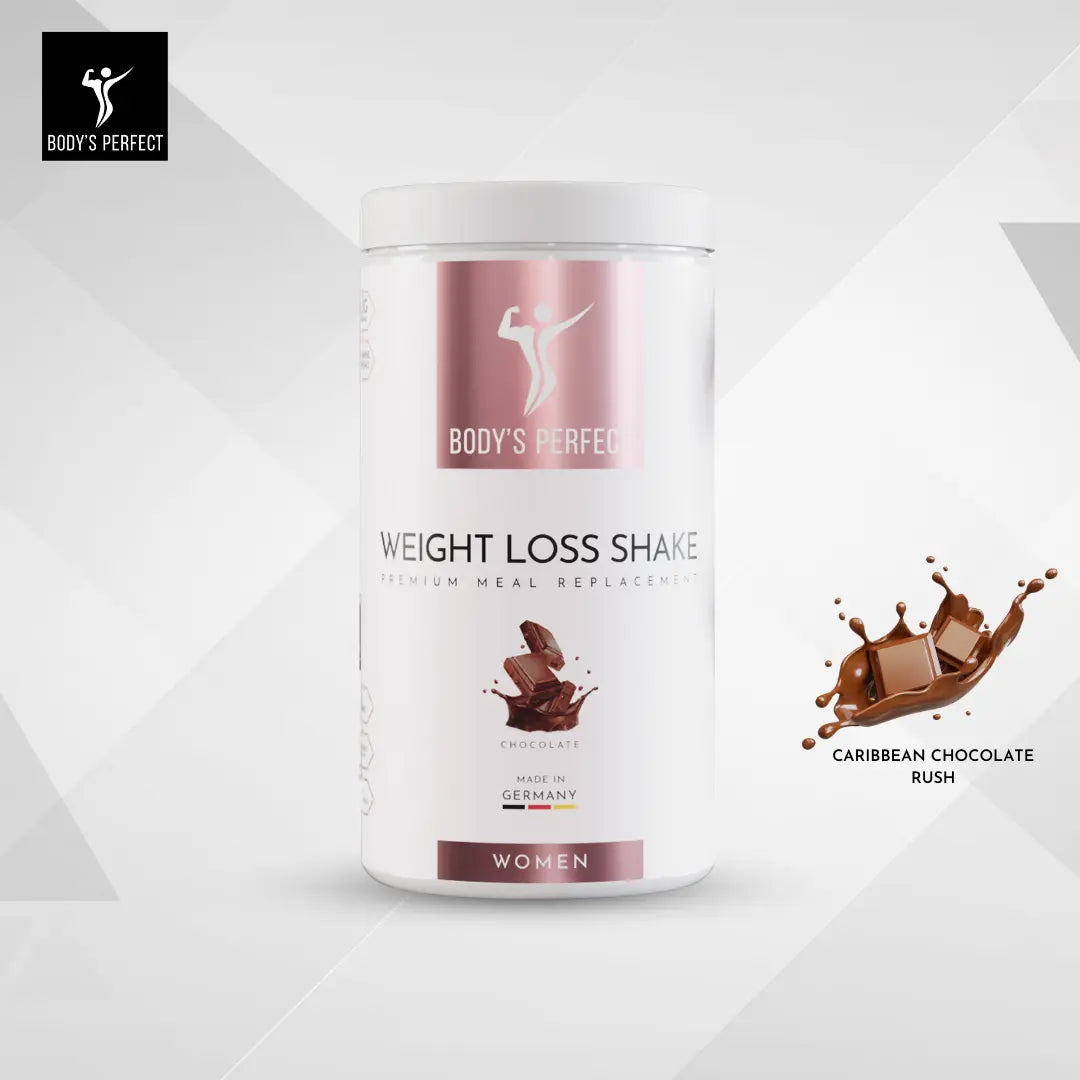
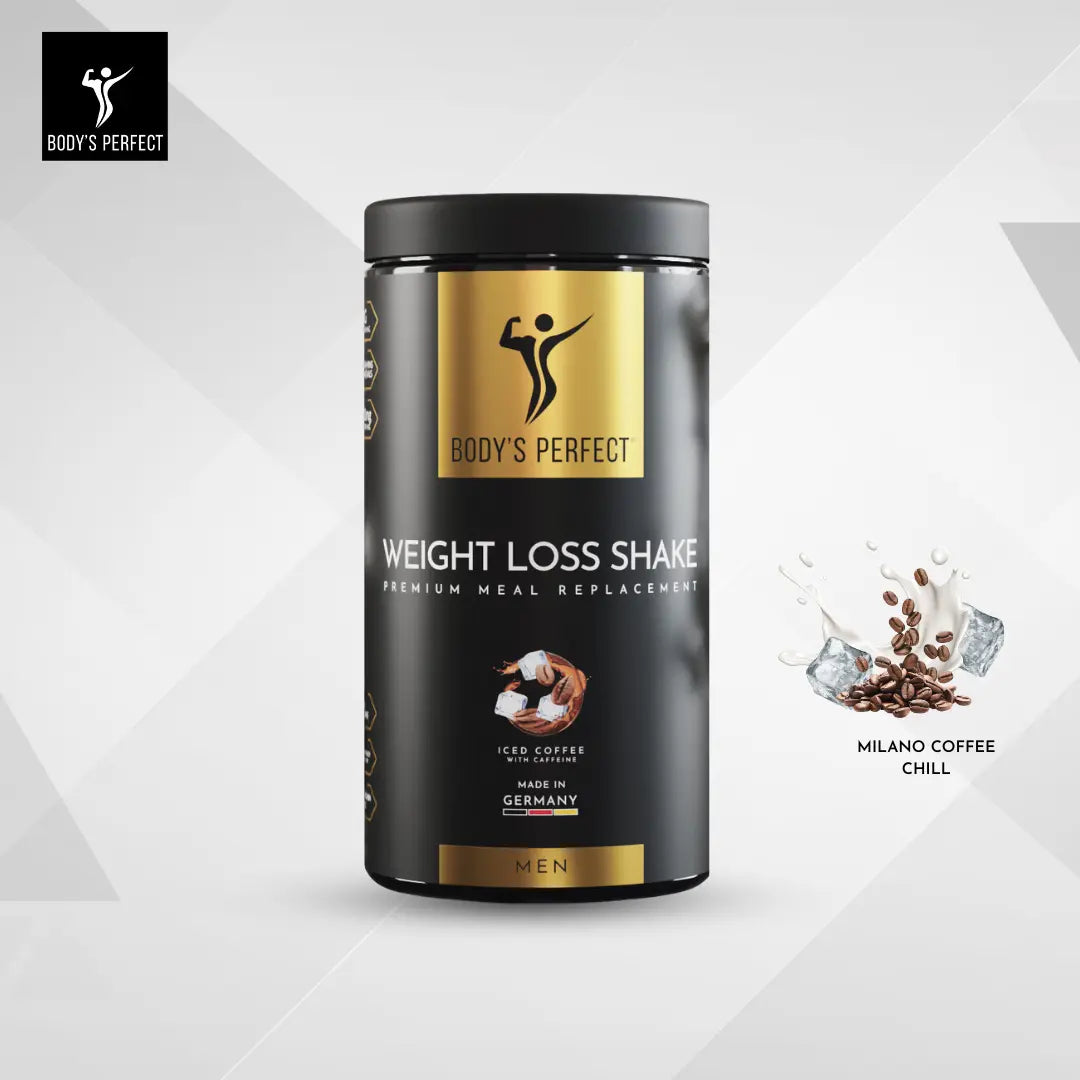
This is where the protein shakes from bodysperfect.com come in. They are a really easy way to ensure you get enough protein. A shake can make you feel full and satisfied, curb cravings, and provide your muscles with everything they need.
This not only makes your journey easier but also tastes good. You give your body exactly what it needs to burn fat while maintaining its valuable muscle mass.
Frequently asked questions about carbohydrates and weight loss
So, you've already read a lot about how carbohydrates and weight loss are connected. But often, a few persistent questions remain. Don't worry, here we answer the most common ones so you can really get started with confidence and without doubt.
Can I eat carbohydrates in the evening if I want to lose weight?
Yes, absolutely! The old myth that carbohydrates in the evening go straight to your hips is persistent, but it has long been scientifically refuted. What really matters at the end of the day is your total calorie balance.
As long as you remain in a calorie deficit, your body doesn't care whether the potatoes are on your plate at lunchtime or in the evening. For many people, a portion of carbohydrates in the evening is even really good. It can improve sleep, which in turn has a great effect on your regeneration and your weight loss success.
Do I have to avoid fruit because it contains fructose?
Absolutely not! Please do not remove fruit from your diet. It is an incredibly important part of a healthy diet. Sure, fruit contains fructose, but it also provides a lot of valuable vitamins, minerals, and fiber that keep you full.
These micronutrients are essential for your body. If you want to be a little more careful, simply choose berries, apples, or oranges more often. They contain slightly less sugar compared to very sweet fruits like grapes or bananas. One to two portions of fruit a day are perfectly fine and can even help you achieve your goals.
Your body is not a simple calculating machine that reacts to individual ingredients. It's always about the overall package: nutrition, exercise, and recovery. Strict prohibitions are rarely the right way. What really matters is understanding your own body and a healthy balance.
What happens if I eat too few carbohydrates?
If you restrict carbohydrates too much, it can quickly backfire. Your body needs them as its main energy source, especially your brain. If you eat too little, unpleasant side effects can quickly become noticeable:
- Tiredness and lethargy: You simply lack the fuel for everyday life and training.
- Concentration problems: Your brain is running on low power, making clear thinking difficult.
- Cravings: Your body literally cries out for quick energy, which often leads to uncontrolled eating binges.
- Nutrient deficiencies: If you avoid carbohydrate-rich foods, you often also lack important fiber and B vitamins.
Listen to your body and find a moderate amount that makes you feel fit and energetic. An overly extreme approach is rarely sustainable and usually ends in frustration.
Are you ready to make your journey to your feel-good weight simple and delicious? The products from BODY'S PERFECT are designed to support you optimally. Our shakes help you meet your protein needs and stay full for a long time, so you can fully concentrate on your goals.




































Share:
How can I boost my metabolism? The best tips & tricks for everyday life
Why am I not losing weight despite a calorie deficit?