

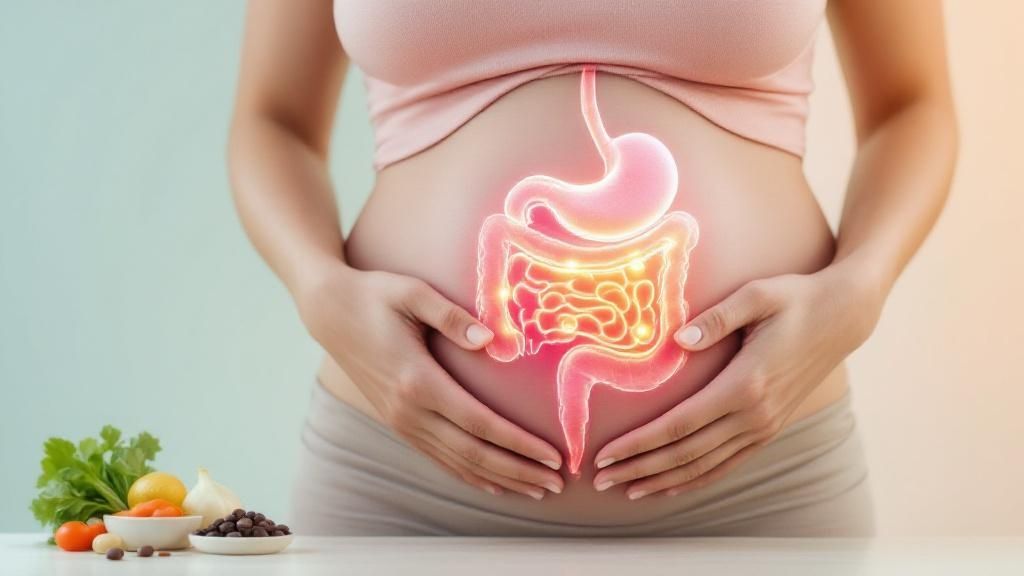
Almost everyone knows the feeling: your stomach is bloated, tense, and just plain uncomfortable. Often, common things are behind it, like certain foods that promote gas, eating too quickly, or an imbalanced gut flora. The problem is widespread, and the symptoms can range from mild discomfort to chronic issues. But don't worry, you're not alone, and there are ways to help your stomach.
What's Really Behind a Bloated Stomach

A bloated stomach is much more than just a cosmetic problem. It's a clear signal from your body that something isn't quite right in your digestive system. This uncomfortable feeling of fullness, pressure, and the visible distension of the abdomen are probably familiar to most people. But what exactly is going on inside your body?
Just imagine your intestines as a highly specialized factory. Countless tiny helpers – your gut bacteria – work tirelessly to break down food. During this process, gases are naturally produced. Bloating, which doctors also call meteorism, occurs when too much of these gases accumulate and cannot escape quickly enough.
How to Recognize a Bloated Stomach
The signs are usually quite clear and can range from barely noticeable to truly painful. Knowing the typical symptoms is the first important step to identify the causes of your bloating.
- Visible distension: Your stomach suddenly appears much larger and rounder than normal, and your pants feel tight at the waist.
- Pressure and fullness: It feels like you have a heavy stone in your stomach, sometimes even after a small meal.
- Rumpling and gurgling: Loud and often embarrassing noises from the abdomen accompany the discomfort.
- Mild abdominal pain or cramps: Trapped gases press on the sensitive intestinal wall and can thus cause pain.
It's important to make a distinction: occasional bloating after a particularly rich meal is usually harmless. However, if you constantly struggle with it, it could indicate deeper underlying causes. An unbalanced diet is often the main culprit here. High sugar consumption, in particular, can disrupt the delicate balance of your gut bacteria. If you want to learn more about this, you can read it in our article on the topic: How harmful is sugar really?.
Our goal is to provide you with the necessary knowledge so that you can identify the triggers in your daily life and do something yourself for your digestion and well-being.
How Diet and Lifestyle Influence Your Digestion
Your daily habits are often the key to balanced digestion and can be one of the main causes of a bloated stomach. It's not just about what you eat, but also how you eat. Even small, unconscious behaviors can greatly affect your well-being.
A good example is eating hastily. When you rush through your meals under time pressure, you inevitably swallow more air. This additional air accumulates in the gastrointestinal tract and quickly leads to an uncomfortable feeling of pressure.
The Usual Suspects on Your Plate
Certain foods are known to stimulate gas production in the intestines. This is a completely natural process, but for many people, it leads to bloating. The main culprits are often complex carbohydrates and fiber that our digestive enzymes cannot completely break down.
Especially in Germany, lifestyle and diet play a significant role in the development of bloating. The consumption of gas-forming foods such as legumes (lentils, peas), certain vegetables (cabbage, onions), and sugar alcohols like sorbitol is widespread. If these food components reach the large intestine undigested, the bacteria living there pounce on them and begin fermentation. This produces gases such as carbon dioxide, methane, and hydrogen. Learn more about the background of bloating on floer-shop.de.
This infographic beautifully illustrates how daily habits and certain foods can directly lead to a bloated stomach. It clearly shows that not only certain food groups but also behaviors such as stress or hasty eating can intensify the symptoms.
A bloated stomach is rarely the result of a single factor. Rather, it is the interplay of diet, eating behavior, and your general lifestyle that troubles your intestines.
The following table gives you an overview of typical foods that are often responsible for bloating.
Foods that Frequently Cause Bloating
An overview of common foods and ingredients that are known to cause gas and a bloated stomach.
| Food Category | Examples | Why they can cause bloating |
|---|---|---|
| Legumes | Beans, lentils, chickpeas, peas | Contain complex sugars (oligosaccharides) that are a feast for gut bacteria and produce gas during fermentation. |
| Cabbage varieties | Broccoli, cauliflower, Brussels sprouts, white cabbage | Contain raffinose, a type of sugar that the human body finds difficult to digest, leading to gas formation. |
| Onion family | Onions, garlic, leeks | Rich in fructans, a type of fiber that is difficult to break down in the small intestine and is fermented in the large intestine. |
| Sugar alcohols | Sorbitol, mannitol, xylitol (in "sugar-free" products) | Are only incompletely absorbed in the intestine and can have a laxative effect and cause severe bloating. |
| Fatty foods | Fried foods, fast food, fatty sauces | Fat slows down gastric emptying. Food remains in the digestive tract longer, leading to feelings of fullness and bloating. |
Keep in mind that everyone reacts differently. What causes problems for one person may be completely unproblematic for another. A food diary can help you find your personal triggers.
More Than Just Food: The Role of Lifestyle
Your lifestyle has just as much influence on your digestion as your diet. Stress is a prime example here. Under tension, your body releases hormones that can slow down digestion. The result: food stays in the intestine longer, which promotes gas formation.
Lack of exercise is also an often underestimated factor. Regular physical activity, such as a brisk walk after eating, stimulates intestinal activity. This helps to transport accumulated gases better through the intestines and eventually break them down.
Finally, fluid intake also plays an important role. Drinking enough still water supports digestion and can help prevent constipation – which is also often behind a bloated stomach. However, you should avoid carbonated drinks, as the carbonic acid itself introduces additional air into the stomach.
And what about fats? Fatty meals can burden digestion, but not all fats are equal. It's important to distinguish the good from the bad. Read our article on healthy and unhealthy fats.
When Your Gut Gets Out of Balance

Sometimes there's more to a bloated stomach than just an unfortunate meal. Your gut is like a vast, bustling garden where trillions of bacteria live – that's your gut microbiome. Ideally, there's perfect harmony here. The "good" bacteria help you digest and ensure that the "bad" ones don't spread too much.
However, if this delicate balance is disturbed, we speak of dysbiosis. Suddenly, the bad bacteria gain the upper hand and can cause a whole host of problems. One of the most common signs is increased gas production, which quickly leads to a painful and unsightly bloated stomach. This imbalance can arise, for example, from stress, certain medications, or a very one-sided, sugar-rich diet.
When the Gut Reacts Hypersensitively
A very common reason for recurring digestive problems is irritable bowel syndrome (IBS). Imagine your gut being extremely ticklish. That's exactly how it is for many sufferers: their digestive tract reacts hypersensitively even to normal amounts of gas or bowel movements – with pain, cramps, and a severely bloated stomach.
The exact causes of irritable bowel syndrome are not yet fully understood. However, it is suspected that a disturbed communication between the gut and the brain (the so-called gut-brain axis) plays a crucial role.
A bloated stomach is often more than just hot air. It can be an important signal from your body that something in your gut is out of balance and needs your attention.
Food Intolerances as a Trigger
Another typical cause of a bloated stomach is food intolerances. Unlike an allergy, your immune system isn't going haywire here; rather, your digestive system has difficulty processing certain food components.
Two of the most well-known culprits are:
- Lactose intolerance: Here, the enzyme lactase is missing to break down milk sugar (lactose) from cheese, yogurt, etc. The undigested sugar moves into the large intestine, where bacteria break it down, producing a lot of gas.
- Fructose malabsorption: With this disorder, the body has difficulty absorbing fruit sugar (fructose), which is found in many fruits, juices, and sweets. The result is the same: the sugar ends up in the large intestine and causes bloating and abdominal pain.
Similar problems can also be caused by gluten intolerance (celiac disease), where the gluten protein from grains leads to inflammation in the intestine.
If you suspect that an intolerance is behind your symptoms, a food diary can be invaluable. Simply note what you eat and when symptoms occur. This often helps you quickly identify the triggers. To get a permanent handle on the symptoms, an adjusted diet often helps. Check out our Top 10 tricks to quickly get rid of a bloated stomach.
Understanding these connections is the first step to regaining control over your well-being and specifically supporting your body.
The Connection Between Overweight and Bloating
Have you ever wondered why your stomach feels particularly bloated on days when you generally feel uncomfortable with your weight? That's no coincidence. Overweight and a bloated stomach often go hand in hand. The point here is not to point fingers, but to understand the physical mechanisms behind it. Only then can you specifically do something about it.
One of the main reasons is simply mechanical: extra belly fat. Especially the so-called visceral fat, which lies deep in the abdominal cavity around the organs, exerts constant pressure on the stomach and intestines. Imagine it like a shirt that's too tight – it restricts and hinders natural movement. This constant pressure can disrupt digestion and cause food and gases to move more slowly. The result? You feel full and bloated.
How Belly Fat Makes the Stomach "Gurgle"
But it's not just the mechanical pressure. Overweight can also disrupt the tiny helpers in your intestines. Studies show that the microbiome – the community of bacteria in your intestines – is often composed differently in people with higher weight. Often, bacteria that produce a lot of gas when breaking down food residues gain the upper hand.
Furthermore, metabolism often runs a bit slower with overweight. A sluggish metabolism usually also means slower bowel activity. Food stays in the digestive system longer, which practically provides a feast for gas-forming bacteria. More time for fermentation simply means more air in the stomach.
Overweight is more than just a number on the scale. It directly influences how your digestion works – from the pressure on your organs to the composition of your gut flora.
Another factor that is often overlooked is insulin resistance. This precursor to type 2 diabetes occurs more frequently with overweight and can further slow down digestion, intensifying feelings of fullness and bloating.
The Vicious Cycle of Diet, Weight, and Bloating
The type of diet that leads to weight gain is rarely one that benefits your digestion. It is usually rich in highly processed foods, lots of sugar, and unhealthy fats. Such foods not only drive up weight, but they are often also difficult to digest and throw the delicate balance of gut bacteria out of whack.
This quickly creates a vicious circle: diet leads to more weight, and the extra weight exacerbates digestive problems.
A good way to break out of this cycle is a protein-rich diet. Proteins keep you full for a long time and can help you avoid cravings for sugary, gas-inducing snacks. If you're looking for inspiration, we've put together valuable 5 tips for a protein-rich diet for weight loss for you here.
The numbers speak for themselves: overweight and obesity are widespread in Germany and thus one of the main causes of complaints such as bloating. Data from the Robert Koch Institute show that the proportion of obese adults increased from 12.2% in 2003 to 19.7% in 2023. This overweight often leads to digestive problems, as an altered gut flora and slower metabolism promote gas formation. You can read the full RKI analysis on obesity here.
Achieving and maintaining a healthy weight is therefore not only good for your general well-being but can also directly and noticeably relieve your abdomen.
When You Should See a Doctor for a Bloated Stomach
Most of the time, a bloated stomach is uncomfortable but harmless. Often, it's just our diet or lifestyle that's bothering us. However, there are also situations where a bloated stomach is more than just annoying – it can be a warning sign from your body for a more serious illness. Knowing this is not meant to scare you. Rather, it's meant to help you take the right steps at the right moment.
Sometimes, there's more behind the feeling of fullness than just too much air. Certain diseases can disrupt digestion so much that chronic bloating is the result. These include, for example, chronic inflammatory bowel diseases (IBD) such as Crohn's disease or ulcerative colitis. Here, the intestinal lining is permanently inflamed, which not only causes pain and diarrhea but also severe bloating.
Acute Infections and Chronic Inflammations
A sudden, severe bloated stomach can also indicate an acute infection. Gastrointestinal inflammations are not uncommon in Germany. A look at the figures from the Robert Koch Institute (RKI) shows this: in the 20th calendar week of 2025 alone, around 7,862 cases of salmonellosis and over 3,300 norovirus infections were reported. Such infections paralyze bowel function and can significantly boost gas production. You can find more information in the current reporting statistics on RKI.de.
Another important cause is celiac disease. This is an autoimmune disease in which even tiny amounts of gluten trigger severe inflammation in the small intestine. The symptoms are often a colorful mix – from digestive problems like a bloated stomach to nutrient deficiencies and constant fatigue.
Your body is talking to you. A persistent, painful bloated stomach that doesn't come alone is a clear signal. Take it seriously and have it checked by a doctor.
You Should Not Take These Warning Signs Lightly
Self-diagnosis on the internet can quickly lead you down the wrong path. If your bloated stomach simply won't go away or you notice any of the following symptoms, it's time to see a doctor. Only then will you get clarity.
- Severe, persistent, or suddenly cramping abdominal pain that doesn't feel like normal fullness.
- Unexplained weight loss, even though you're eating as usual.
- Fever or chills, which may indicate inflammation or infection.
- Persistent diarrhea or constipation, especially if they alternate.
- Blood in the stool – whether bright red or black (so-called tarry stool).
- Chronic fatigue and exhaustion, which could be a sign of a nutrient deficiency.
These signs indicate that there's more than just the wrong food behind your symptoms. A doctor can use targeted questions and examinations to find out what's really going on and find the right treatment for you.
Frequently Asked Questions About Bloating – Answered Briefly and Concisely
Now that we've looked at the many possible causes of bloating, you probably still have a few questions. Here I have summarized the most common ones and answer them briefly, understandably, and without jargon.
Can stress really cause bloating?
Yes, absolutely. The connection between the head and the gut is much stronger than most of us believe. It's not for nothing that people talk about the "gut brain" – your intestine has its own huge nervous system that is constantly in communication with your brain.
When you are stressed, your body releases hormones like cortisol. These can effectively slow down the natural movement of your intestine, known as peristalsis. Food stays in the system longer, which in turn leads to fermentation and gas production – the perfect breeding ground for bloating.
In addition, chronic stress can also disturb the delicate balance of your gut bacteria. Suddenly, gas-producing bacteria gain the upper hand, and discomfort increases.
Relaxation is not a luxury, but a necessity for good digestion. Simple things like deep breathing before meals or a short walk can lower stress levels and give your gut a well-deserved break.
Why is my bloating always worse in the evening?
Many people experience this feeling. It is usually due to various small things accumulating throughout the day. Imagine it like a barrel that slowly but surely fills up over the course of the day.
In the morning, your digestive system is usually still empty and relaxed. With each meal, however, more work is added. At the same time, your gut bacteria are busy and produce gases as they process food.
As long as you stand upright and move, the air in your abdomen can distribute better and also escape more easily. In the evening, when you rest and perhaps lie down, muscle tension in the abdominal wall decreases. Now the trapped air has a free path and causes the visible and palpable distension.
A conscious diet spread throughout the day can work wonders here. If you want to learn how to stay full and satisfied without overeating, you will find many tips in our guide on losing weight without starving yourself that will also relieve your digestion.
When should I see a doctor for bloating?
Occasional bloating after a heavy meal or on a stressful day is usually no cause for concern. However, you should pay attention if the discomfort doesn't go away or if certain warning signs appear.
Your body is pretty good at showing you when something more serious might be going on. In these cases, it's important to see a doctor to clarify the exact causes of the bloated stomach and to make sure nothing is overlooked.
You should not hesitate to seek medical attention if you experience these symptoms:
- Severe, cramp-like or persistent pain that is more than just an uncomfortable pressure.
- Unexplained weight loss, even though you are eating as usual.
- Fever or chills, which may indicate an infection.
- Visible blood in the stool or very dark, almost black stools.
- A constant alternation between severe diarrhea and constipation.
- Persistent fatigue and feeling completely drained.
These signs can indicate illnesses that require medical treatment. So please do not hesitate to seek professional help if you are unsure.
On your way to a better gut feeling and your ideal weight, BODY'S PERFECT can support you with high-quality products made in Germany. Discover our shakes and capsules tailored to your needs and find out how you can achieve your goals with natural ingredients. Visit us at https://bodysperfect.com and start your journey.












































Share:
Foods that Boost Metabolism – 8 Effective Tips for Your Fat Burning
When should you drink protein shakes for the best results?