


With melatonin, side effects are mostly harmless. Often, they are just mild headaches, some dizziness, or a slight tiredness the next day. This happens especially when the dosage isn't quite right or you take it at the wrong time. However, this usually passes quickly.
What is melatonin and why can it have side effects?

You've probably heard of melatonin as the body's own "sleep hormone." Basically, it's the conductor of your internal clock, telling your body: "Okay, it's time to wind down." As soon as it gets dark, your body ramps up production, you get tired, and hopefully, you can fall asleep well.
This entire process is a finely tuned system. When you take melatonin as a supplement, you gently intervene in this system. You can imagine it as setting the hands of your internal clock forward a little bit to help it get back in sync. A small, well-timed boost can work wonders, especially if your rhythm has been thrown off by jet lag or stress.
But this is precisely where the catch lies, why melatonin can cause side effects. Even a "natural" hormone can cause unwanted reactions if it is not in harmony with your body's needs.
It's all about the right balance
The be-all and end-all is balance. Too high a dose or the wrong timing can disrupt your internal clock more than help it. The result: instead of waking up refreshed, you might feel exhausted the next day or have difficulty concentrating.
How melatonin affects you depends on a few things:
- Your personal disposition: Every body works differently and reacts uniquely.
- The dosage: With melatonin, less is often more.
- The time of intake: It must match your natural sleep-wake rhythm.
Even official bodies like the Federal Institute for Risk Assessment (BfR) point out that caution should be exercised. They warn of possible undesirable effects, even in healthy adults. Drowsiness, headaches, and impaired driving ability the following day are most frequently mentioned. You can read the BfR's assessment in detail in this report.
Important to know: Melatonin is not a classic sleeping pill that simply knocks you out. It is rather a signal transmitter that prompts your body to prepare for sleep.
To use this signal transmitter optimally for yourself, you should understand how it works. A solid basic knowledge is the best way to use melatonin safely and effectively. If you want to delve deeper into the matter, read our article on melatonin.
The most common side effects of melatonin in detail
While melatonin is a hormone our body produces itself, additional intake can still cause reactions. The good news: most of these are harmless and are simply related to the dosage or timing of intake. The most common feedback is a slight grogginess the next morning – a feeling of not being fully awake.
This phenomenon, which some call a "melatonin hangover," usually happens when too much of it is still in the blood in the morning. This can occur if the dose was too high or you took it too late. Your body simply didn't have enough time to break it down before the alarm went off.
The following graphic clearly illustrates how your body might react if the dose or timing isn't quite right.
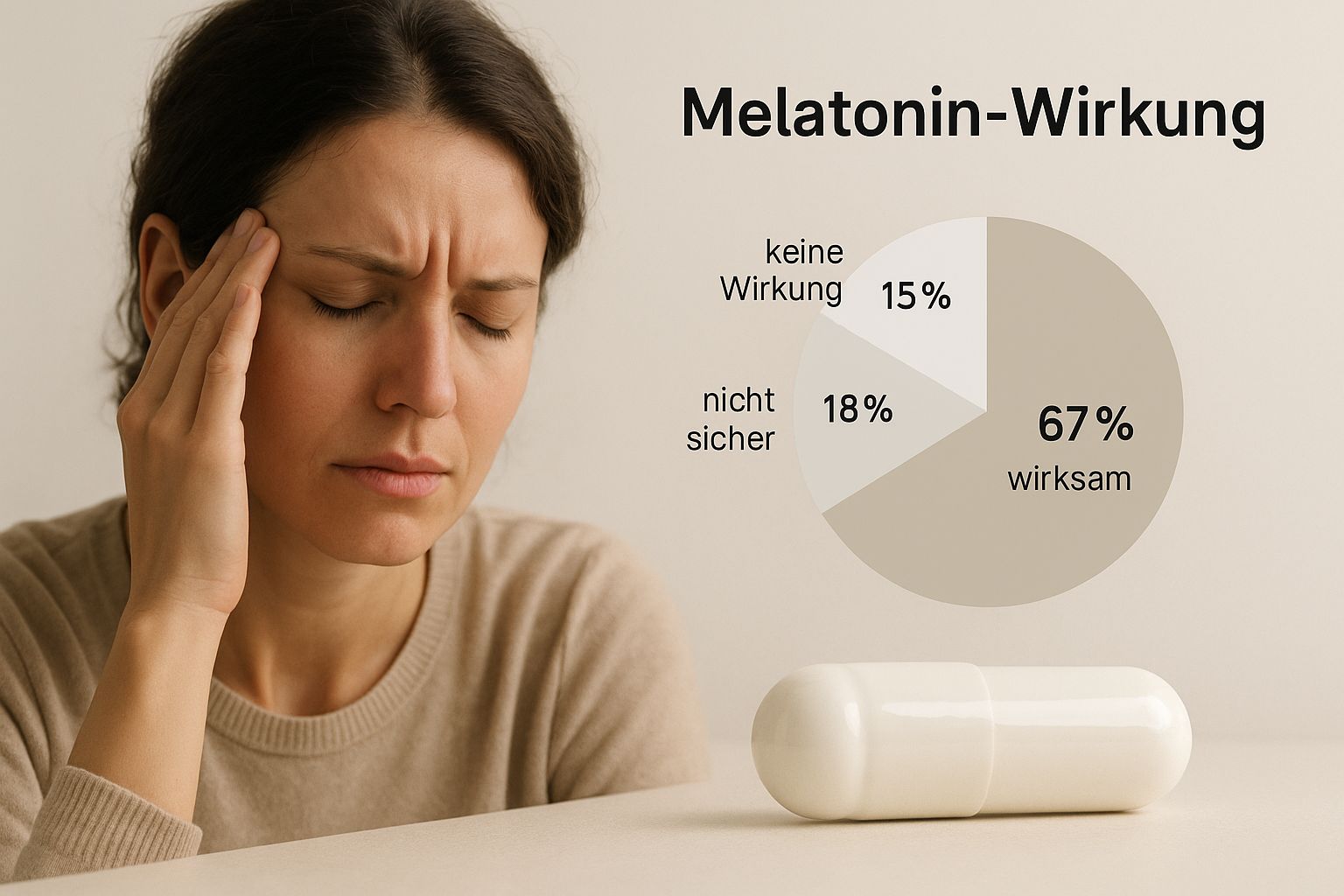
As you can see, headaches and dizziness are often companions that indicate that the internal clock is a bit out of sync.
Typical reactions at a glance
In addition to morning fatigue, there are a few other effects. While they are rarer, it's still good to know about them so you can correctly interpret your body's signals.
-
Headaches and dizziness: These can occur if blood pressure drops slightly or the hormone affects blood vessels. However, they are usually mild and disappear quickly.
-
Vivid or strange dreams: Melatonin can affect the REM sleep phase – this is the phase in which we dream most intensely. This can lead to unusually vivid dreams, which are completely harmless.
-
Gastrointestinal complaints: A few people report mild nausea or abdominal rumbling. This is rather rare and usually indicates a personal sensitivity.
The most important thing is: these side effects are almost always temporary. They are a clear sign that you might need to adjust the dose or the timing of intake.
It's always worth paying attention to quality and natural ingredients when it comes to dietary supplements. You can read more about how to find the right products for you in our guide on natural dietary supplements.
To give you a quick overview, we have summarized the possible melatonin side effects in a table here.
Overview of common and rare melatonin side effects
This table aims to provide a clear overview of the possible side effects of melatonin, sorted by how often they occur.
| Side effect | Frequency | Description and what you can do |
|---|---|---|
| Daytime sleepiness | Common | You feel sluggish or groggy in the morning. Reduce the dose or take it 30–60 minutes earlier. |
| Headaches | Occasional | Mild to moderate headaches. Make sure to drink enough and adjust the dose. |
| Dizziness | Occasional | A slight feeling of grogginess. Avoid too high a dose and get up slowly in the morning. |
| Vivid dreams | Rare | Unusually intense dreams. This is usually harmless and normalizes on its own. |
| Stomach discomfort | Very rare | Mild nausea or abdominal pain. Try taking melatonin with a small snack. |
As you can see, most reactions are mild and can be managed well. The key often lies in listening to your own body and responding with small adjustments.
How to support your internal clock with the right timing

Imagine your internal clock as a finely tuned orchestra. Melatonin is the conductor, raising the baton at just the right moment so that all instruments – meaning the cells of your body – come to rest. If you take the hormone at the wrong time, it's like giving the signal to fall asleep far too early or too late. The whole ensemble gets out of sync.
So, the right timing is not just important, it's absolutely crucial. It determines whether melatonin is your friend and helper or whether it leads to unwanted melatonin side effects. As a rule of thumb: The ideal time is about 30 to 60 minutes before bedtime. This gives the active ingredient enough time to take full effect and gently signal your body to fall asleep.
Why the wrong timing messes everything up
If you take melatonin too early in the evening, you might get tired long before you even want to go to bed. This is not only impractical but can also be dangerous. If you take it in the middle of the night because you woke up, you risk a nasty "hangover" the next morning. Your body simply won't have enough time to fully break down the hormone.
The reason for this is that melatonin controls the circadian rhythm. Taking it at the wrong time completely throws this internal clock out of whack. The consequences can be grogginess, extreme fatigue, and even an increased risk of accidents. You can find more about the risks of incorrect use on test.de.
A fixed routine is the best way to avoid this.
Tips for perfect timing
Here are a few simple rules to optimally support your internal clock and avoid side effects:
- Fixed time: Try to take melatonin at the same time every day, even on weekends. This creates reliability for your body.
- Before bed: Plan to take it approximately 30 to 60 minutes before you turn off the lights.
- Do not redose: If you wake up at night, absolutely do not take a second dose. This significantly increases the risk of fatigue the next day.
- Listen to your body: Do you often feel groggy in the morning? Try taking the dose 15 minutes earlier the next evening and see if it improves.
When you master the timing, you work with your body instead of against it. This way, you use the full potential of melatonin for a restful night, without any unpleasant surprises the next morning.
Finding the right dose: here's how
With melatonin, it's clear: less is often more. Many assume that a higher dose automatically means better sleep. But the opposite is true – too much melatonin only increases the risk of unwanted side effects, such as the typical "hangover" the next morning.
The trick is to find the perfect dose for you personally. It's best to start with a very small amount, for example, 0.5 to 1 milligram. This is often enough to give your body the gentle signal to fall asleep without overwhelming it.
Listen to your own body
Pay close attention to how you feel. Do you fall asleep well and wake up refreshed in the morning? Perfect, then you've found your dose. However, if you feel groggy or tired, the dose was probably too high.
The key is patience. Instead of immediately drastically increasing the dose if it doesn't work, you should only adjust it very slightly. Sometimes even the smallest change makes a big difference.
Give your body a few nights to get used to the new routine before making any changes. This way, you prevent taking unnecessarily too much and keep the risk of side effects low.
Here are a few simple guidelines to help you get started:
- For sleep problems: Start with 0.5 mg to 1 mg, about 30 to 60 minutes before you go to bed.
- For jet lag: Even a small dose of 0.5 mg can help your internal clock adjust to the new time zone faster.
- Product choice: Make sure you choose a product that allows for a low and precise dosage. Sprays or low-dose capsules are often more practical than high-dose tablets that are difficult to divide.
Don't forget: Melatonin is not a classic sleeping pill that essentially knocks you out. It's more of a smart pacemaker for your natural sleep-wake rhythm. If you want to learn more about the different forms, take a look at our overview of melatonin tablets and other variants.
When you should avoid melatonin
For most people, melatonin is a gentle and safe sleep aid. But as with any good tool, you need to know when and how to use it correctly. In certain phases of life or with certain health conditions, it's wiser to avoid it or at least consult a doctor beforehand.
Your body is not a machine. Especially your hormonal system is a finely balanced network that reacts particularly sensitively during certain phases. An additional hormone intake from outside – and that is exactly what melatonin is – can disrupt this balance. So, listen to your body's signals and play it safe.
Particular caution during these life stages
For some groups of people, there simply isn't enough research to confidently recommend taking it. Here, safety is the top priority.
- Pregnant and breastfeeding women: During pregnancy and breastfeeding, the hormone balance is working overtime. No one can say for sure how additional melatonin affects the unborn child or infant. Therefore, the clear recommendation is: please avoid it during this time.
- Children and adolescents: A growing body is a constant construction site. The long-term consequences of melatonin administration on this sensitive developmental phase have not yet been truly researched. Therefore, intake should only occur in exceptional cases and under strict medical supervision.
Health aspects and interactions
Even if you have certain health problems, caution is advised. Melatonin can influence existing conditions or interfere with other medications. In the worst case, this can even intensify unwanted melatonin side effects.
A consultation with a doctor is essential before taking melatonin if you suffer from autoimmune diseases, epilepsy, or severe liver and kidney damage. The same applies if you are taking blood thinners or certain antidepressants.
Good sleep and general well-being always start with a healthy lifestyle. If you're looking for more ways to stay fit and manage your weight, check out our article on sustainable weight loss.
Frequently asked questions about melatonin
Now that we've looked at dosage, correct timing, and potential pitfalls, let's clear up a few common questions. Many myths and uncertainties surround melatonin. Here you will find clear, understandable answers so that you know exactly where you stand.
Can melatonin be addictive?
This is probably one of the biggest concerns – and here's good news: Unlike many classic prescription sleeping pills, melatonin is not physically addictive. So you don't have to fear withdrawal symptoms if you stop taking it.
However, a kind of psychological habit can creep in. You might then feel like you can't fall asleep without your evening capsule. That's why it's best to view melatonin as a targeted helper for specific times and not as a permanent solution for every single night.
How do I recognize an overdose?
While a melatonin overdose is not dangerous, it is anything but pleasant. Basically, it simply exacerbates the typical melatonin side effects. Pay attention to your body's signals such as:
- Severe fatigue or a "foggy" feeling the next morning
- Throbbing headaches and dizziness
- Mild nausea or rumbling in the stomach
- Unusual irritability or mood swings
Fortunately, your body breaks down melatonin quite quickly – the half-life is only 30 to 60 minutes. So the symptoms usually disappear quickly. However, they are a clear sign that you should reduce the dose next time.
The good news: Melatonin side effects usually don't last long. If you feel groggy in the morning, this feeling should quickly subside after getting up. However, if the effects last for several hours, the dose was definitely too high or you took it too late.
Am I allowed to drive after taking it?
There's only one answer here: a clear and unambiguous no. Melatonin makes you tired and slows down your reaction time – that's its job, after all. Your driving ability can still be impaired for up to five hours after taking it.
So, always take melatonin only when you are safely at home for the rest of the evening and no longer need to drive or operate any machinery. Your safety and that of others are absolutely paramount.
Do you have more questions about the use of our products? We have collected many answers for you in our FAQ section on our website.
Are you ready to give your sleep a natural boost? BODY'S PERFECT Sleep Capsules are carefully formulated to help you gently unwind and start the new day refreshed. Discover the support for your nights now at https://bodysperfect.com.













































Share:
Melatonin Tablets: Your Guide to Better Sleep
Biotin for Hair: How to Truly Support Your Hair Growth