


If you want to lose weight, there's one topic you can't avoid: a calorie deficit. A calorie chart for weight loss might be your most important tool. It helps you keep track of your energy intake – the scientifically sound basis for any successful weight loss.
Why a calorie chart really helps with weight loss

You might be wondering why so many people swear by calorie counting for weight loss. The answer is simple: it creates awareness. Without this knowledge, you often grope in the dark, making decisions based on feeling rather than facts. A healthy calorie deficit can hardly be managed this way.
A calorie chart is much more than just a dry list of numbers. It's a practical tool that gives you a sense of the energy density of foods. Suddenly, it becomes clear why a small handful of nuts has more calories than a huge plate of salad.
Exposing unhealthy habits
Often, it's the small, unnoticed habits that prevent success on the scale. The dash of syrup in your coffee here, the creamy dressing on your salad there, or the quick afternoon snack – all of this adds up. A calorie chart brings precisely these hidden calorie bombs to light.
When you start logging your meals and snacks, you'll quickly recognize patterns. You'll see in black and white where you can easily save calories, often without feeling like you have to give something up.
The key is not deprivation, but conscious decisions. A calorie chart gives you the clarity you need to choose better alternatives and achieve your goals sustainably.
Better planning and achieving goals
With the information from a calorie chart in hand, you can plan your meals much better. You quickly learn which foods keep you full for a long time, are rich in nutrients, and still spare your calorie budget.
This structured approach not only helps you stay on track but also to set realistic goals. Every day you meet your calorie target is a small victory and another step towards your desired weight. This guide provides you with the knowledge to optimally use the following tables and tips and to successfully start your journey.
Correctly calculate your personal calorie needs
Every person is unique – this is especially true for our bodies. Your personal calorie needs are therefore not a number that can simply be determined universally, but rather the crucial starting point for anyone who wants to lose weight successfully. Once you know this number, you stop guessing and start to control your calorie deficit purposefully.
To find out your needs, we need to take a closer look at two components: the basal metabolic rate and the active metabolic rate. If you put both together, you get your total daily energy requirement.
Your basal metabolic rate: The basis for everything
The basal metabolic rate (sometimes also called BMR for Basal Metabolic Rate) is the amount of energy your body uses when you do absolutely nothing. Just imagine lying in bed for 24 hours. Even then, your body needs calories to keep vital functions running – for example, for breathing, your heartbeat, or regulating your body temperature.
This value varies from person to person and depends on a few things:
- Age: As we age, our muscle mass tends to decrease. This also slightly lowers the basal metabolic rate.
- Gender: Men naturally tend to have a higher muscle percentage, which is why their basal metabolic rate is often higher than that of women.
- Weight and height: A larger, heavier body logically requires more energy to sustain itself.
- Muscle mass: Muscles are real energy burners! Even at rest, they consume significantly more calories than fat tissue.
Your active metabolic rate: What you burn through movement
The active metabolic rate is added on top. This is all the energy you consume through physical activity. This really includes everything – from walking the dog to housework to a strenuous workout at the gym.
To realistically estimate this part, experts use the so-called PAL factor (Physical Activity Level). This factor is essentially a number for your average activity level:
| PAL Factor | Activity Level | A typical example |
|---|---|---|
| 1.2 | Exclusively sitting or lying down | Bedridden or very frail people |
| 1.4-1.5 | Mostly sitting, little movement in leisure time | A classic office job |
| 1.6-1.7 | Sitting job, but with regular movement | Office job, but you regularly go for walks or exercise |
| 1.8-1.9 | Mainly walking or standing | Salesperson, waiter, or craftsperson |
| 2.0-2.4 | Physically very demanding work | Construction worker or competitive athlete |
Your total energy requirement can then be calculated simply: Basal metabolic rate x PAL factor.
A quick example: Let's assume your basal metabolic rate is 1,500 kcal. You have an office job, so a PAL factor of 1.5. Your calculation is: 1,500 x 1.5 = 2,250 kcal per day.
This manual calculation is a great starting point. If you want to make it even easier for yourself, simply use a practical calorie calculator. You can find even more details and background information in our article on calculating your total energy requirement. With this knowledge, you have the perfect basis to plan your calorie deficit and finally get started properly.
The large calorie chart for everyday foods
Now it's getting practical! Here comes the part that will help you the most in everyday life: the large calorie chart for weight loss. See it as your personal compass for the supermarket and the kitchen. With it, you'll make conscious and clever decisions, without any guesswork.
We have not only listed the calories per 100 grams but also directly the values for a typical portion. This makes planning your meals so much easier and more intuitive. You quickly get a feel for which foods provide a lot of energy and which ones you can really dig into.
How to best use the calorie chart
So you don't have to search long, we've sorted everything into clear groups. Whether you're standing in front of the supermarket shelf or studying the menu in a restaurant – you'll immediately find what you need.
- Fruits & Vegetables: The basis for a vitamin and fiber-rich diet.
- Grain Products & Side Dishes: Your most important fuel providers.
- Dairy Products & Eggs: The classics for protein and calcium.
- Meat, Fish & Alternatives: Indispensable for a good feeling of satiety and muscle maintenance.
- Fats & Oils: Important, but very high in calories – here, moderation is key.
- Snacks & Sweets: The small pleasures you should consciously indulge in.
- Drinks: Often the secret fattening agents.
This graphic simply shows you how your daily energy needs are composed.
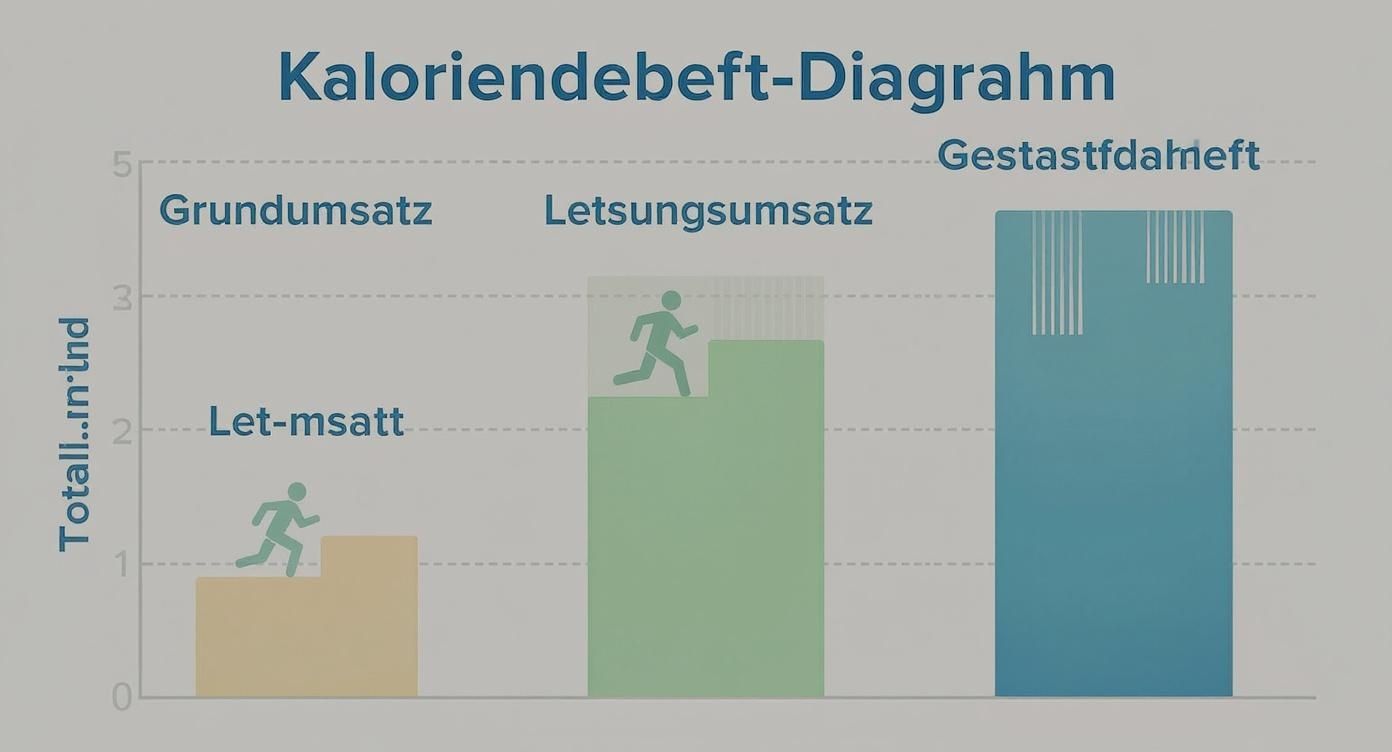
You see immediately: Your total requirement is the sum of what your body consumes at rest (basal metabolic rate) and what you additionally burn through movement (active metabolic rate). Exactly this number is the basis for planning your calorie deficit.
Excerpt from the calorie chart
Here's a small but fine overview of foods that almost everyone has at home. Perfect as a cheat sheet to get started!
| Food | Category | Typical Portion | Calories per 100g | Calories per portion |
|---|---|---|---|---|
| Apple | Fruit | 1 piece (150 g) | 52 kcal | 78 kcal |
| Banana | Fruit | 1 piece (120 g) | 89 kcal | 107 kcal |
| Broccoli | Vegetable | 1 floret (200 g) | 34 kcal | 68 kcal |
| Chicken breast | Meat | 1 fillet (150 g) | 165 kcal | 248 kcal |
| Salmon fillet | Fish | 1 fillet (125 g) | 208 kcal | 260 kcal |
| Egg (size M) | Eggs | 1 piece (60 g) | 155 kcal | 93 kcal |
| Whole grain bread | Grain products | 1 slice (50 g) | 250 kcal | 125 kcal |
| Natural yogurt (3.5%) | Dairy products | 1 cup (150 g) | 61 kcal | 92 kcal |
| Olive oil | Fats & Oils | 1 tbsp (10 ml) | 884 kcal | 88 kcal |
| Almonds | Snacks | 1 handful (30 g) | 576 kcal | 173 kcal |
| Chocolate (milk chocolate) | Sweets | 1 bar (25 g) | 535 kcal | 134 kcal |
This table gives you a first indication of how different the energy density of various foods can be.
Fruits and vegetables: Your low-calorie partners
If you want to lose weight, fruits and vegetables are your best friends. They are packed with vitamins, minerals, and fiber, but have very few calories. This means you can eat your fill without breaking your calorie budget.
Especially green vegetables like spinach or lettuce, but also cucumbers, tomatoes, and zucchini are true lightweights. When it comes to fruit, berries are a great choice as they contain little fruit sugar and many valuable antioxidants. Just remember that fruits like bananas or grapes have slightly more calories.
Grain products and side dishes: Choose consciously
Carbohydrates are not enemies, as long as you choose the right ones. It's best to always opt for whole grain products like whole wheat bread, oats, or quinoa. They provide more fiber, keep you feeling full longer, and stabilize your blood sugar levels.
A small but important tip: Pay attention to portion sizes! A normal serving of pasta (weighed raw) is about 75-100 grams, not half the package. Especially at the beginning, a kitchen scale can be worth its weight in gold.
The average calorie consumption in Germany for adults, depending on age and activity, is between 1,800 and 2,500 kcal daily. For sustainable weight loss, you often aim for a deficit of around 500 kcal, which leads to a healthy weight loss of about 0.5 kg per week. The calorie chart helps you keep track.
Proteins for satiety and muscle protection
Protein is an absolute must when losing weight. It's incredibly satiating and protects your muscles from being broken down during a calorie deficit. Lean meats like chicken or turkey breast, fish, eggs, and dairy products like low-fat quark are ideal for this.
But plant-based sources like lentils, chickpeas, tofu, or tempeh are also fantastic protein providers. If you want to know more about which foods keep you feeling full for a particularly long time, take a look at our article on satiating foods with few calories.
Hidden calories in fats, snacks, and drinks
Beware, this is where the most common calorie traps lurk! Fats and oils are essential for life, but they also have the highest energy density. A single tablespoon of oil can easily contain over 100 calories – so use it sparingly.
The same applies to drinks. Fruit juices, sodas, or a latte macchiato with syrup often have more calories than a small meal. Water, unsweetened tea, and black coffee are always the better choice. And snacks? They should be a conscious indulgence, not an everyday habit.
The calorie chart in everyday life: How it really works
A list full of numbers and data is one thing. The other is applying this knowledge in real life. A calorie chart for weight loss is only truly useful if you cleverly integrate it into your daily routine. But don't worry: it's not about weighing every lettuce leaf for the rest of your life. The goal is rather to develop a good sense for your diet.
This feeling for food and portions helps you make the right decisions – whether you're at the supermarket, sitting in a restaurant, or invited to eat with friends. This way, you stay calmly on track without everything revolving solely around calorie counting.
Learning to estimate portion sizes – without a scale
You don't always have a kitchen scale with you. But that's not even necessary! With a few simple tricks, you can estimate portion sizes pretty well on the go. You always have your best tool with you: your own hand.
- A handful: This is the perfect size for snacks like a small portion of nuts or a handful of berries (approx. 30 g).
- A fist: This is how big a portion of cooked rice, pasta, or potatoes should be. That's about 150–200 g.
- A palm: An ideal portion of meat or fish (without fingers) fits exactly on your palm (approx. 120–150 g).
- Two cupped hands: This amount is perfect for a large portion of salad or vegetables.
With this method, you quickly develop a good eye for the right amounts. This gives you back control over your meals without constantly depending on a scale.
Tracking down hidden calorie bombs
Most of the time, it's not the large main meals that blow your calorie budget. Much more dangerous are the small "extras" that creep in unnoticed. These hidden calories lurk everywhere and are easily overlooked.
A classic mistake: You meticulously count the calories in your food, but forget about your drinks. A large latte macchiato or a glass of orange juice can easily have as many calories as a small snack.
Here's where you should pay particular attention:
- Drinks: Sodas, juices, coffee with syrup, and of course alcohol – the calories add up incredibly quickly.
- Sauces and dressings: A creamy dressing quickly turns a light salad into a calorie bomb. The same applies to cream sauces.
- "Healthy" convenience foods: Many muesli bars or smoothies from the refrigerated section are true sugar traps.
A quick look at the nutritional information on the packaging is really worth its weight in gold here. If you get into the habit of reading labels, it sharpens your awareness and helps you find clever alternatives.
Eating out without going off track
A meal at a restaurant or an invitation to friends doesn't have to derail your plans. With the right strategy, you can maintain control here too. Simply ask for light preparation, order the sauce separately, or choose grilled instead of fried dishes.
Good planning helps immensely. For example, if you prepare your meals for workdays (meal prep), you consciously create buffers for such occasions. You can find inspiration and great ideas for this in our delicious meal prep recipes for weight loss. This way, you stay flexible without losing sight of your goals.
How BODY'S PERFECT products help you in everyday life

A calorie chart is a powerful tool, no question. But honestly: everyday life is often unpredictable. Stress, spontaneous invitations, or sudden cravings can thwart even the best plan. On some days, there simply isn't enough time or energy to cook a fresh, balanced meal.
It is precisely for these moments that we developed BODY'S PERFECT products. They are your practical helper so you can easily maintain your calorie deficit – without having to compromise on important nutrients. See them as a smart addition to your diet and your calorie chart.
Meal replacement when time is short
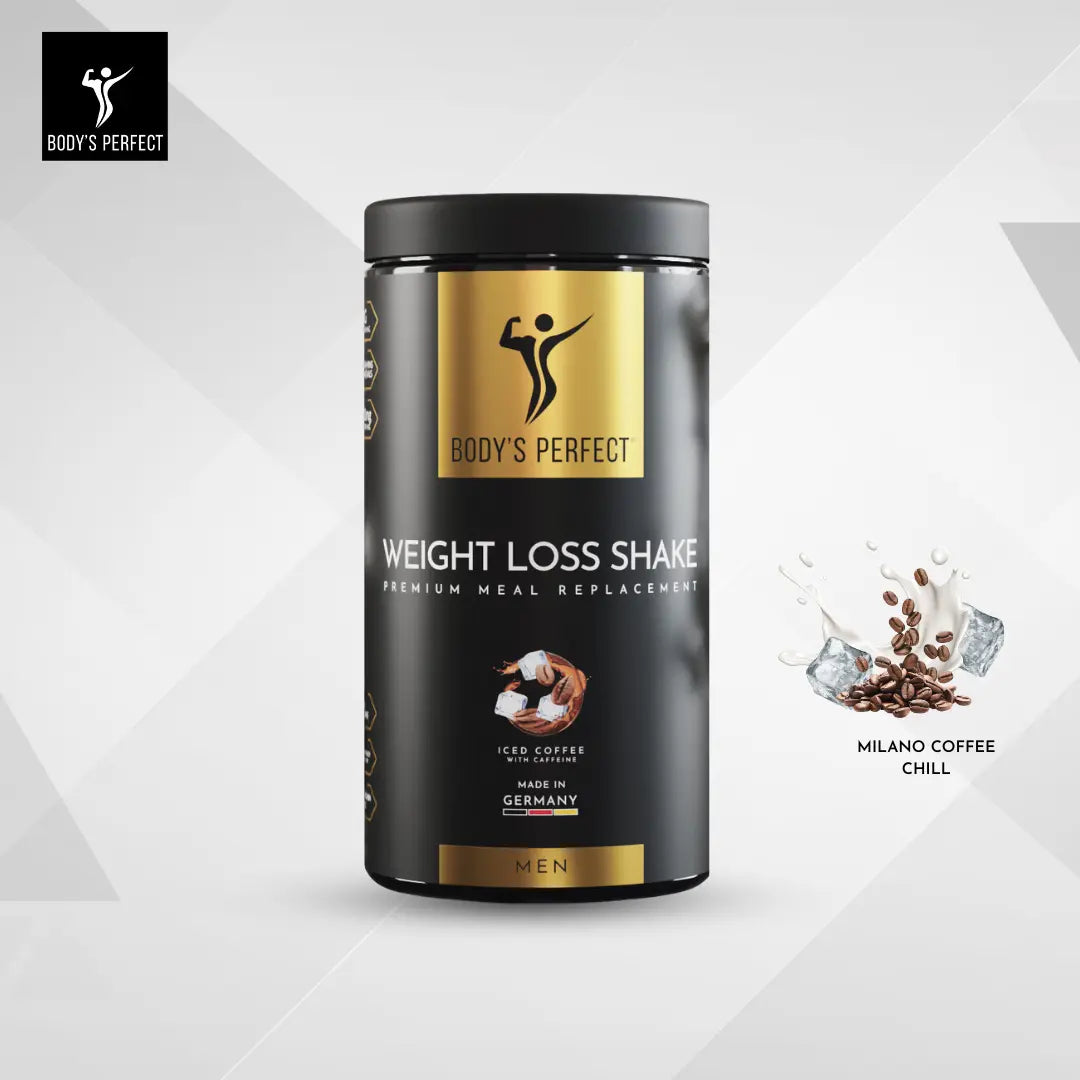
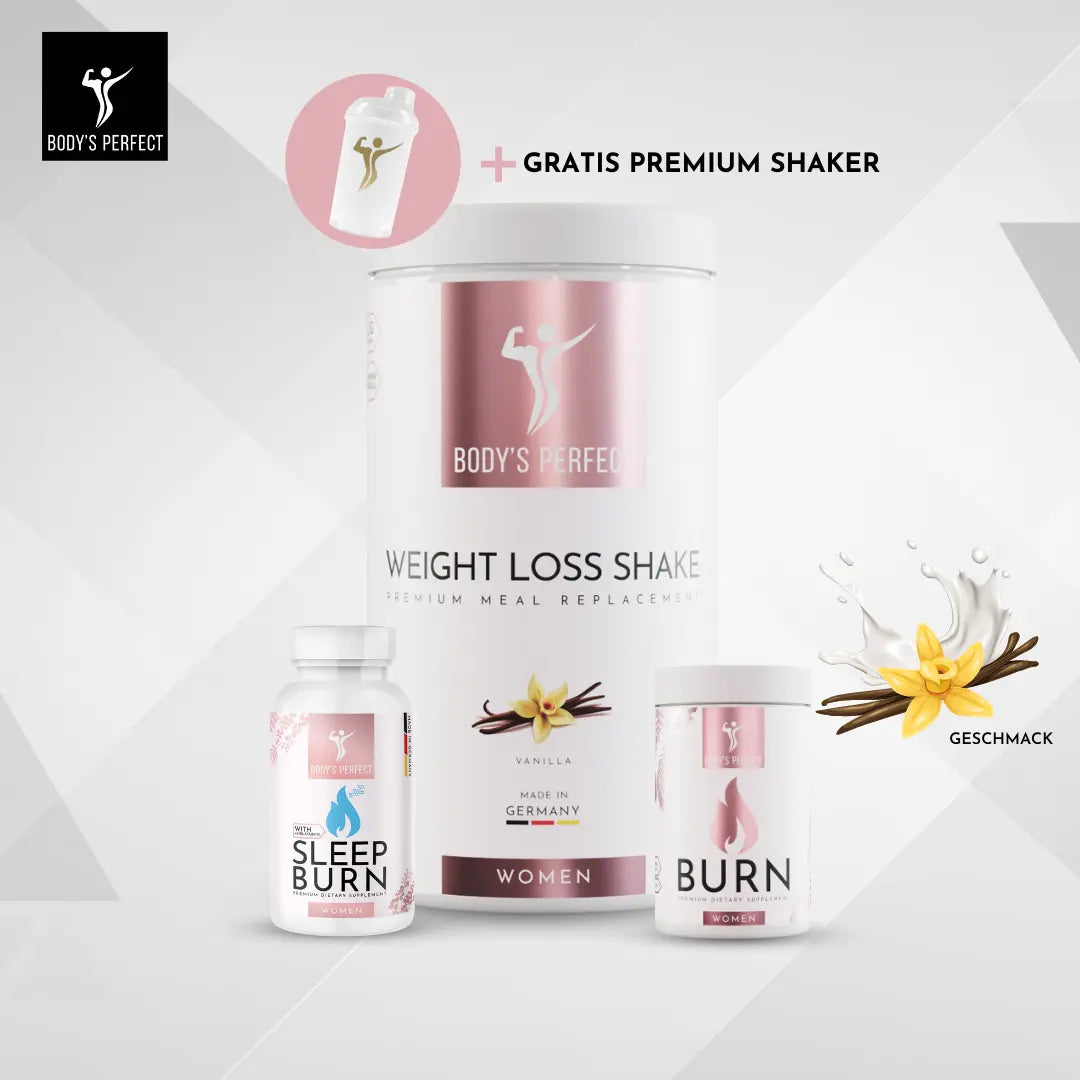
Hectic morning? Long meeting at lunchtime? Instead of grabbing a quick and usually unhealthy snack, you can simply replace an entire meal with one of our shakes. Our PERFECT SHAPE Shake provides you with everything your body needs.
- All essential nutrients: It provides you with high-quality protein, essential vitamins, minerals, and fiber that keep you pleasantly full.
- Full calorie control: Each portion has an exact calorie value. This makes logging it in your table a breeze.
- Ready in one minute: Mix, drink, done. That's how quickly you can have a delicious and nutritious meal that keeps you full for a long time.
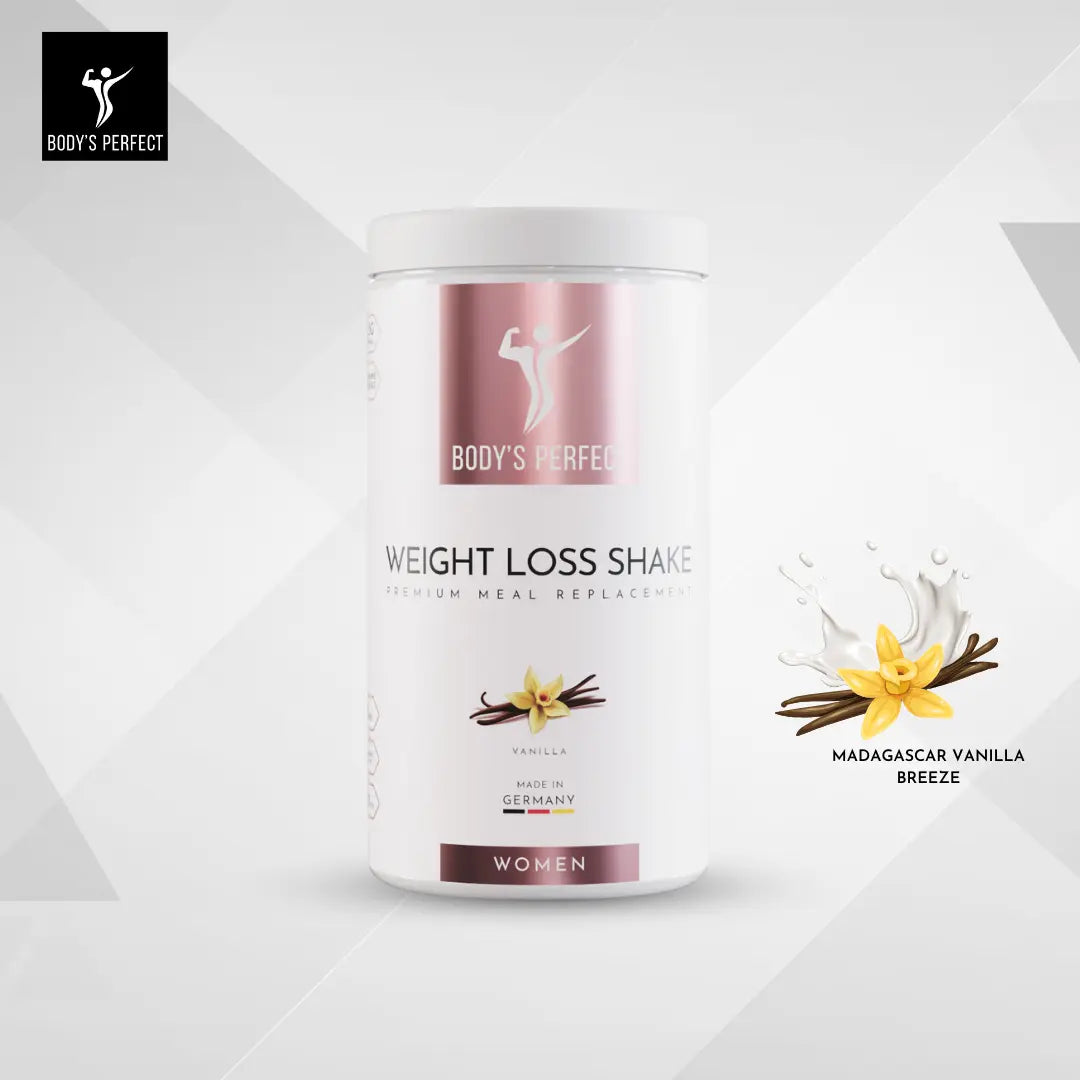
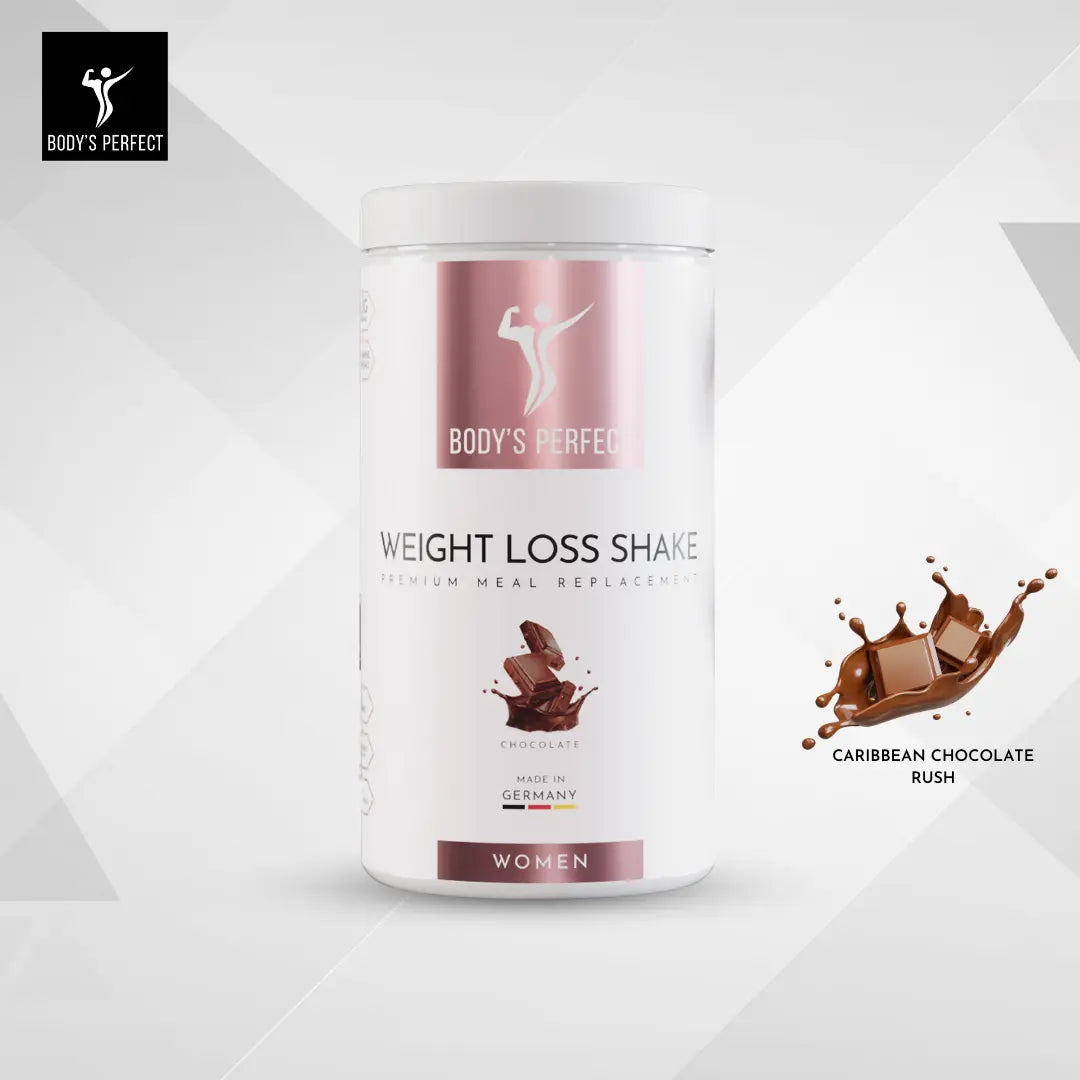
With a meal replacement like our popular weight loss shake for women, you not only save valuable time but also effortlessly maintain full control over your calorie intake.
Targeted support for your metabolism
A well-functioning metabolism is a crucial factor for successful fat burning. In addition to your calorie-conscious diet, there are special products that can naturally stimulate your energy metabolism.
Our PERFECT CUT Capsules were developed precisely for this purpose. They contain a carefully coordinated formula of proven, natural ingredients such as green tea extract and caffeine. These can stimulate your metabolism and thus further support fat burning.
The idea of consciously managing energy consumption and nutrient intake is not new, by the way. In Germany, calorie tables gained importance as early as the 1970s, as the scientific understanding of the body's energy requirements grew. Today, such tables and tailored products like those from BODY'S PERFECT are integral components of a modern, health-conscious lifestyle. You can find out more about current dietary trends in Germany on boelw.de.
By integrating our products into your diet plan, you create valuable support for yourself. They help you consistently maintain your calorie deficit, prevent cravings, and achieve your weight loss goals even more effectively.
Avoiding typical mistakes when counting calories
With a calorie table for weight loss, you have a powerful tool at hand, but there are a few classic pitfalls along the way. If you know them, you can easily avoid them and prevent yourself from throwing in the towel in frustration. It's about being smart, not harder.
One of the most common mistakes: We underestimate what we eat. A handful of nuts here, a dash of oil for frying there – it adds up. Without careful attention, 200-300 extra calories per day can quickly creep into your plan.
The fallacy of too large a calorie deficit
More is not always better – especially not when it comes to a calorie deficit. The idea of reaching your goal faster by extreme hunger is tempting, but it almost always backfires. An overly aggressive deficit puts enormous stress on your body.
The result is often the dreaded yo-yo effect. Your body switches to an economy mode, slows down its metabolism, and as soon as you eat "normally" again, it hoards every calorie as a reserve for the next emergency. The result? You often weigh more than before.
Your body is your partner, not your opponent. A moderate deficit of 300-500 calories a day is sustainable, protects your muscle mass, and prevents cravings.
Quality trumps pure quantity
A calorie is not just a calorie, at least not when it comes to its effect on your body. 200 calories from a protein shake will keep you full for hours and feed your muscles. The same amount from a sugary soda will spike your blood sugar and leave you hungry again shortly after.
So, don't just look at the numbers, but also at where your calories come from:
- Proteins: The most important building block for weight loss. Protein is incredibly filling and protects your valuable muscles from breakdown.
- Fiber: Vegetables, legumes, and whole grains fill you up and keep your digestion moving.
- Healthy fats: Avocados, nuts, or a good olive oil are essential for your hormone balance and the absorption of important vitamins.
Do you feel stuck, even though your deficit should actually be correct? Often, such hidden causes are behind it. In our article, you can learn more about why you're not losing weight despite a calorie deficit and what you can do about it.
Forgotten calories in snacks and drinks
Another classic: Liquid calories and small snacks in between are simply not counted. The morning cappuccino, the juice with lunch, or the glass of wine in the evening often go unnoticed in the calorie balance. But it is precisely here that hundreds of calories can hide, sabotaging your progress.
Be brutally honest with yourself and record everything you consume – at least for the initial period. Only then will you get a realistic picture of your actual intake and see where you need to start. This honest look is the key to achieving your goals without frustration.
The most frequently asked questions about calorie tables
Finally, we will clarify a few questions that we encounter again and again in everyday life. They are intended to remove any remaining uncertainties and give you the necessary confidence to get started. Because remember: a calorie table for weight loss is just your tool – you are the person who ultimately uses it successfully.
Many are initially unsure whether they have to write down every single calorie for the rest of their lives. The short answer is: absolutely not!
Do I have to count calories forever?
Counting at the beginning is super important, but view it as a learning phase. It helps you develop a feel for reasonable portion sizes and the energy density of foods. This knowledge will eventually become second nature to you. In the long run, you'll be able to maintain your weight without constant tracking because you'll have automatically learned to make smart choices.
Another typical problem: You're looking for a specific food and simply can't find it on the list.
What do I do if a food is not in my table?
Don't worry, this isn't about mathematical perfection down to the last decimal place. If something is missing, just find a similar product from the table to get a good guideline. For packaged foods, looking at the nutritional information on the back is the most accurate source anyway. The goal is simply to find a good approximation that helps you stay within your goal.
The goal is not perfection, but to stay consistent. Small deviations won't throw you off track as long as you keep the big picture in mind.
Are all calories equal?
This question is absolutely crucial if you not only want to lose weight in the short term but also want to maintain it. Physically speaking, a calorie is always a calorie. For your body, however, it makes a huge difference where it comes from.
Just imagine it this way:
- 200 calories from a protein shake provide you with valuable nutrients, keep you full for hours, and support your muscles.
- 200 calories from pure sugar will send your blood sugar soaring and shortly after trigger the next craving.
So, it's not just about the quantity, but above all about the quality of your calories. A balanced diet with sufficient protein, fiber, and healthy fats is the key to maintaining your calorie deficit without constant hunger and providing your body with everything it needs.
Are you ready to take your diet to the next level and achieve your goals more easily? The high-quality products from BODY'S PERFECT are the ideal complement to your journey. Discover our shakes, capsules, and individual metabolism tests now to smartly support your weight loss endeavor.
























Share:
Overcoming Emotional Eating: Your Path to More Control and Well-being
How Many Carbs Per Day to Lose Weight? Your Guide to Success