

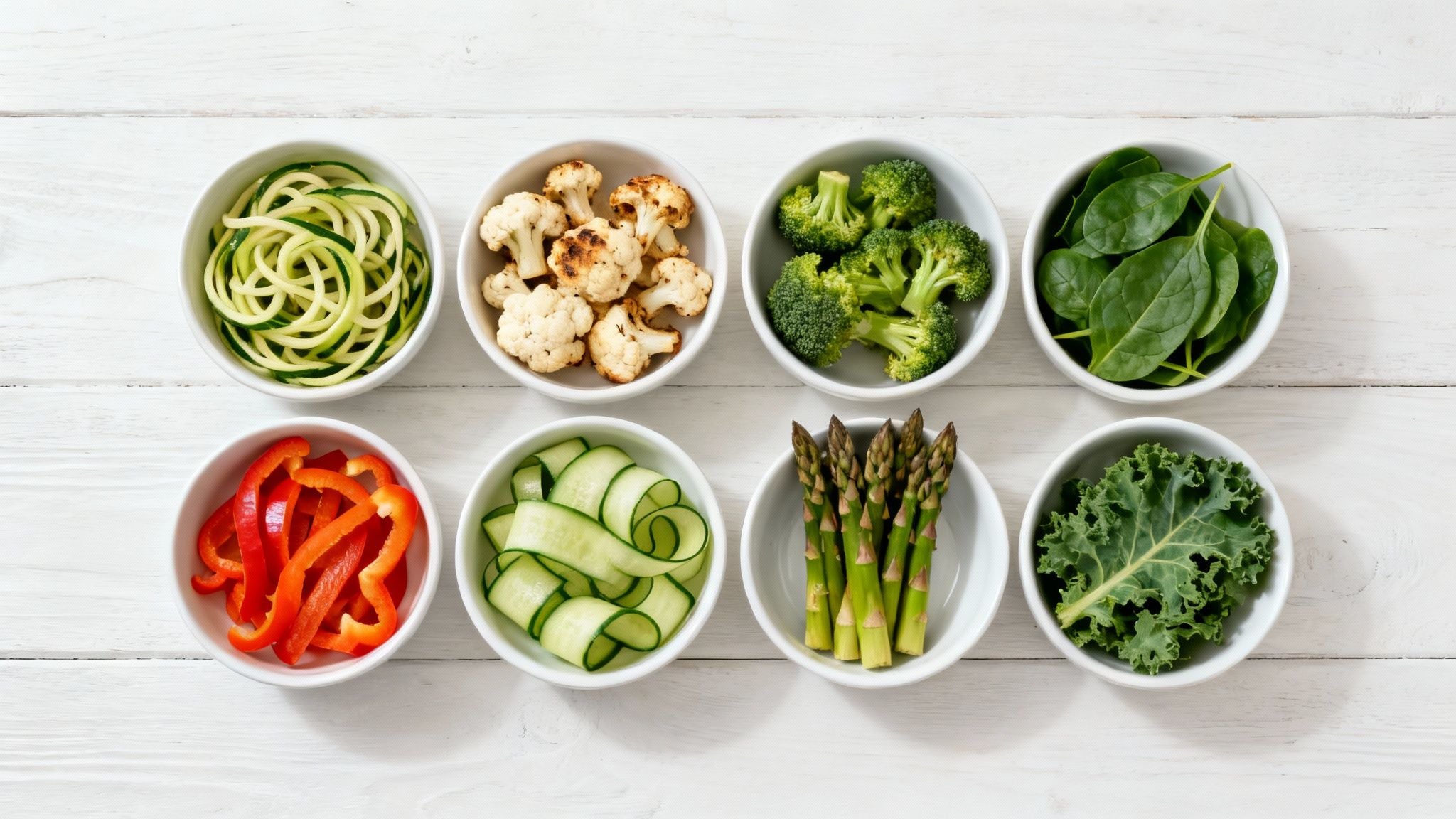
Do you want to lose weight without giving up enjoyment? Then a diet that focuses on low-carb vegetables is often the most effective and delicious way. However, many people don't know which varieties are truly suitable for keeping carbohydrate intake low while optimally nourishing the body. This article addresses exactly that.
We'll introduce you to the top 8 lowest-carb vegetable varieties that will enrich your meal plan. You'll not only learn how many carbohydrates are in spinach, zucchini, or cauliflower, but also what valuable nutrients they contain. In addition, there are simple and practical preparation tips that show you how delicious and versatile a conscious diet can be. Forget boring diets – your path to a healthier you starts here and is surprisingly colorful and full of flavor.
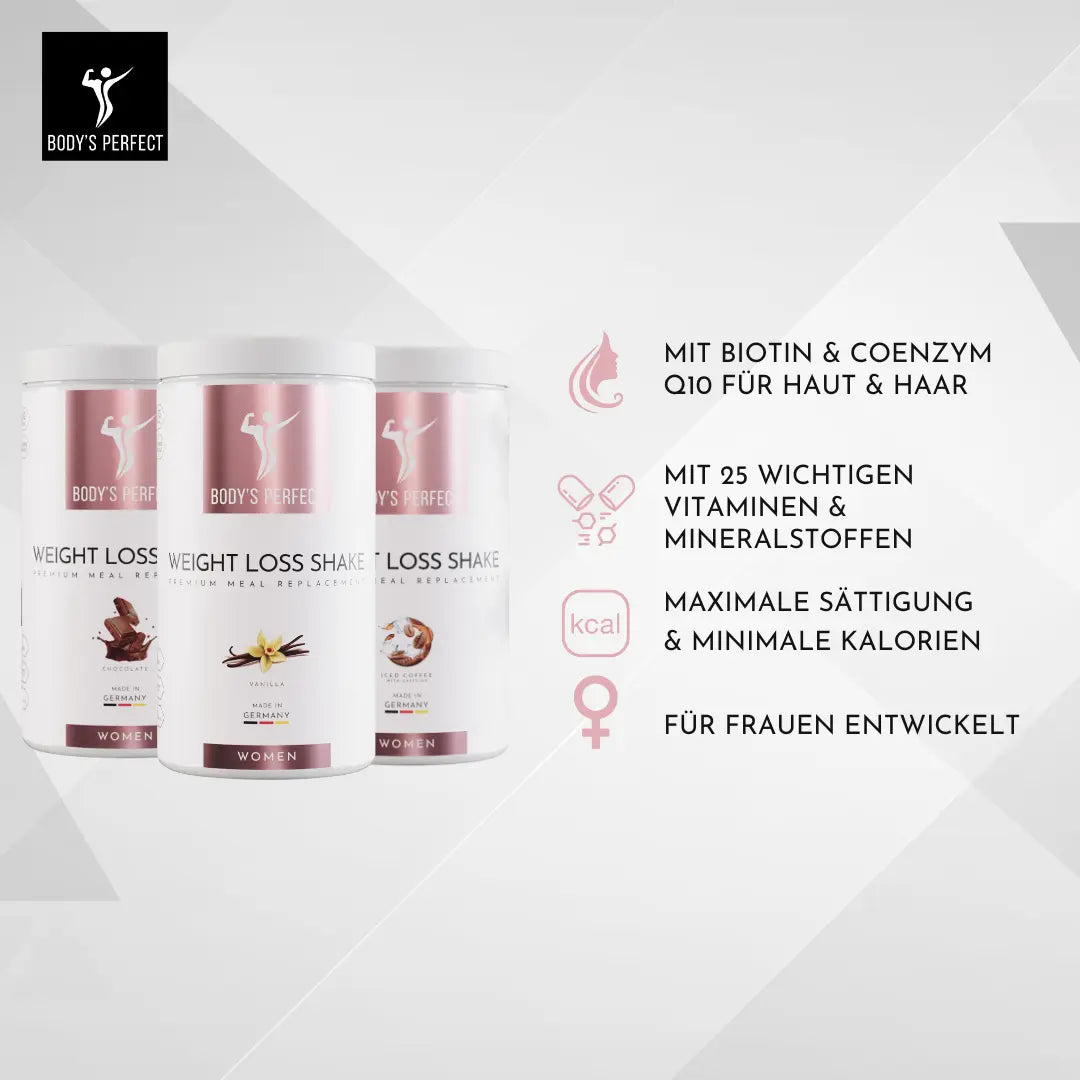
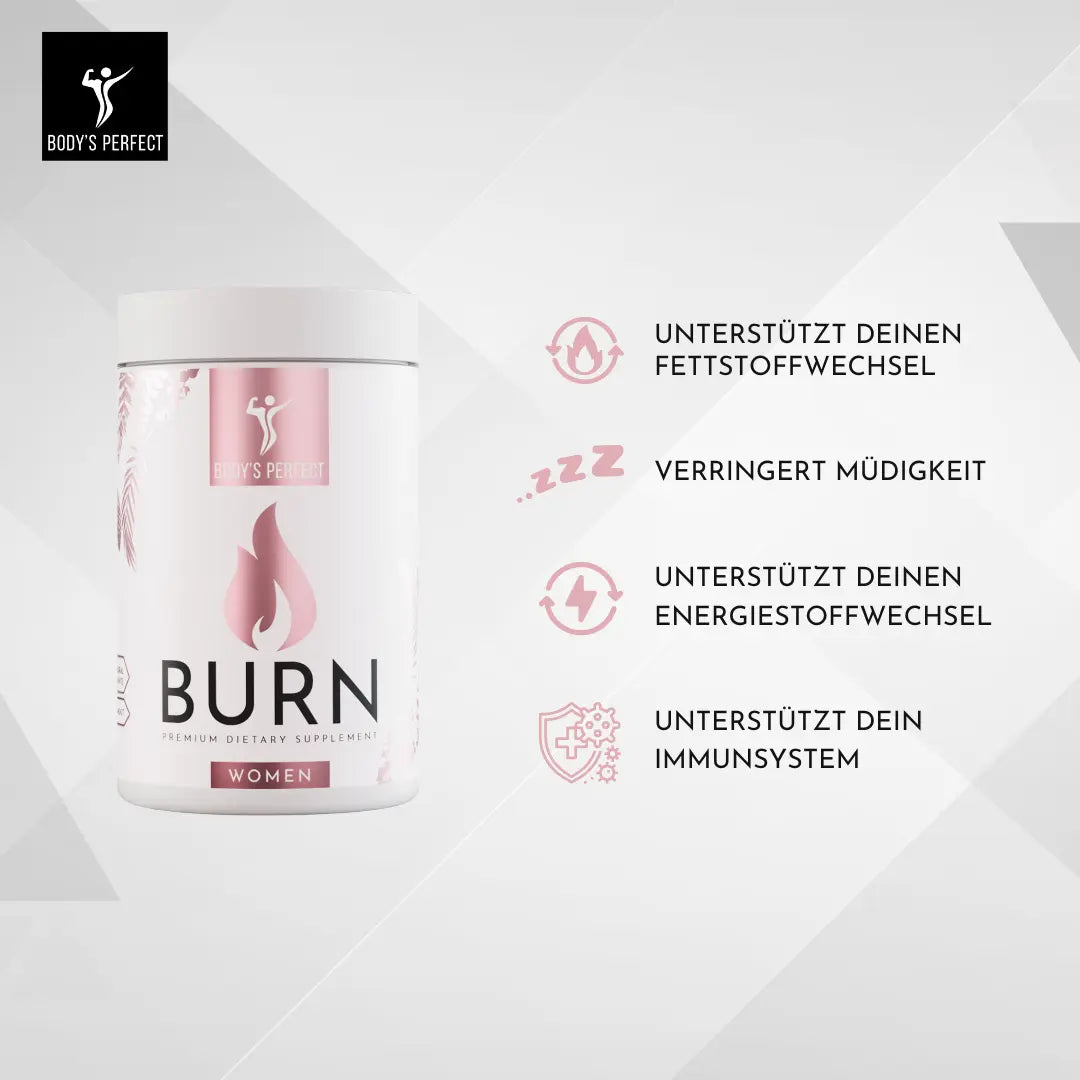
To achieve your goals even more effectively, targeted support for your metabolism can be beneficial. Products like those from BODY'S PERFECT are designed to naturally support your body and accelerate your weight loss success. Discover now how to perfectly combine healthy food and smart helpers.
1. Spinach
Spinach is a true powerhouse among vegetables and an absolute favorite in low-carb diets. With only about 1.4 grams of net carbohydrates per 100 grams, this green leafy vegetable is extremely versatile and nutrient-rich. It provides an impressive amount of vitamins such as vitamin K, vitamin A, and vitamin C, as well as important minerals like iron, magnesium, and potassium. These properties make it an ideal low-carb vegetable that optimally supports you in your goals for weight reduction and a healthy diet.
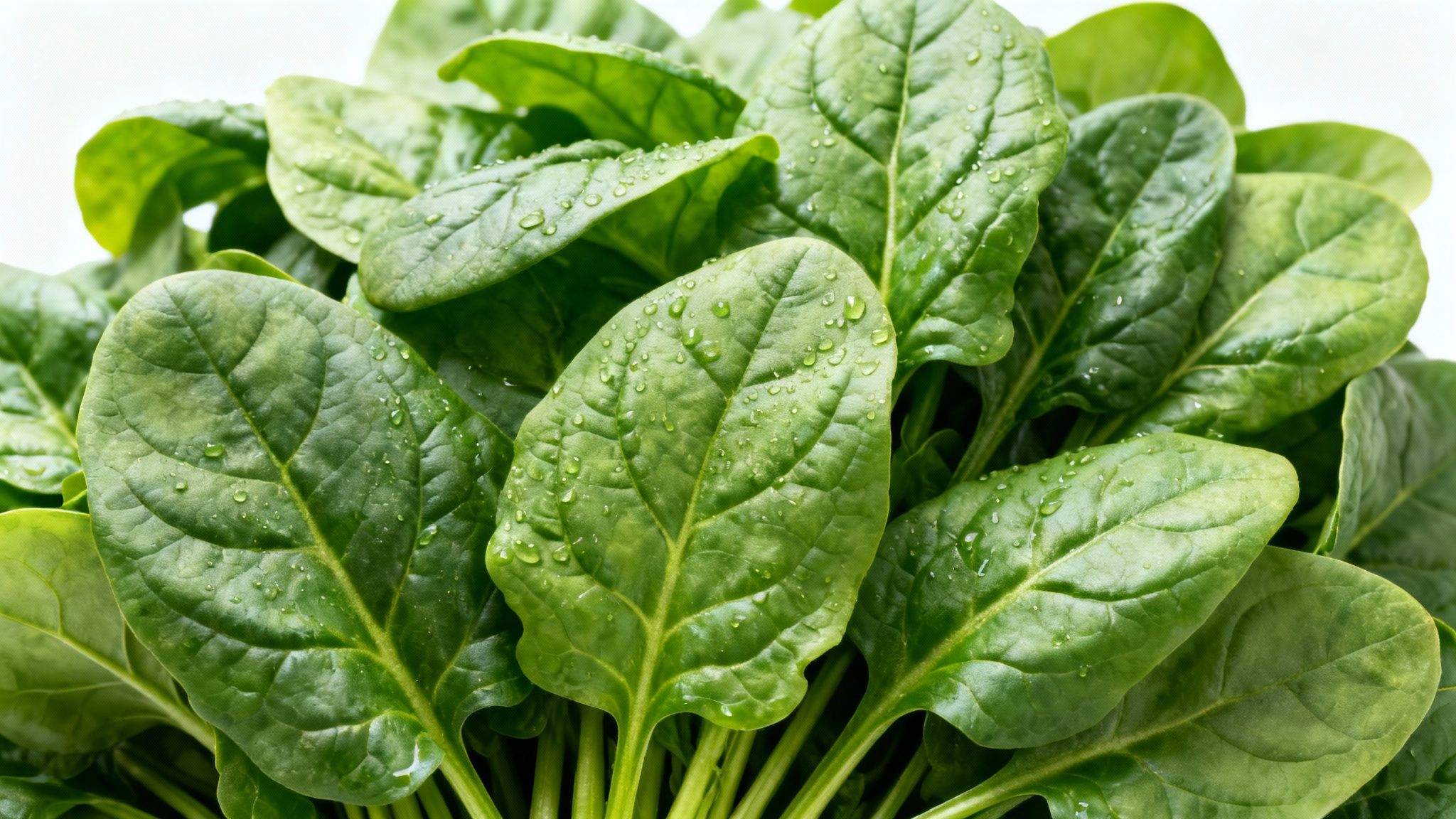
Why spinach is an excellent choice
Spinach's low carbohydrate density helps you feel full without significantly affecting your blood sugar levels. This makes it perfect for a ketogenic or low-carb diet. Its high water and fiber content also promotes digestion and ensures a long-lasting feeling of satiety. Knowing how to integrate such foods into your plan is crucial. If you want to learn more about how many carbohydrates are ideal for weight loss, you'll find valuable information here.
Versatile preparation ideas
Spinach can be effortlessly integrated into countless dishes. Its flexibility makes it an indispensable part of any kitchen.
- Quick Meals: An omelet with spinach and feta is a protein-rich breakfast that keeps you full for a long time.
- Healthy Side Dishes: Briefly sautéed in olive oil with a little garlic, it becomes the perfect side dish for fish or meat.
- Smoothies & Salads: For a nutrient boost, you can add raw baby spinach to smoothies or salads.
- Classic Dishes: Creamed spinach with a fried egg is a quick and satisfying low-carb lunch.
Practical tips for everyday life
To get the most out of spinach, follow these simple tricks:
- Improve iron absorption: Combine spinach with vitamin C-rich foods like bell peppers or a squeeze of lemon juice.
- Protect nutrients: Sauté spinach only briefly or steam it to preserve heat-sensitive vitamins.
- Fresh or frozen: Frozen spinach is a great alternative. It is often flash-frozen immediately after harvest, retaining almost all nutrients.
2. Zucchini
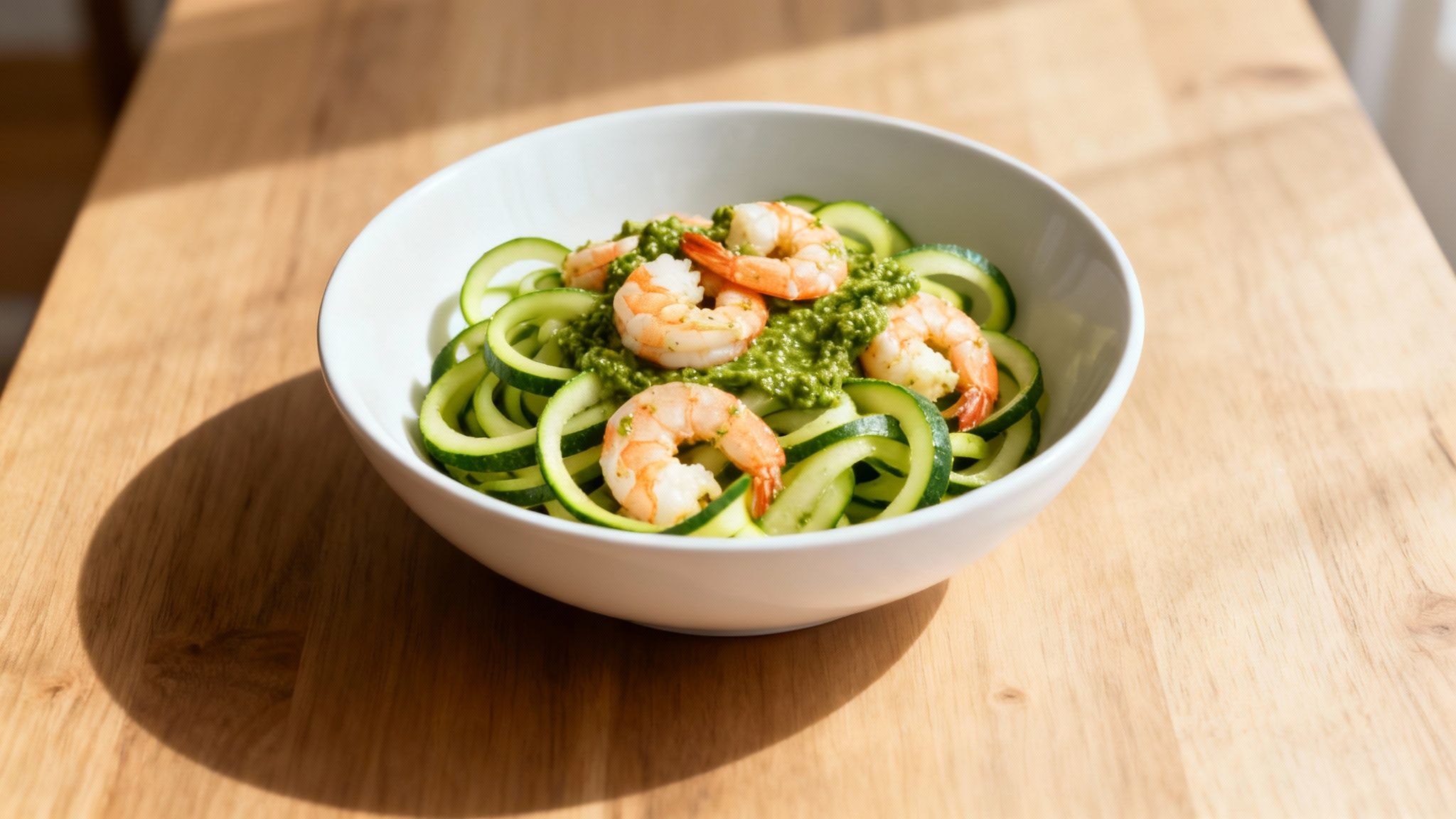
Zucchini, a popular summer squash, is a superstar in low-carb cooking. With only about 2.1 grams of net carbohydrates per 100 grams, it is not only extremely low in calories but also incredibly versatile. It provides valuable nutrients like potassium and vitamin C and is rich in water, which makes it particularly light and refreshing. Its mild flavor and firm texture make it an ideal low-carb vegetable, perfect as a substitute for pasta, potatoes, or bread.
Why zucchini is an excellent choice
The low carbohydrate content of zucchini stabilizes blood sugar levels, optimally supporting your weight loss goals without sacrificing enjoyment. Thanks to its high water content, it provides good satiety and helps you stay hydrated. Its ability to absorb sauces and flavors allows it to be integrated into almost any dish, making it an indispensable aid for creative and figure-conscious eating.
Versatile preparation ideas
Zucchini is a culinary chameleon. Hardly any other vegetable can be prepared in so many different ways and used as a low-carb substitute.
- Pasta Alternative: Processed into "zoodles" with a spiralizer, they are a fantastic substitute for noodles. Try them with pesto and shrimp.
- Hearty Main Courses: As stuffed zucchini boats baked with ground meat and cheese, they become a satisfying meal.
- Healthy Side Dishes: Sliced and grilled or fried with herbs and olive oil, they pair perfectly with meat and fish.
- Creative Substitutes: Zucchini lasagna, where thin zucchini slices replace pasta sheets, or crispy zucchini fritters are delicious alternatives to classics.
Practical tips for everyday life
With these simple tricks, you'll get the most out of your zucchini:
- Avoid watering: Lightly salt the zoodles before cooking and pat them dry with a paper towel after a few minutes to remove excess water.
- Cook until al dente: Cook or fry zoodles for only 2-3 minutes to keep them nice and firm and prevent them from getting mushy.
- Easy filling: Larger zucchinis are excellent for hollowing out and stuffing for a complete low-carb meal.
- Enjoy raw: Grated zucchini adds a fresh, crisp note and additional nutrients to salads.
3. Cauliflower
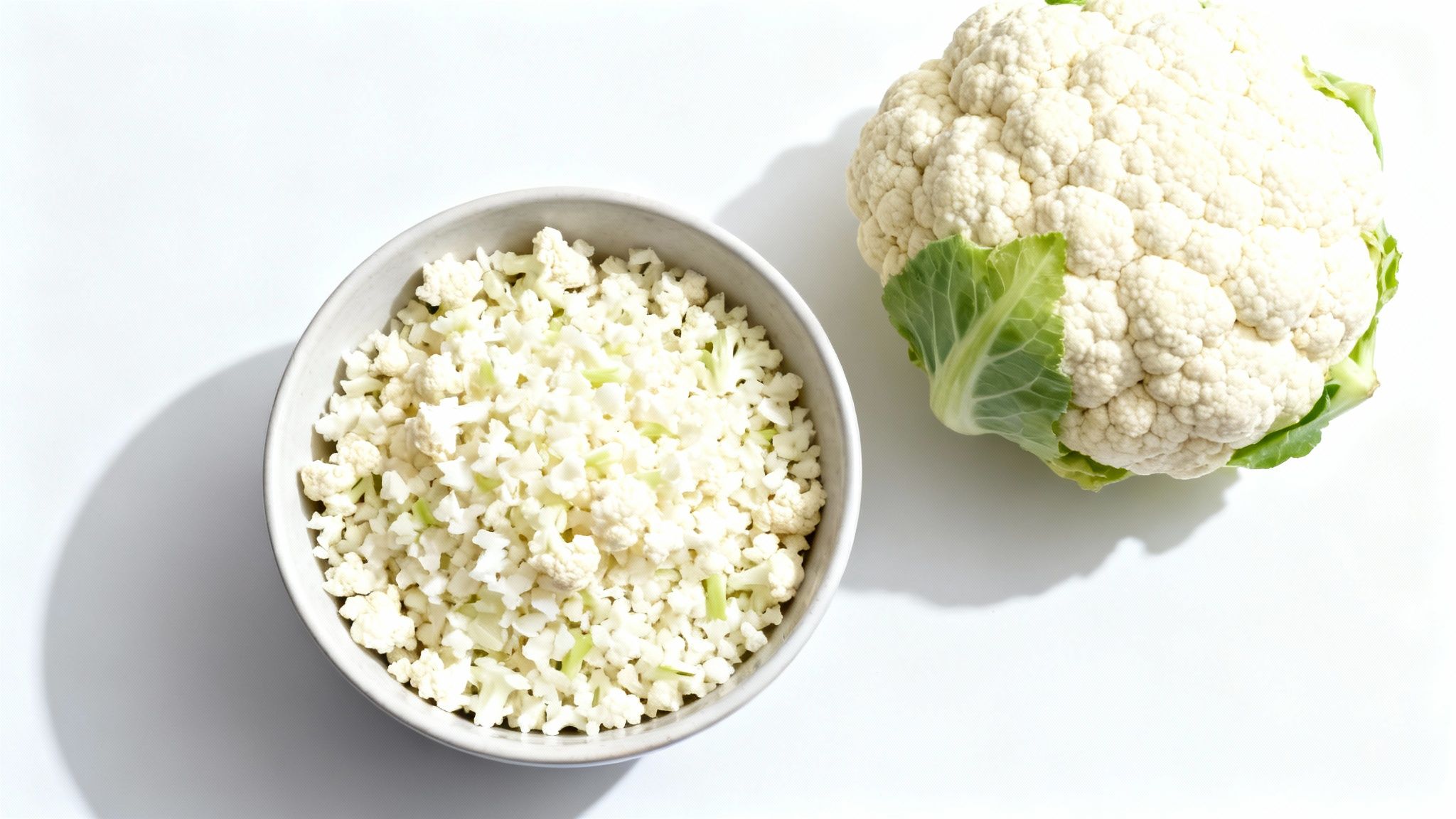
Cauliflower has evolved from a simple side dish vegetable to a true superstar in low-carb cuisine. With only about 2.9 grams of net carbohydrates per 100 grams, this cruciferous vegetable is incredibly versatile. Its mild, slightly nutty flavor and unique texture allow it to replace calorie and carb-heavy classics like rice, mashed potatoes, or even pizza dough. This makes it the perfect low-carb vegetable for anyone looking to lose weight or simply eat more consciously without sacrificing enjoyment.
Why cauliflower is an excellent choice
Cauliflower's rise is no coincidence. Thanks to its popularity in the keto and Whole30 communities, it is more versatile than ever today. It is not only low in carbohydrates but also rich in fiber, vitamin C, and vitamin K. These nutrients support your feeling of fullness and your overall health. Due to its low glycemic index, it helps to keep blood sugar levels stable. If you want to know how such foods affect your metabolism, learn more about foods that stimulate metabolism here.
Versatile preparation ideas
Cauliflower's true strength lies in its versatility. It adapts to almost any taste and can be easily integrated into your favorite dishes.
- Side dish substitute: As "cauliflower rice" or creamy puree with butter and garlic, it skillfully replaces its carbohydrate-rich counterparts.
- Main courses: A low-carb pizza crust made from cauliflower is a delicious and healthy alternative.
- Snacks & Appetizers: Spicy "Buffalo Cauliflower Wings" from the oven are the perfect snack for a movie night.
- Comfort Food: A creamy cauliflower gratin or "Mac and Cheese" proves that low-carb eating does not mean deprivation.
Practical tips for everyday life
With these simple tricks, you'll get the most out of your cauliflower:
- Perfect cauliflower rice: Pulse raw cauliflower briefly in a blender so it doesn't get too fine. After cooking, squeeze well to remove excess moisture.
- Maximum flavor: Roast cauliflower florets at a high temperature (approx. 220°C/425°F) in the oven. This makes them wonderfully nutty and slightly crispy.
- Season for more flavor: Cauliflower loves spices. Give it an exciting touch with turmeric, paprika, or curry powder.
- Use frozen produce: Frozen cauliflower is a practical alternative. Let it thaw completely and drain well before processing.
4. Broccoli
Broccoli is an absolute superfood and a cornerstone for anyone looking to eat a low-carb diet. With only about 4 grams of net carbohydrates per 100 grams, this cruciferous vegetable is not only low in calories but also incredibly nutrient-rich. It provides important vitamins such as vitamin C and K, as well as folic acid, and is an excellent source of fiber. This combination makes broccoli a perfect low-carb vegetable that effectively supports your health and fitness goals.
Why broccoli is an excellent choice
Broccoli's low carbohydrate content ensures that your blood sugar levels remain stable, which prevents cravings and promotes fat burning. The fiber it contains provides long-lasting satiety and supports healthy digestion, which is particularly important if you want to lose weight. Broccoli also contains secondary plant compounds like sulforaphane, which are attributed numerous health-promoting properties. It is therefore not only a low-carb star but also a true powerhouse for your well-being.
Versatile preparation ideas
Broccoli is extremely versatile and adapts to many tastes. Whether as a main dish or a side, it can be prepared easily and deliciously.
- Creamy Soups: A broccoli cheddar soup with cream is a filling and warming dish for cold days.
- Crunchy Side Dishes: Roasted in a pan with parmesan and almonds, broccoli becomes a delicious side dish for meat and fish.
- Hearty Salads: A broccoli salad with bacon and a creamy dressing is a great meal that keeps you full for a long time.
- Clever Alternatives: Finely chopped and briefly fried, broccoli becomes "broccoli rice," a fantastic low-carb alternative to traditional rice.
Practical tips for everyday life
With these tips, you'll get the most out of your broccoli:
- Preserve nutrients: Steam broccoli briefly for 3-4 minutes. This keeps it crunchy and retains its valuable vitamins.
- No waste: The stems are just as edible and nutritious as the florets. Simply peel and use them too.
- Enhance flavors: Combine broccoli with garlic, a squeeze of lemon juice, and high-quality olive oil for a more intense flavor.
- Enjoy raw: Fresh broccoli florets are also great as a raw snack with a light herb dip.
5. Cucumber
The cucumber is the epitome of freshness and lightness and is an absolute must in a low-carb diet. With only about 1.8 grams of net carbohydrates per 100 grams, it is extremely low in calories. Its high water content of over 95% makes it an ideal thirst quencher and helper for hydration. In addition to water, it also provides important nutrients such as vitamin K and potassium. These properties make cucumber a perfect low-carb vegetable that refreshes you, satisfies you, and supports a healthy lifestyle.
Why cucumber is an excellent choice
The incredibly low carbohydrate and calorie content of cucumber makes it an optimal food for weight management. It fills the stomach without burdening the calorie count and helps prevent cravings. Its refreshing taste and crisp texture add variety to your meal plan. Integrating such clever foods is an important step on the path to a healthier you. If you are looking for more inspiration, you will find valuable tips on healthy habits for losing weight here.
Versatile preparation ideas
Cucumber is far more than just a simple salad ingredient. Its versatility makes it a true all-rounder in low-carb cuisine.
- Refreshing Snacks: Cucumber rolls with cream cheese and salmon are a quick, elegant, and protein-rich snack.
- Creative Side Dishes: With a spiralizer, you can quickly prepare cucumber spaghetti as a light noodle alternative.
- Dips & Sauces: Homemade tzatziki made from grated cucumber, Greek yogurt, and garlic is the perfect dip for vegetable sticks.
- Drinks & Soups: Infused cucumber mint water provides hydration, while a cold gazpacho cools on hot days.
Practical tips for everyday life
With these simple tricks, you can get the most out of cucumber:
- Eat the peel: Buy organic cucumbers and eat the peel, as most vitamins and fiber are directly under it.
- Crunchy Salads: Sprinkle sliced cucumbers with a little salt and let them sit for a short time. This draws out water and makes them extra crunchy.
- Healthy Bread Substitute: Use thick cucumber slices as a base for mini sandwiches or canapés – a brilliant low-carb idea.
- Chip Alternative: Slice the cucumber into very thin slices and season them generously. This creates a refreshing and healthy snack.
6. Asparagus
Asparagus is not only a culinary highlight in spring but also a real ace in low-carb cuisine. With just 2 grams of net carbohydrates per 100 grams, this noble vegetable is ideal for conscious eating. It is particularly rich in folic acid, vitamin K, and various B vitamins. Its diuretic properties, attributed to the amino acid asparagine, can support the body in natural detoxification. This makes asparagus a perfect low-carb vegetable that elegantly combines enjoyment and health benefits.
Why asparagus is an excellent choice
The extremely low carbohydrate content of asparagus ensures that you can enjoy it without concern, without stressing your blood sugar levels. This makes it an excellent ingredient for any carbohydrate-reduced diet. Rich in fiber and water, asparagus also promotes a lasting feeling of fullness and supports healthy digestion. These properties help you achieve your nutritional goals while feeling good.
Versatile preparation ideas
Whether green or white, asparagus can be prepared in many ways and suits almost any occasion.
- Hearty Snacks: Asparagus wrapped in Parma ham, baked until crispy in the oven, is an irresistible low-carb snack.
- Classic Dishes: Boiled asparagus with a poached egg and a light hollandaise sauce is a classic that always delights.
- From the Grill: Refined with olive oil and sea salt and grilled briefly, asparagus unfolds its full aroma.
- Light Meals: A creamy asparagus soup or a hearty asparagus frittata is perfect for a quick lunch or brunch.
Practical tips for everyday life
With these simple tricks, you'll always prepare asparagus perfectly:
- Freshness Test: Simply snap off the woody ends where they naturally break. This effortlessly removes the tough part.
- Proper Storage: To keep it fresh, you can wrap asparagus in a damp cloth or store it upright in a glass of water in the refrigerator.
- Easy Peeling: Green asparagus often only needs to be peeled in the lower third, while white asparagus should be peeled completely.
- Perfect Roasting Aroma: For an especially tasty side dish, roast asparagus at 200 °C (390 °F) for about 12-15 minutes in the oven.
7. Kale
Kale, often celebrated as a superfood, is a fantastic choice for a low-carb diet. With only about 2.4 grams of net carbohydrates per 100 grams (from 4.4g total carbohydrates and 2g fiber), it is one of the most nutrient-dense vegetables available. It is rich in vitamin K, vitamin C, vitamin A, and antioxidants. This impressive combination of nutrients makes kale a valuable low-carb vegetable that strengthens your body and fits ideally into a health-conscious lifestyle.
Why kale is an excellent choice
The low carbohydrate content, combined with plenty of fiber, ensures stable blood sugar levels and a long-lasting feeling of fullness, which helps you lose weight. Additionally, kale is an excellent source of the trace element selenium, which is important for thyroid function and protecting cells from oxidative stress. If you want to learn more about the importance of this nutrient, you can find more information here about foods with selenium that can enrich your diet.
Versatile Preparation Ideas
Kale is much more than just a traditional side dish. Its robust structure makes it versatile in modern cuisine.
- Healthy Snacks: Homemade kale chips, baked crispy in the oven, are a tasty and healthy alternative to potato chips.
- Nutrient-Rich Smoothies: A kale smoothie with berries and avocado starts your day with a powerful boost of vitamins.
- Modern Side Dishes: Briefly sautéed with garlic and chili in olive oil, it becomes a flavorful and quick side dish.
- Creative Salads: Massage raw kale with a lemon dressing to make it more tender and create a refreshing salad.
Practical Tips for Everyday Use
Here's how to get the most out of your kale and make it even tastier:
- Make it tender: Remove the thick, central rib, as it can often be tough and bitter.
- Reduce bitterness: Massage the raw leaves with a little olive oil and salt for a few minutes before preparing.
- Better digestibility: A quick blanching before further processing makes the kale easier to digest.
- Balance the flavor: Combine it with acidic (lemon, vinegar) or sweet (berries, apple) components to perfectly round off its strong aroma.
8. Paprika (Bell Peppers)
Bell peppers are a true all-rounder in low-carb cuisine, bringing color, flavor, and valuable nutrients to the plate. With only about 3.9 to 4.6 grams of net carbohydrates per 100 grams, depending on the color, they are a fantastic low-carb vegetable. Their exceptionally high vitamin C content – especially in red bell peppers – is particularly noteworthy, strengthening your immune system. In addition, bell peppers provide a good portion of vitamin A and important antioxidants that protect the body from free radicals.
Why Bell Peppers Are an Excellent Choice
Their crunchy texture and sweet taste make bell peppers a versatile companion that is convincing both raw and cooked. Their low carbohydrate content ensures that you can enjoy them without significantly affecting your blood sugar levels, making them ideal for a ketogenic or low-carb diet. The high water content also contributes to hydration and supports a long-lasting feeling of fullness. For a balanced diet, it's also important to incorporate the right fats. If you want to understand why this is the case, you can find out more here about the differences between saturated and unsaturated fatty acids.
The following bar chart clearly shows the carbohydrate content of different bell pepper varieties.
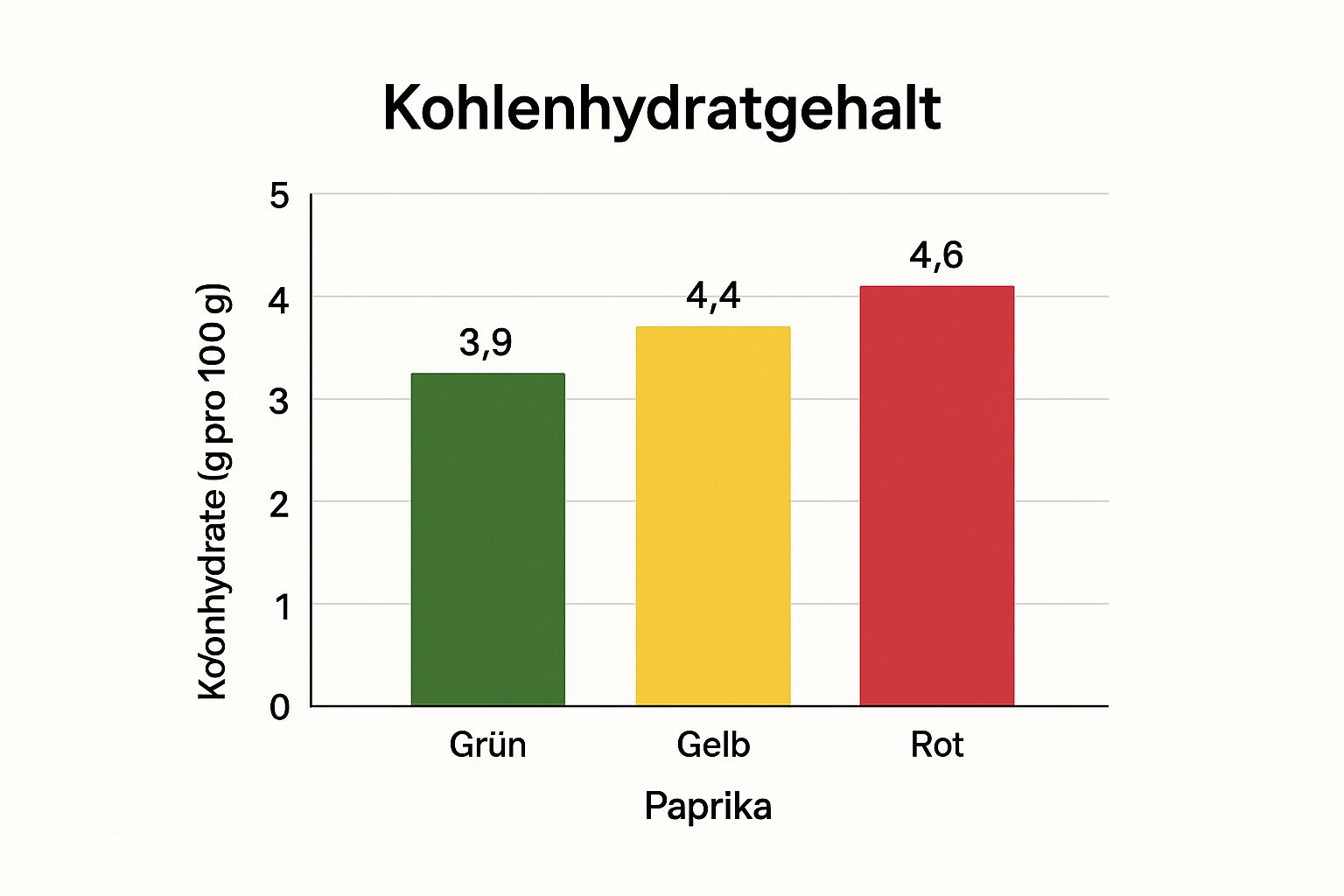
As the graphic illustrates, the carbohydrate content increases with ripeness, which is why sweeter red bell peppers have slightly more carbohydrates than the more tart green ones.
Versatile Preparation Ideas
Bell peppers can be easily incorporated into your meal plan and visually and tastefully enhance any dish.
- Hearty Main Courses: Stuffed bell peppers baked with ground meat and cheese are a low-carb classic that is filling and delicious.
- Crunchy Snack: Bell pepper strips are a perfect, healthy substitute for chips and go wonderfully with dips like guacamole or herb quark.
- Aromatic Side Dish: Grilled bell peppers with a light balsamic glaze are a delicious side dish for meat, fish, or halloumi.
- Creative Breakfast Ideas: A bell pepper shakshuka with poached eggs provides a protein-rich and colorful start to the day.
Practical Tips for Everyday Use
With these simple tricks, you can get the most out of bell peppers:
- Sweetness & Ripeness: Red and yellow bell peppers are riper and sweeter, green bell peppers have a more tart taste. Choose according to your preference and dish.
- Intense Flavor: Roast bell peppers in the oven until the skin turns black. Then, they can be easily peeled, and the flesh will have an intense, smoky aroma.
- Use as a container: Halve bell peppers and use them as edible shells for ground meat, scrambled eggs, or vegetable fillings.
- Freezing & Shelf Life: You can easily freeze bell peppers. Cut them into strips or cubes and blanch them briefly to preserve color and vitamins.
8 Low-Carb Vegetables in Comparison
| Vegetable | Implementation Complexity 🔄 | Resource Requirements ⚡ | Expected Results 📊 | Ideal Use Cases 💡 | Main Benefits ⭐ |
|---|---|---|---|---|---|
| Spinach | Low - raw or cooked | Low - water, heat | High nutrient density, Vitamin K bomb | Ketogenic & Low-Carb diets | Versatile, mild, long shelf life |
| Zucchini | Very low - quickly prepared | Very low - minimal preparation | Light, low-calorie, versatile | Pasta substitute, Keto, gluten-free | Quick preparation, neutral taste |
| Cauliflower | Medium - diverse preparation methods | Medium - pureeing, roasting | Versatile substitute (rice, mash) | Low-carb all-rounder, Paleo, Keto | Versatile, neutral taste, nutrient-rich |
| Broccoli | Medium – steaming recommended | Medium - steaming, frying | Immune system strengthening, cancer preventive | Anti-cancer, immune support, diabetics | High Vitamin C/K, protein-rich |
| Cucumber | Very low - eat raw | Very low - no preparation | Hydration, low-calorie | Hydration, snacks, detox | Very low-calorie, refreshing |
| Asparagus | Medium - peeling & cooking | Medium - seasonal | Detoxification, blood sugar control | Detoxification, pregnancy, gourmet | Diuretic, high folate content |
| Kale | Medium - prepare leaves | Medium - blanching/massaging | Nutrient maximization, anti-aging | Vegan Low-Carb, heart health | Extremely nutrient-rich, antioxidant |
| Bell Pepper | Low - raw or cooked | Low - no special effort | Immune strengthening, Vitamin C boost | Mediterranean cuisine, meal prep | Rich in Vitamin C, versatile in colors |
Your Next Step: How to Smartly Integrate Low-Carb Vegetables into Your Weight Loss Plan
You now have an impressive list that shows you how diverse and tasty low-carb vegetables can be. From crunchy bell peppers to creamy zucchini, to nutrient-rich spinach and kale – the possibilities are almost endless and anything but boring. The crucial point is that a successful dietary change is not based on deprivation, but on smart substitutions and enjoyment.
The true strength of these vegetables lies in their flexibility. They are not just side dishes but can take on leading roles in your kitchen. Cauliflower becomes pizza crust, zucchini becomes pasta, and cucumbers become refreshing, filling snacks. This change in perspective is key to keeping your meals exciting and preventing cravings for carbohydrate-rich foods from even arising.
From Theory to Practice: Your Personal Low-Carb Strategy
The path to success begins with small but consistent steps. Instead of overhauling your entire diet overnight, focus on gradual improvements. Here are three concrete approaches you can implement immediately:
- The "One-Meal-a-Day" Approach: Choose one meal each day where you specifically replace a high-carb side dish like pasta, rice, or potatoes with one of the vegetables presented. For example, start by consistently making your dinner low-carb.
- Preparation is Everything (Meal Prep): Use a weekend day to prepare your vegetables. Wash and cut bell peppers, broccoli, and cucumbers and store them in airtight containers in the refrigerator. This way, you always have a healthy snack or a quick ingredient for your meals ready.
- Focus on Satiety and Nutrients: Make sure to combine your low-carb vegetables with high-quality protein sources (like chicken, fish, or tofu) and healthy fats (like avocado or olive oil). This combination ensures long-lasting satiety and provides your body with everything it needs.
Maximize Your Success with Targeted Support
A nutrient-rich diet based on low-carb vegetables is the perfect foundation for your weight loss goals. But every body is unique. Sometimes, metabolism needs targeted support to run at full speed and effectively promote fat loss. If you want to accelerate your progress and give your body an extra boost, natural helpers can make all the difference.
A well-thought-out diet plan is the foundation. However, targeted support for your individual metabolism can be the key to overcoming plateaus and reaching your goals faster.
By putting this knowledge into action now, you are laying the groundwork for sustainable change. It's not about a short-term diet, but about a long-term, healthy lifestyle that gives you energy, boosts your well-being, and helps you reach and maintain your desired weight.
Are you ready to specifically support your metabolism and take your weight loss journey to the next level? Discover at BODY'S PERFECT how you can optimally supplement your healthy diet with scientifically sound, natural supplements to achieve your goals even more effectively. Find the perfect support for your journey now at BODY'S PERFECT





















Share:
Naturally Regulate Female Hormones and Find Balance
Top 8 Low-Calorie Filling Foods for Successful Weight Loss