


"How many carbs per day to lose weight?" – this is probably one of the first questions you ask yourself when you want to shed some pounds. Unfortunately, there isn't a universally applicable number, but as a rough rule of thumb, a range between 50 and 150 grams per day has proven effective. This will encourage your body to burn fat without leaving you without energy for daily life.
The Right Carbohydrate Approach for Your Weight Loss Success
Navigating the jungle of dietary advice can be quite frustrating. Low-carb here, keto there – but what's really right for you? It's not about completely eliminating carbohydrates. The trick is to find the right amount and, most importantly, the right sources that suit your body and your life.
Your journey begins with understanding the different strategies. Too drastic a reduction can quickly kill your motivation, while too many carbohydrates can hinder your progress. Ultimately, it's about balance.
Three Proven Approaches at a Glance
So you don't lose track, I've divided the most common methods into three clear categories. Each approach has a different goal and is suitable for different needs.
- Moderate (100–150 g/day): Perfect for beginners or if you exercise regularly. Here, you still have enough room for complex carbohydrates from whole grains, legumes, or fruit. You won't feel as restricted.
- Low-Carb (50–100 g/day): Here you tighten the reins a bit more. This often leads to quicker results on the scale. The focus is clearly on vegetables, high-quality protein, and healthy fats.
- Ketogenic (< 50 g/day): This is the strictest variant. The goal is to get the body into a state called ketosis, where it uses fat as its primary energy source. This approach requires a lot of discipline and good planning.
Ultimately, it's not just about the grams, but how you feel. Listen to your body: What amount gives you power and at the same time helps you achieve your goals? That's your personal sweet spot.
To make it even more tangible, I've summarized the three approaches in a small table for you.
Overview of Common Carbohydrate Amounts for Weight Loss
This table gives you a quick overview of the three most proven approaches to reducing carbohydrates and for whom they are suitable.
| Approach | Carbohydrates per day | Ideal for |
|---|---|---|
| Moderate | 100–150 grams | Active people and beginners looking for a flexible and sustainable method. |
| Classic Low-Carb | 50–100 grams | Anyone who wants to see faster results and is willing to largely forgo bread, pasta & co. |
| Ketogenic (Keto) | < 50 grams | People who aim for a very structured and disciplined diet to maximize fat burning. |
I hope this overview helps you find an initial direction for yourself.
The following infographic visually illustrates these three paths once again. This often helps to get a better feel for the differences.
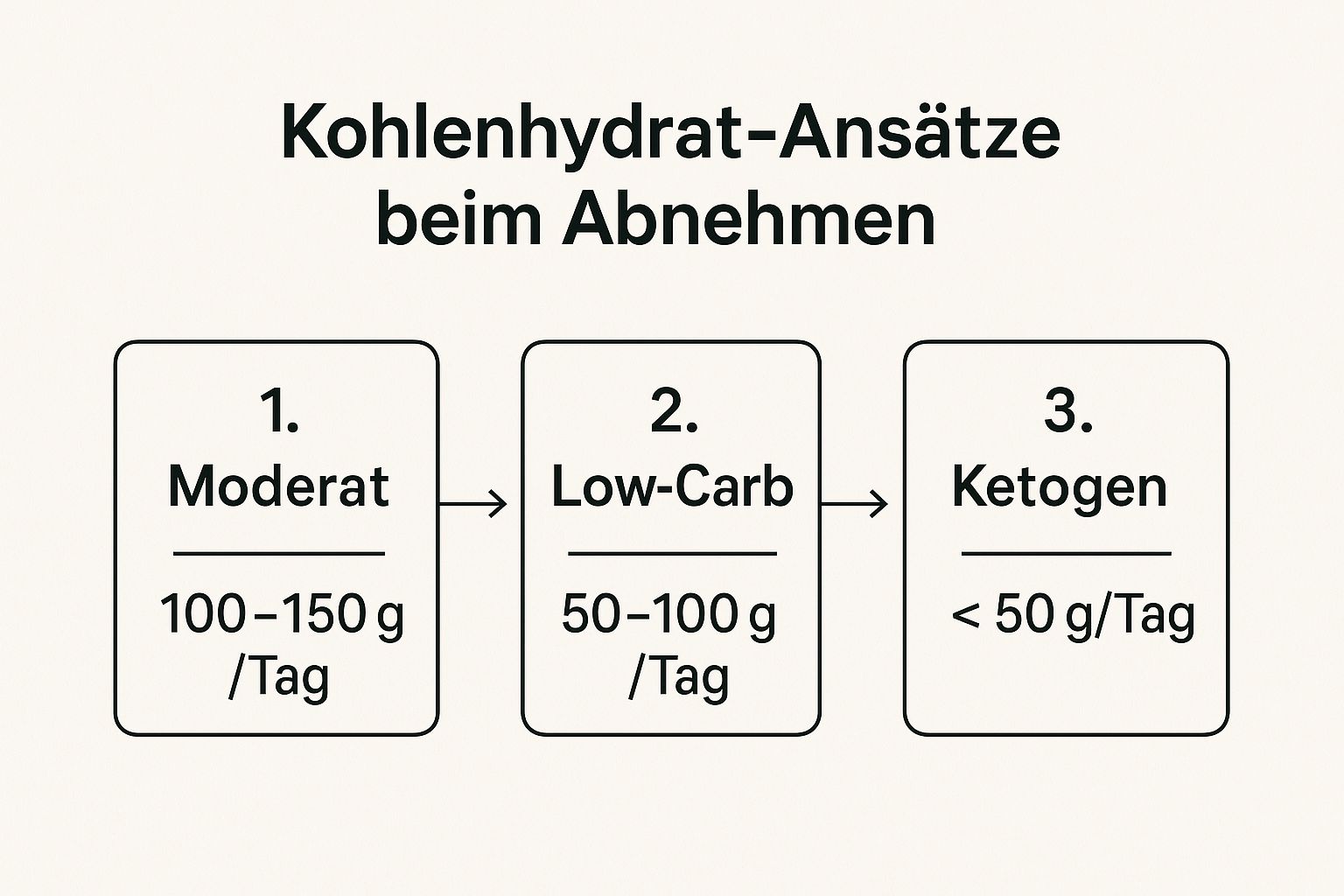
As you can see, there's quite a bit of leeway. You don't have to give up everything overnight; you can choose the path that suits you best.
Incidentally, general nutritional science also provides recommendations here. Experts in Germany often advise that 40 to 50 percent of daily calories should come from carbohydrates. For an average requirement of 2000 calories, this would be 200 to 250 grams. This can also be a good, sustainable approach, as long as you maintain a calorie deficit at the same time. If you want to delve deeper into the matter, you can find good basics on weight loss with carbohydrates on oviva.com.
Calculating Your Personal Carbohydrate Needs

Forget all those blanket recommendations that don't fit your life at all. Your body is unique and has its own specific needs. Your age, your weight, and especially your daily activity – all of this plays a huge role. The question "How many carbs per day to lose weight?" can therefore only be answered once you know your personal numbers.
The very first and most important step is always to determine your total calorie needs. This is made up of your basal metabolic rate and your active metabolic rate. It might sound complicated at first, but it's absolutely not.
Understanding Basal Metabolic Rate and Activity Level
Your basal metabolic rate is the energy your body consumes when you're just lying down and doing absolutely nothing. Think of it as your body's "operating costs." Factors like age, gender, height, and weight determine this number.
On top of that comes your active metabolic rate. This is the energy for everything you do: working, exercising, walking. Clearly, someone with an office job consumes less energy than someone who works on a construction site. To account for this, there's the PAL value (Physical Activity Level).
Your individual calorie requirement is the foundation for your weight loss success. Only when you know how much energy your body truly needs can you set a meaningful calorie deficit and derive your carbohydrate intake from it.
The combination of your basal metabolic rate and PAL value results in your total daily calorie requirement. If you want to calculate this value precisely for yourself, it's best to check out our detailed guide on calculating your total energy needs.
A Concrete Calculation Example from Practice
Let's make it tangible. Let's take a 35-year-old woman as an example. She is 1.70 m tall, weighs 75 kg, and works in an office. To stay fit, she goes to the gym three times a week for an hour.
- Basal metabolic rate: Using a common formula, we arrive at a basal metabolic rate of approximately 1,500 kcal for her.
- PAL value: Due to her office job and moderate exercise, we can assume a PAL factor of approximately 1.6.
- Total calorie requirement: 1,500 kcal (basal metabolic rate) x 1.6 (PAL factor) = 2,400 kcal.
She wants to lose weight, so she aims for a moderate calorie deficit of about 500 kcal per day. This means she should consume around 1,900 kcal daily.
Now it gets interesting: From this value, we derive her personal carbohydrate amount. We opt for a moderate low-carb approach, where about 30% of daily calories should come from carbohydrates.
- Carbohydrate calories: 1,900 kcal x 0.30 = 570 kcal.
One gram of carbohydrates has approximately 4 kcal. So we simply divide this value by four.
- Carbohydrate amount in grams: 570 kcal / 4 kcal/g = approx. 142 grams.
Perfect! These 142 grams are her personal guideline for carbohydrates per day to lose weight effectively.
Incidentally, this value is significantly lower than what is typically consumed. Data from Germany shows that women consume an average of about 230 grams and men even 300 grams of carbohydrates, although these values vary greatly depending on activity.
With this calculation, you have a fantastic starting point. But don't see this number as a law carved in stone. It's more of a flexible guideline that you can and should always adjust to your well-being and progress.
Choosing the Right Carbohydrates for Your Success

Great, you now have your personal guideline for daily carbohydrate intake. But now comes the truly crucial part, where the wheat is separated from the chaff: It's not just about the pure gram count, but primarily about the quality of your carbs.
The wrong carbohydrates can send your blood sugar on a wild roller coaster ride and provoke cravings out of nowhere. That's exactly what you want to avoid, of course.
Think of carbohydrates as fuel for your car. You can fill it with cheap gasoline that makes the engine sputter, or you can treat it to high-quality fuel for clean, long-lasting performance. It's exactly the same with your body.
Your Foundation: Complex Carbohydrates
Your first choice should always be complex carbohydrates. You'll find them in foods like whole grains, oats, quinoa, legumes, and starchy vegetables such as sweet potatoes. Their huge advantage is that your body breaks them down and digests them slowly.
For you, this has several positive effects:
- Stable blood sugar: This spares you the dreaded energy dips and sudden hunger pangs.
- Long-lasting satiety: The fiber they contain ensures you feel full and satisfied for longer.
- Important nutrients: You also supply your body with valuable vitamins, minerals, and fiber.
The exact opposite are simple carbohydrates. These include sugar, white flour products like white bread or white pasta, sweets, and sugary drinks. They shoot into the blood, causing your blood sugar to spike and then fall sharply. The result? Usually new hunger.
The key is to view simple carbohydrates as a rare exception, not as a main component of your meals. Focus on nutrient-dense foods that truly nourish you and support your body in losing weight.
To help you make the right decisions at the supermarket and at home, I've provided a clear comparison for you here.
Good vs. Bad Carbs at a Glance
This table shows you which carbohydrate-rich foods will help you lose weight and which you should avoid.
| Food Group | Better Choice (Complex Carbohydrates) | Better to Avoid (Simple Carbohydrates) |
|---|---|---|
| Grains | Whole-wheat bread, oats, quinoa, brown rice, lentil or chickpea pasta | White bread, white pasta, croissants, sweetened cereals, white rice |
| Vegetables | Sweet potatoes, pumpkin, parsnips, peas, corn, beans, lentils | Highly processed products like potato chips or French fries |
| Fruits | Berries, apples, oranges, grapefruit (enjoy in moderation) | Canned fruit in syrup, sweetened fruit juices, large quantities of dried fruit |
| Snacks | Roasted chickpeas, nuts, vegetable sticks with hummus | Chocolate bars, cookies, gummy bears, chips, pastries |
As you can see, even a simple swap in your daily routine can make a huge difference. For example, try lentil pasta instead of classic wheat pasta, or reach for roasted chickpeas when you're craving a snack.
This is how you lay the foundation for sustainably healthy habits. To find even more inspiration, check out our article on which foods help with weight loss – there you'll find many more great ideas for your meal plan.
How to Make Low Carb Work in a Hectic Daily Routine

Theory is one thing, practice is another. You now know how to calculate your carbohydrate needs, but how do you integrate all of that into a busy daily routine? This is precisely where most good intentions fail, between canteen food, quick dinners, and invitations from friends.
But don't worry, it doesn't have to be that way. It's not about making your life more complicated, but about developing clever routines that give you peace of mind.
The question "How many carbs per day to lose weight?" is the starting point. Implementation determines success. In German-speaking countries, some guidelines have become established: Those who want to see quick results often adhere to a strict 20 to 50 grams per day. A more moderate approach, ideal for athletes or for a gentler start, is around 100 to 150 grams.
Quick Meals That Always Work
A good start to the day lays the groundwork for everything else. A filling, low-carb breakfast is golden, as it prevents the typical mid-morning craving. Scrambled eggs with some vegetables, Greek yogurt with a handful of berries and nuts, or a creamy protein shake are perfect options.
For lunch and dinner, you don't have to spend hours in the kitchen. Here are a few ideas that are really quick:
- The XXL Salad: The base is leafy greens, cucumber, and tomatoes. Add a solid protein source like chicken breast, tuna, feta, or boiled eggs. A complete meal is ready.
- The Quick Vegetable Stir-fry: Simply fry your favorite vegetables (broccoli, zucchini, mushrooms) with ground turkey or beef, season with soy sauce or herbs – this takes less than 15 minutes.
- Warming Soups: A creamy vegetable soup or a hearty broth is incredibly filling without overloading your carbohydrate count.
My tip from experience: Just cook a double portion in the evening. That way, you'll have a ready-made, healthy lunch the next day and won't even be tempted to grab a currywurst at the canteen. Meal prep is the magic word here!
What to Do When Cravings Hit?
Ah, the sudden craving for sweets – the final boss of every dietary change. Your body is used to sugar and needs some time to adjust. Instead of fighting it and torturing yourself, it's much smarter to have good alternatives ready.
Here are a few simple swaps that work wonders for me:
- Craving chocolate? Reach for a piece of dark chocolate (at least 85% cocoa) or a protein-rich snack.
- Craving chips? Roasted chickpeas, vegetable sticks with herb quark, or a small handful of nuts will satisfy the urge for something salty.
- Craving gummy bears? Fresh berries are a great alternative. Or try a sugar-free protein shake with fruit flavor.
Shakes, in particular, are a secret weapon when the craving for sweets becomes overwhelming. They provide valuable protein, are filling, and taste like a dessert.
Avoiding Common Mistakes and Breaking Plateaus
You started super motivated, the first few pounds melted away, but suddenly nothing is moving on the scale anymore? Welcome to the dreaded weight loss plateau. It's frustrating, no question, but absolutely no reason to throw in the towel. It's a completely normal part of the process – your body is smart and simply adapts to the new situation.
Often, it's small, unconscious mistakes that sabotage your progress. The good news is: If you know them, you can take targeted countermeasures and get your metabolism back on track. It's not about being even stricter with yourself, but simply about being smarter.
The Hidden Carbohydrate Traps
One of the most common reasons for stagnation is hidden carbohydrates. You meticulously pay attention to bread and pasta, but forget other sources that can secretly add up throughout the day.
- Drinks: Fruit juices, soft drinks, or the beloved latte macchiato with syrup can be real sugar bombs. They quickly provide a lot of carbohydrates without really satisfying.
- Ready meals and sauces: Many convenience foods, dressings, and barbecue sauces contain a lot of sugar to enhance the taste. A quick glance at the nutrition label will immediately expose these traps.
- "Healthy" snacks: Muesli bars or dried fruits sound great at first, but often contain concentrated sugar. Here, the quantity makes the poison.
So don't just pay attention to the obvious things. Often it's the small amounts that are spread throughout the day that ultimately make the difference.
The Right Balance of Macronutrients
If you focus solely on the question "How many carbs per day to lose weight?", you might overlook two other crucial players: proteins and fats. A common mistake is to drastically reduce the intake of these important nutrients in addition to carbohydrates.
Proteins are your best friend when it comes to losing weight. They keep you full for a long time and protect your valuable muscle mass. Healthy fats from sources like avocados, nuts, or good olive oil are also indispensable, for example, for your hormone production. If you cut back too much here, you risk cravings and a sluggish metabolism.
A weight loss plateau is often a sign from your body that it needs an adjustment. Instead of further reducing calories, try to optimize the composition of your meals. Sometimes a little more protein or a targeted "refeed day" with more carbohydrates works wonders to kickstart your metabolism again.
If you find that despite all your efforts you're not making progress, it's worth taking a closer look at the causes. In our article, you'll learn more about why you're not losing weight despite a calorie deficit and what deeper reasons might be behind it.
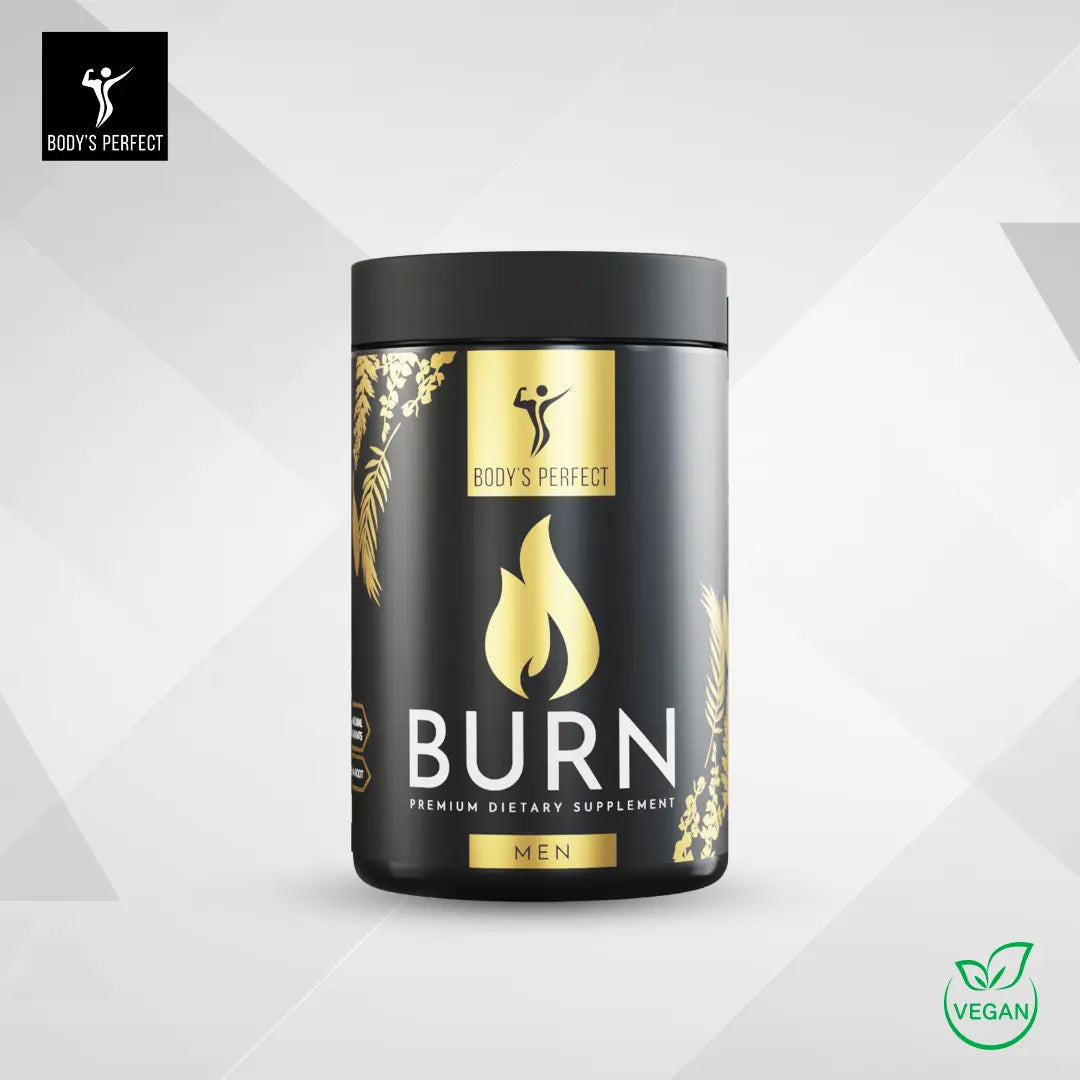
Sometimes your body also needs targeted support during such phases. Products like our Metabolism Capsules from bodysperfect.com have been developed precisely for this purpose. They contain natural ingredients that support your energy metabolism and can help you overcome such plateaus more easily. They can be a valuable supplement to give you that crucial boost and get back on track.
Frequently Asked Questions about Carbohydrates and Weight Loss
Finally, I want to address the questions I repeatedly get asked when it comes to carbohydrates and weight loss. Here are the answers, short and to the point, so you can start with a good feeling and full confidence.
Do I really have to avoid carbohydrates in the evening?
This is one of the most persistent myths that has lasted for years. The clear answer is: No, you don't. For your weight loss success, it's not the timing that matters, but your daily total calorie balance.
As long as you stay within your calorie deficit at the end of the day and don't exceed your calculated amount of carbs, you will lose weight. It doesn't matter at all whether the potatoes land on your plate at lunch or dinner.
Nevertheless, for some, focusing more on proteins and fats in the evening has an advantage. It keeps you full longer and ensures a more stable blood sugar level overnight, which can improve sleep. My tip: Just try out what feels best for you and your body.
Am I allowed to eat fruit at all? It has so much sugar in it!
Yes, absolutely! Fruit is an absolute powerhouse of vitamins, minerals, and important fiber. The fructose it contains is embedded in a fiber structure in its natural form – which makes it much less problematic for your body than isolated sugar from sweets.
Of course, it also depends on the amount. A handful of berries in quark or a crisp apple as a snack are great. However, you should avoid huge portions of very sweet fruits or fruit juices, as they will quickly spike your blood sugar.
Your body needs the nutrients from fresh fruit to stay healthy and function optimally. Cutting it out completely would be a mistake. Just enjoy it in moderation as an integral part of your diet.
What do I do if I’ve gone completely overboard with a meal?
First, breathe! It happens to all of us and is not the end of the world. A single meal that's a bit more lavish won't set you back weeks. The only crucial thing is how you react afterwards.
Don't see it as a failure, but simply as part of life. The next day, you continue eating according to your plan as if nothing had happened. Please don't try to compensate for the extra calories by starving yourself or exercising twice as much. That only leads to an unhealthy spiral of guilt and cravings.
Sometimes, however, a little support can be quite useful after such days. If you want to know how you can help your body cope better with larger amounts of carbohydrates, read our guide on carbohydrate blockers. You'll find some interesting information there.
If you want to give your body the best possible support on its way to your desired weight, discover the high-quality and natural products from BODY'S PERFECT. Our specially developed shakes and capsules are designed to support your metabolism and make losing weight easier for you – all "Made in Germany". Find the perfect companions for your goals now at https://bodysperfect.com.









































Share:
Protein Before or After Your Workout: What's Really Better for Muscle Growth?
What to eat in the evening to lose weight? Your guide to a light dinner