


Do you sometimes feel like you're fighting against your own body? That diet that worked wonders for your friend does absolutely nothing for you? This could be due to your personal metabolic type, because every body processes energy differently. So, if you're asking yourself, "What's my metabolic type?", you're well on your way to finally achieving your goals.
Why your metabolic type is the key to losing weight
Imagine your metabolism like a car engine. Some engines run best on premium fuel (rich in carbohydrates), while others need diesel (rich in fats and proteins). If you fill it with the wrong fuel, the engine sputters, and frustration mounts. The same applies to your body when you want to lose weight.
Once you know your individual metabolic type, you stop guessing and start acting purposefully. This knowledge is the basis for understanding why certain foods give you an energy boost, while others simply make you tired and sabotage your weight loss goals.
This guide is your personal compass on this journey of discovery. We'll show you step by step:
- What the different metabolic types are and what truly characterizes them.
- How to find out which type you tend to be with simple questions.
- Which diet and exercise perfectly suit your body to achieve your feel-good weight.
The question "What's my metabolic type?" is part of a growing health trend in Germany. No wonder, as statistics show that over 53.5% of adults are overweight – a clear indication of the enormous influence metabolism has on body weight. You can learn more about these correlations at marcusknispel.com.
Your metabolism determines how efficiently your body converts nutrients into energy or stores them as fat. Understanding it is the crucial step for successful weight management.
An important factor here is also how your body reacts to carbohydrates. A stable blood sugar level can prevent cravings and boost fat burning. Would you like to delve deeper into this topic? Then read our detailed article on blood sugar regulation.
In the following sections, you'll learn how to use this knowledge directly for yourself and finally work with your body – and not against it.
The three metabolic types – simply and clearly explained
To find out what your metabolic type is, let's first look at the three basic types: the ectomorphic, the mesomorphic, and the endomorphic type. The names may sound scientific at first, but the ideas behind them are actually quite logical. Just imagine them as three different blueprints for the human body.
Each of these body types has its own way of dealing with nutrients and storing energy. This is also why the same diet works great for your friend but might not do anything for you. Knowing your own type is the key to finally tailoring your diet and training correctly and losing weight successfully.
The ectomorphic type – the fast burner
You can imagine the ectomorphic type as a classic long-distance runner. They are naturally slender, often have narrow joints, and rather long arms and legs. Their metabolism runs at full speed, which is why they burn calories like a blast furnace. This often makes it difficult for them to gain weight at all – whether muscle or fat.
Many envy them for seemingly being able to eat whatever they want without gaining an ounce. However, for those who want to build muscle specifically, this fast metabolism can be a real test of patience.
This infographic gives you a quick overview of the three metabolic types.

As you can see, metabolism branches out in three very different directions, and each requires its own strategy.
The mesomorphic type – the natural athlete
The mesomorphic type is, so to speak, the natural athlete. They naturally have broader shoulders, a narrow waist, and a relatively low body fat percentage. Their metabolism works extremely efficiently: they build muscle relatively easily, and if necessary, they also get rid of fat quite simply.
Mesomorphic types usually respond very well to strength training and often see visible results after a short time. Their biggest challenge is to maintain the right balance to preserve their athletic form without uncontrollably gaining mass.
The endomorphic type – the efficient storage unit
The endomorphic metabolic type is a true energy-saving marvel. Its body is programmed to use nutrients optimally and immediately store any excess energy as fat. Endomorphic people often have a stronger, rounder physique and tend to gain weight quickly.
For them, losing weight is often a real challenge because their metabolism simply works a little slower. If you recognize yourself here, we have collected even more valuable information for you in our article on the slow metabolic type.
Important to know: In reality, hardly anyone is 100% a pure ectomorph, mesomorph, or endomorph. Most of us are mixed types, but one tendency clearly predominates. Your job is to find this personal tendency and align your strategy accordingly.
Find your metabolic type with a self-test

Have you become curious and want to answer the question "What's my metabolic type?" for yourself? Great, because with a few targeted questions, you can already get a good initial assessment. It's simply about observing your body more closely and learning to understand its signals.
This little self-test is, of course, not a highly scientific procedure, but it is a fantastic guide. It helps you recognize your personal tendencies and get a better feel for how your metabolism works. Consider it your first, important step to truly tailoring your diet and training to yourself.
Your body shape as a first clue
Often, your body shape already reveals a lot about your genetic make-up. Take a moment and answer the following questions honestly for yourself:
- Your build: Are you rather delicate and slender (ectomorphic)? Or are you naturally more athletic with visible muscle definition (mesomorphic)? Perhaps you are also more strongly built and tend towards softer, rounder shapes (endomorphic)?
- Your joints: A little trick: Enclose your wrist with the thumb and middle finger of your other hand. Do your fingers overlap loosely, just barely touch, or is there a clear gap? Narrow joints often indicate an ectomorphic tendency, while strong joints are typical for the endomorphic type.
- Weight development: Do you find it extremely difficult to gain weight? Do you build muscle relatively quickly? Or do you easily gain fat, especially around your stomach, hips, and thighs?
How you react to food and exercise
Your body gives you valuable feedback after every meal and every workout – we just have to learn to listen properly again. These questions will help you better interpret your body's reactions.
Your answer to the question "What's my metabolic type?" often lies in how you feel after eating. Are you full of energy or do you feel rather sluggish? This is a crucial clue.
Answer for yourself:
- Energy after eating: How do you feel after a meal rich in carbohydrates, for example, a large portion of pasta? Do you feel fit and energetic afterward, or rather tired, sluggish, and perhaps even bloated? A clear energy slump afterward can be a sign of an endomorphic predisposition.
- Cravings: Do you often get an uncontrollable craving for sweets or carbohydrates? This is a common sign that your blood sugar levels are on a roller coaster ride.
- Training success: Do you see results quickly when you start strength training (typical mesomorphic)? Or do you really have to fight hard for every gram of muscle mass (typical ectomorphic)?
If you want to delve deeper and tailor your diet even more precisely, a more accurate analysis may be useful. In our in-depth article, you can learn more about the possibilities of a professional metabolic analysis for weight loss.
Ultimately, the most important thing is that you see these insights as a starting point and remain curious about what works best for you and your body.
The right diet for your metabolic type

Okay, you now have an idea of what your metabolic type might be. Great! But what do you do with this knowledge in everyday life? Now it gets practical. We'll look at how you can easily put this theory on your plate – with simple, immediately implementable tips.
Basically, it's about giving your body the fuel it runs best on. The secret lies in the correct distribution of the so-called macronutrients: carbohydrates, proteins, and fats. This is the decisive lever to achieve your weight loss goals.
Ectomorphic type – Fueling up with carbohydrates
If you are the ectomorphic type, your metabolism is working at full speed. You burn calories like a high-performance furnace. Therefore, you need constant replenishment, preferably in the form of complex carbohydrates. They provide the necessary energy and prevent your body from starting to break down valuable muscle mass in an emergency.
Here's what your ideal nutrient distribution could look like:
- Carbohydrates: approx. 50–55% – Opt for whole grain products, oatmeal, potatoes, quinoa, and plenty of fruit.
- Proteins: approx. 25% – Lean meat, fish, eggs, and legumes are perfect for building muscle.
- Fats: approx. 20–25% – Healthy fats from avocados, nuts, and good oils should not be missing, of course.
A perfect lunch for you would be, for example, a large portion of whole-grain pasta with chicken breast and a colorful vegetable stir-fry.
Mesomorphic type – It's the mix that matters
As a mesomorphic type, you've hit the genetic jackpot, so to speak. Your metabolism is efficient, and you build muscle easily. For you, a balanced diet with a fairly even distribution of nutrients works best. This promotes muscle growth and at the same time keeps your body fat percentage in check.
A good guideline for you is:
- Carbohydrates: approx. 40% – A moderate amount of whole grain products and starchy vegetables fits perfectly.
- Proteins: approx. 30% – A protein-rich diet is ideal to support your athletic predisposition.
- Fats: approx. 30% – A good balance of healthy fats rounds off your meals.
This balanced approach is very trendy. Did you know that more and more people are paying attention to a conscious and individually suitable diet? A balanced diet with plenty of vegetables and fruits is an important building block here.
Endomorphic type – Focus on protein and healthy fats
Do you belong to the endomorphic type? Then a reduced-carbohydrate diet is often the most direct path to success. Your body tends to convert excess carbohydrates quickly into fat stores. The solution: more protein and healthy fats! They keep you full longer and ensure stable blood sugar levels.
Your best strategy: Focus on high-quality proteins and healthy fats. Not only do they keep you fuller, but they also really kickstart your metabolism.
Your target distribution could look like this:
- Carbohydrates: approx. 25% – Choose mainly fiber-rich vegetables and only small portions of complex carbohydrates.
- Proteins: approx. 40% – Fish, lean meat, eggs, and dairy products should form the basis of your diet.
- Fats: approx. 35% – Nuts, seeds, avocado, and olive oil are your best friends.
Do you want to boost your metabolism even more? In our guide to foods that stimulate metabolism, you'll find a list of the best natural fat burners.
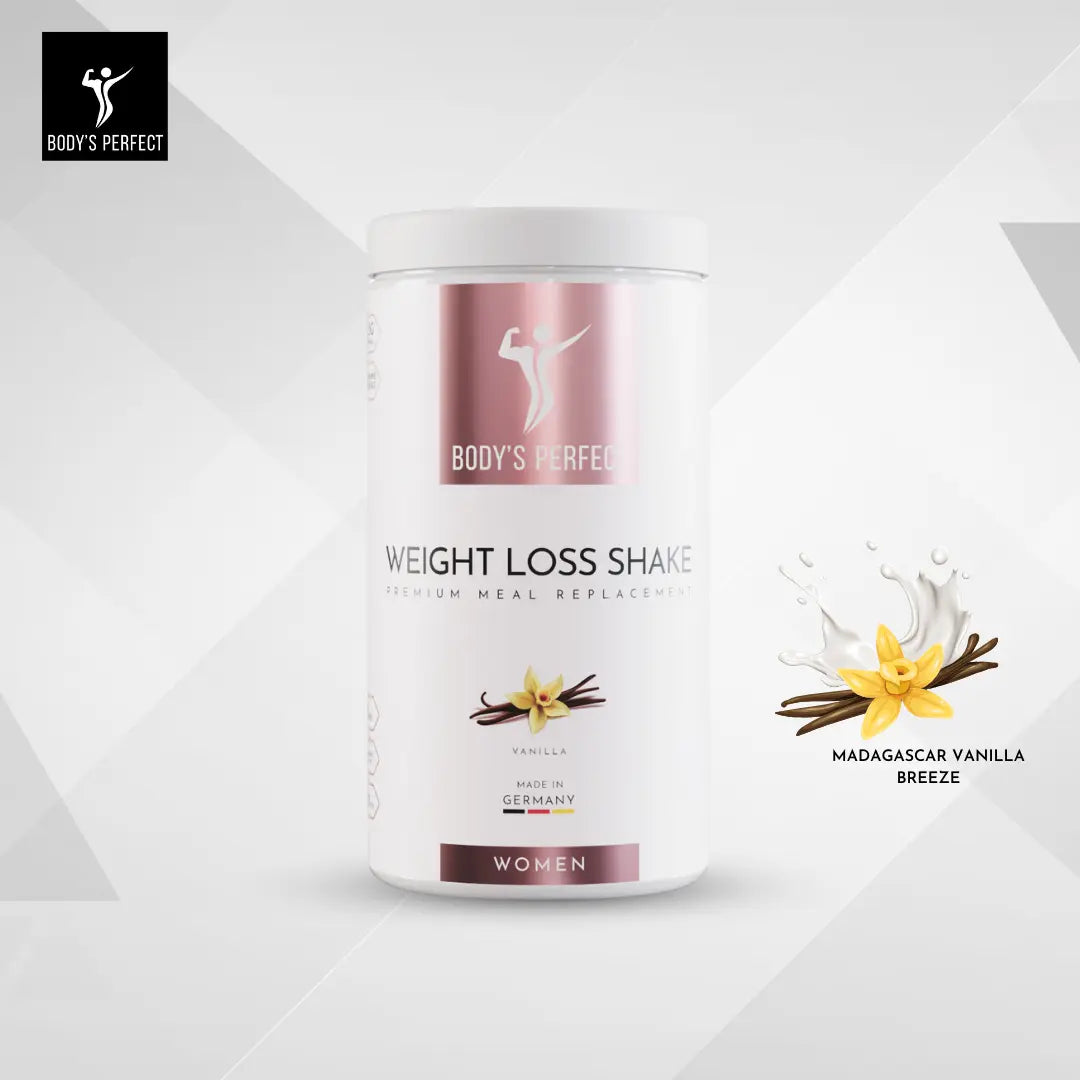
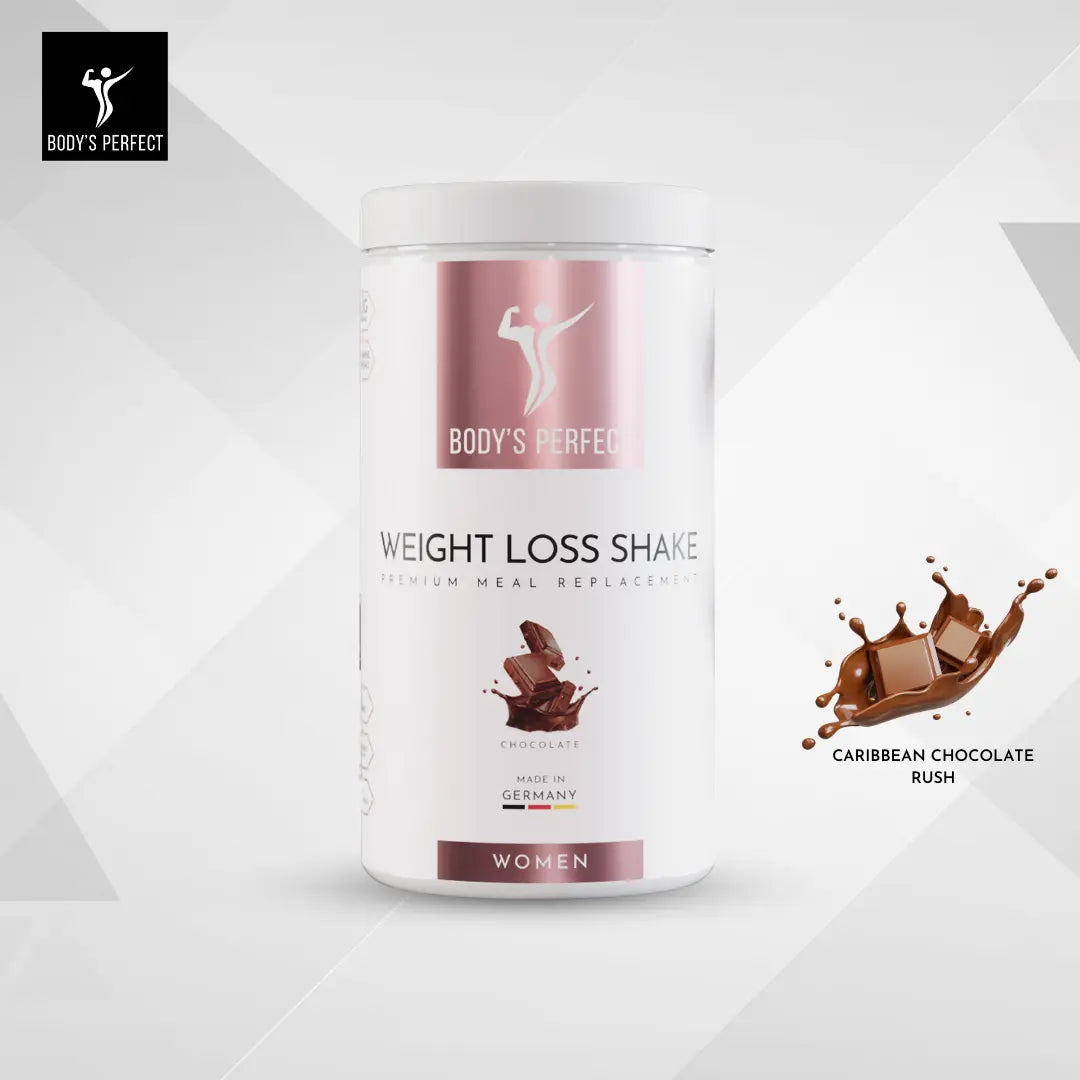
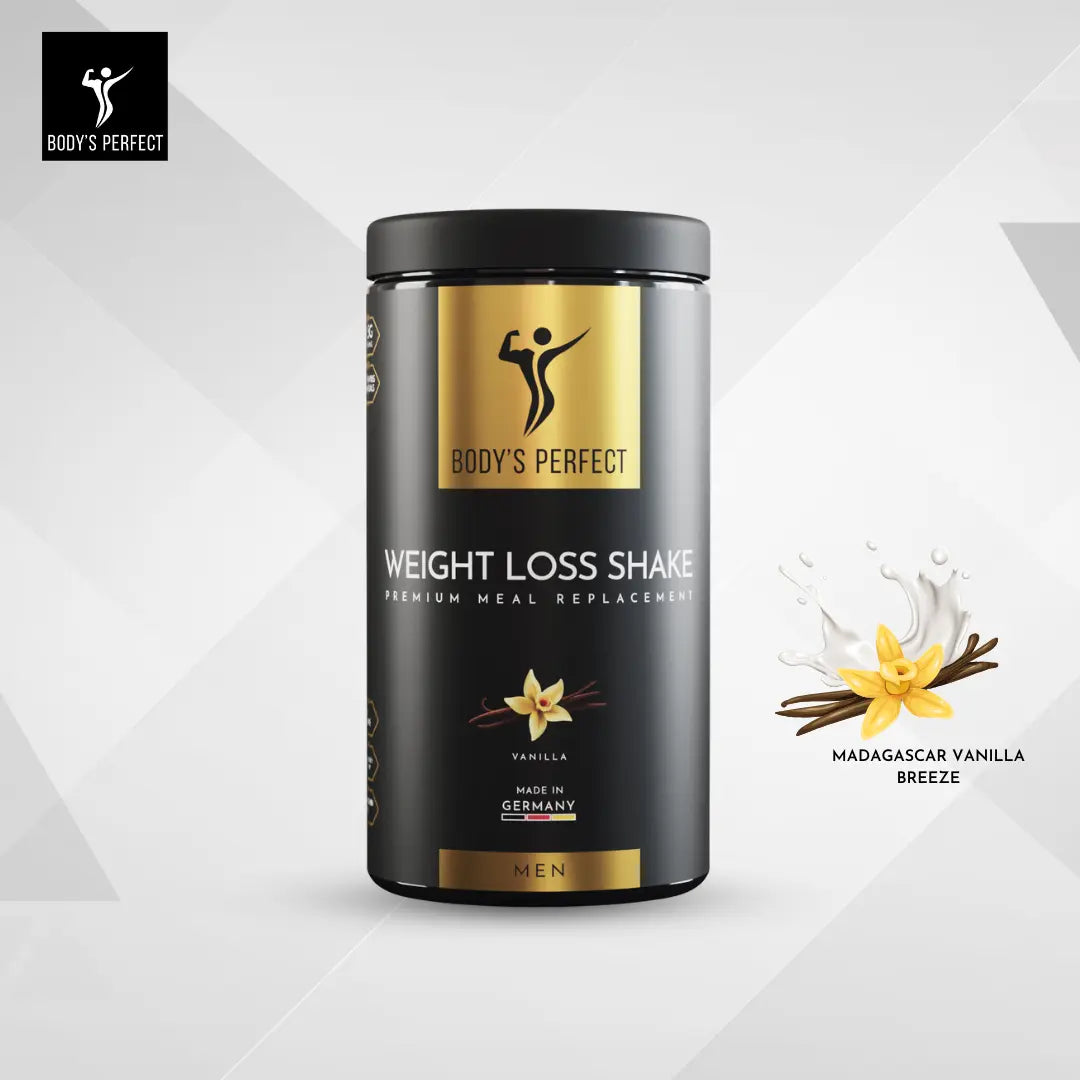
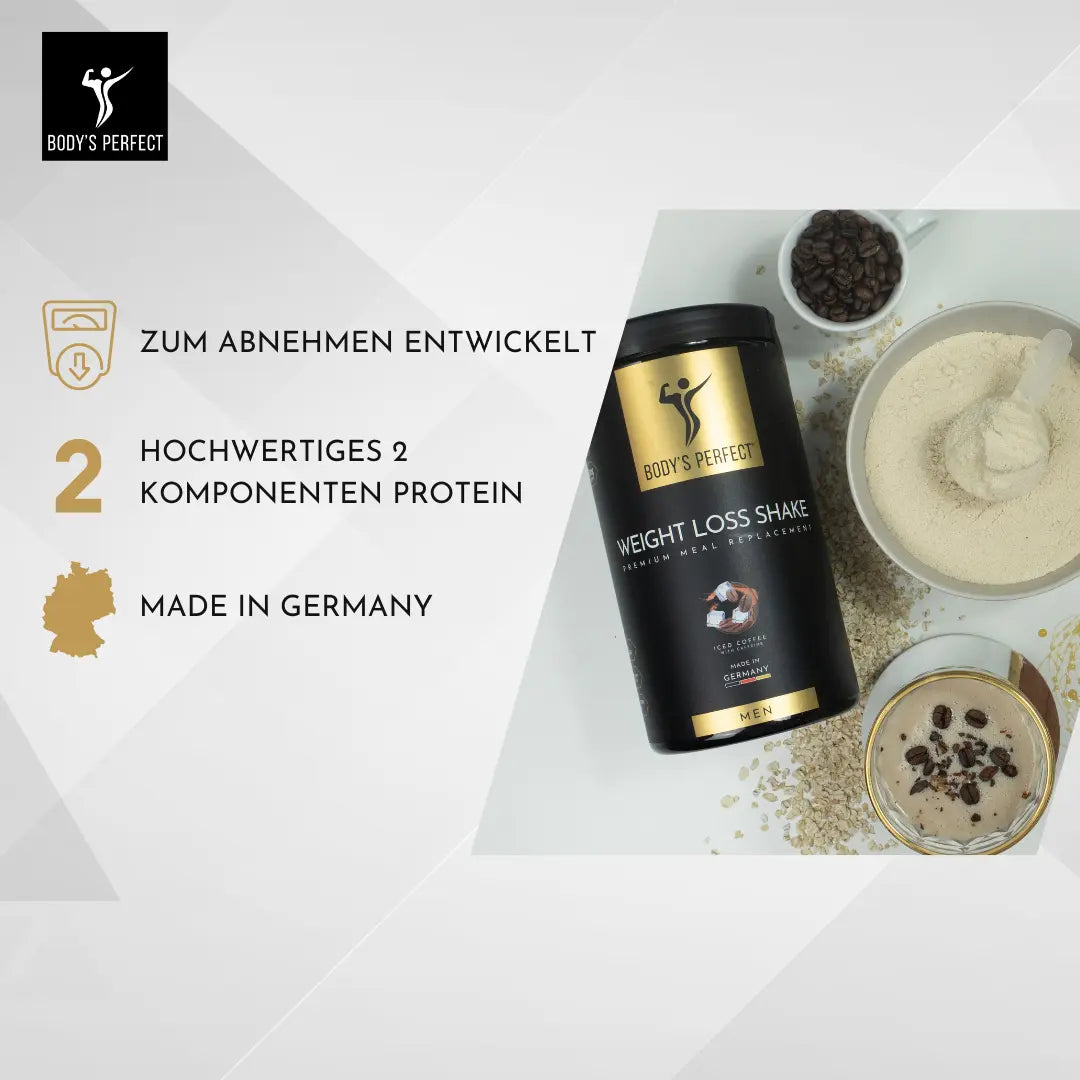
No matter what type you are: adequate protein intake is always important – for muscle maintenance and a good feeling of satiety. The high-quality BODY'S PERFECT protein shakes are a great support here. They help you meet your daily protein needs easily and deliciously, whether as a quick meal or as a reward after your workout.
The right training for your metabolic type
The right diet is a huge step towards your feel-good body, but it's only half the battle. Things only really come together when you also tailor your training to your metabolism. Because just like with food, your body reacts to exercise individually.
Some people achieve the best results with short, intense workouts, while others need longer, moderate sessions to get in shape. If you tailor your training precisely to yourself, you save a lot of frustration and simply reach your goals faster.
Ectomorph: Full focus on muscle building
Are you an ectomorphic type and your metabolism is running at full speed? Then your top goal is to build valuable muscle mass. Too much endurance training would be counterproductive, as you would only burn more calories that your body actually needs to build new muscles.
Your training plan should therefore focus on these points:
- Emphasis on strength training: Focus on 3 to 4 sessions per week. Work with heavy weights and do fewer repetitions, about 6 to 8 per set. This provides the right growth stimulus.
- Compound exercises are your foundation: Concentrate on complex exercises such as squats, deadlifts, or bench presses. These target several muscle groups at once and are unbeatable when it comes to effective muscle growth.
- Cardio only in moderation: 1 to 2 short, moderate cardio sessions per week are completely sufficient to keep your cardiovascular system fit without jeopardizing your building goals.
Mesomorph: The golden mean for athletic all-rounders
As a mesomorphic type, you've hit the jackpot: your body responds incredibly well to almost any type of training. This is the perfect starting point to build both strength and endurance. Your task now is to find the right balance to get the most out of your athletic predisposition.
A mix of different training stimuli works best for you:
- Combination of strength & endurance: Cleverly alternate between strength training (about 3 times a week) and varied cardio sessions (about 2 times a week).
- Vary the intensity: Always give your muscles new challenges. HIIT (High-Intensity Interval Training) or a tough circuit training are perfect for setting new stimuli and staying motivated.
Endomorph: Get your metabolism going
Your goal as an endomorphic type is clear: to significantly boost your metabolism and maximize fat burning. You can achieve this best with a smart combination of intense interval training and regular endurance sports.
For you as an endomorphic type, movement is your best friend! Regular exercise, especially HIIT, really fires up your metabolism and helps you effectively burn body fat.
Your training focus should therefore look like this:
- HIIT as a fat-burning weapon: Incorporate 2 to 3 HIIT sessions per week. This allows you to fully utilize the afterburn effect and even burn calories hours after your workout.
- Regular endurance training: Schedule an additional 2 to 3 moderate cardio sessions like jogging, cycling, or swimming firmly into your weekly plan. You can find more information on this in our comprehensive guide on cardio for weight loss.
The idea of tailoring training and nutrition to one's body type is becoming increasingly popular – and for good reason. Studies suggest that people who consistently follow a type-appropriate plan often achieve their weight loss goals faster and more sustainably.
Frequently asked questions about metabolic types
You've now learned a lot about how your body works and how you can tailor your diet and training to it. Finally, we'll clarify a few questions that we repeatedly encounter in connection with metabolic types. This way, we'll clear up the last myths and give you the confidence you need for your journey.
Can my metabolic type change over the course of my life?
That is one of the most exciting questions of all! Your genetic predisposition – meaning whether you tend towards an ectomorphic, mesomorphic, or endomorphic type – remains the same throughout your life. It is, so to speak, fixed in your DNA.
What can change, however, is how strongly this type manifests itself. Your lifestyle, age, stress, or hormonal phases such as pregnancy or menopause have a huge influence. So it's quite possible that your body reacts differently at 40 than it did at 20.
Imagine your genes as a map. Your lifestyle, however, decides which route you take. That's why it's not only normal, but even smart, to adjust your diet and training regularly.
What if I don't really fit into any type?
Do you recognize yourself in several descriptions? Perfect, you are absolutely not alone! The three body types are to be understood as a model, practically as a compass that gives you a rough direction. Hardly anyone is 100% a "pure" type.
Most of us are mixed types. Perhaps you are a meso-endomorphic type who builds muscle quickly but also tends to accumulate fat easily. Therefore, do not view the recommendations as rigid rules, but as flexible guardrails. Experiment with what works for you and find the mix of diet and exercise that makes you feel best and achieves the best results.
Is the theory of metabolic types scientifically sound?
The original idea of the three body types (ectomorph, mesomorph, endomorph) actually comes from psychology in the 1940s. It is therefore not a strictly scientific concept, as we know it today from DNA analyses, but rather a practical model that summarizes physical characteristics.
Nevertheless, it has proven to be an incredibly useful tool in practice. It has already helped countless people to better understand their body and finally find a strategy that suits them. Instead of following general advice, the model offers a simple framework for making more individual decisions for one's own health.
You see: The question "Which metabolic type am I?" is the ideal starting point to get to know your body better and achieve your goals. However, if you want to know exactly and optimize your diet based on your unique genes, BODY'S PERFECT has a modern solution for you. With a BODYSlim DNA test, you get deep insights into how your metabolism really works.
Discover the possibilities now at https://bodysperfect.com and start your personal journey to a healthier you.





















Share:
DNA Test for Weight Loss Reviews: How Your Genetic Code Paves the Way to Your Feel-Good Weight
Low-Calorie Fillers: How to Stay Full Longer and Still Lose Weight