

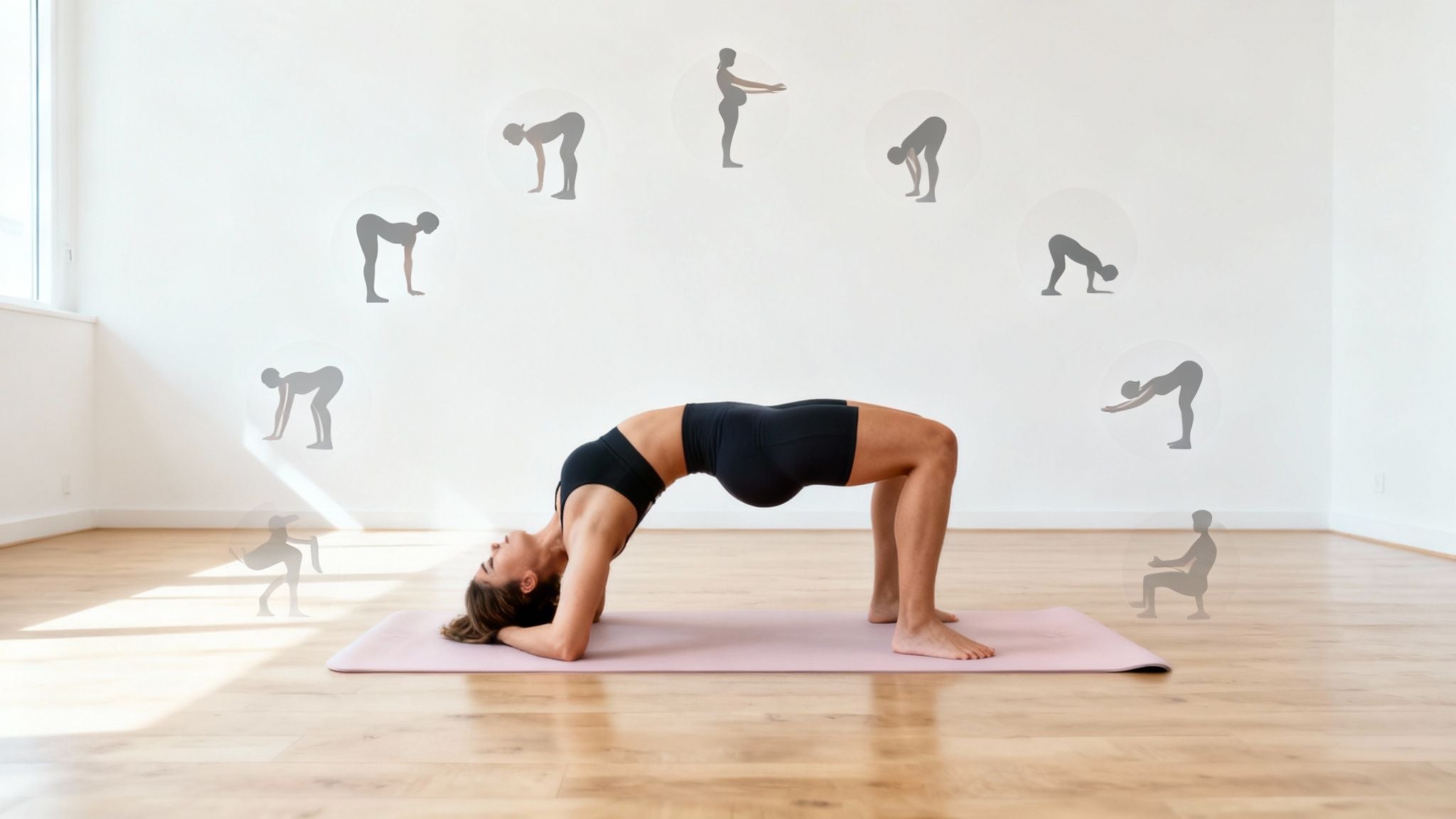
Do you want a round, firm butt that not only looks good but also improves your posture and strengthens you in everyday life? Then you've come to the right place. Many people immediately think of countless squats when they think of butt training, but the truth is: for a truly sculpted and defined butt, more variety is needed. It's about specifically targeting all three gluteal muscles – the gluteus maximus, medius, and minimus – from different angles to achieve optimal results. That's exactly the secret behind effective round butt exercises.
In this guide, we present the eight best exercises that will take your glute training to a new level. We'll show you not only how to correctly perform classics like hip thrusts and Romanian deadlifts, but also how to avoid common mistakes and gradually increase intensity. You'll receive clear, easy-to-follow instructions and valuable tips to make every repetition count.
A strong butt is more than just an aesthetic goal; it's the powerhouse of your body, stabilizing your pelvis and preventing back pain. Let's lay the groundwork for your goals together and discover the most effective exercises that will bring you closer to your dream butt.
1. Hip Thrusts: The King of Butt Exercises
If there's one exercise that's essential for building a round, firm butt, it's hip thrusts. This powerful exercise isolates the gluteus maximus – the largest of your butt muscles – like almost no other. You lie on your upper back on a bench, with your feet firmly on the floor. By specifically lifting your hips against resistance, you activate your entire gluteal musculature to the maximum.
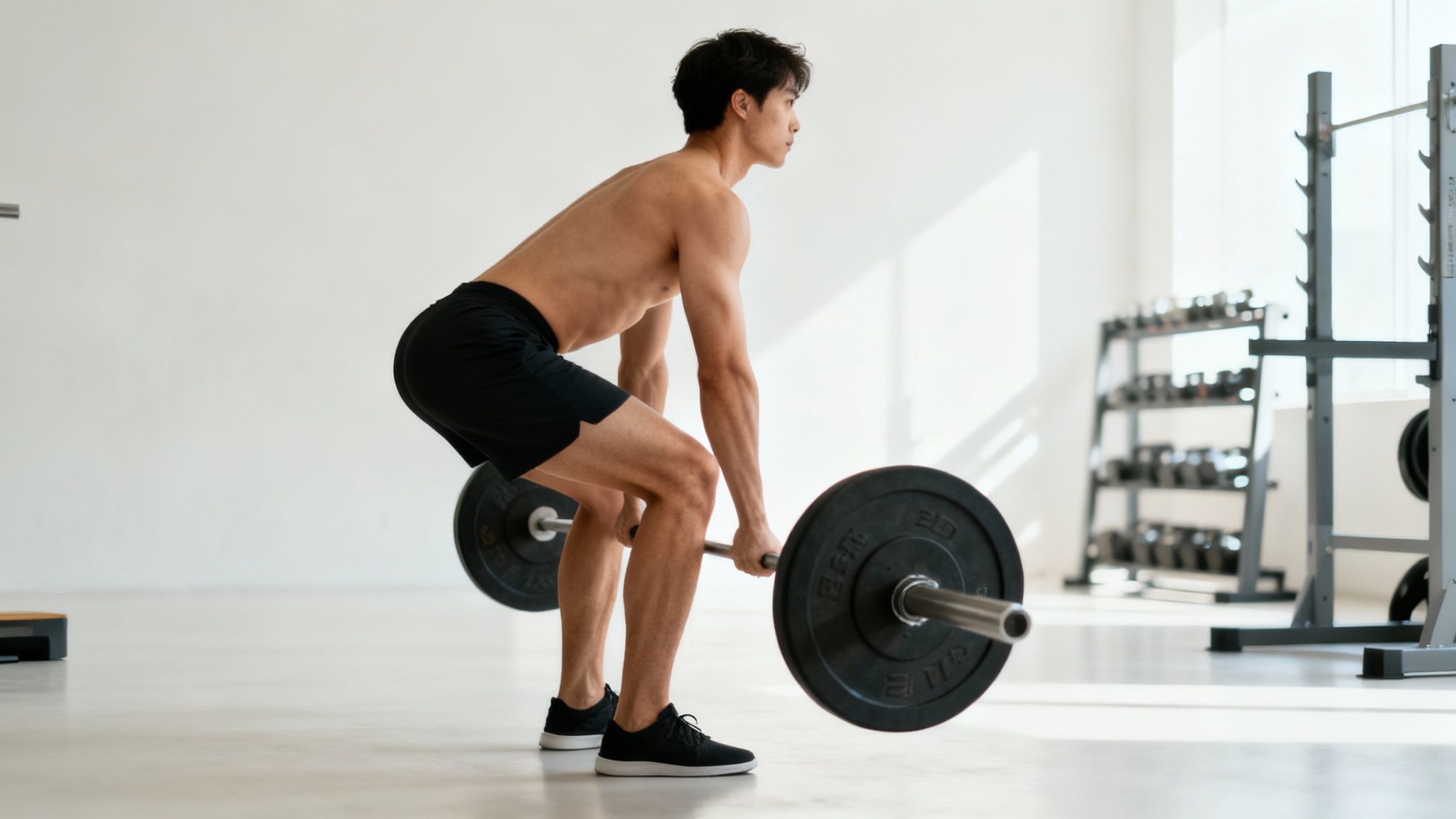
The great advantage of hip thrusts lies in their optimal biomechanics: at the peak of the movement, when your hips are fully extended, the gluteus reaches maximum contraction. This makes this movement one of the most effective round butt exercises ever.
How to perform Hip Thrusts correctly:
- The Position: Sit on the floor and lean your upper back (approximately at shoulder blade height) against a stable bench. Place your feet flat on the floor, about shoulder-width apart. Your knees should be bent at a 90-degree angle when your hips are up.
- The Movement: Powerfully push your hips upward until your body forms a straight line from your shoulders to your knees. Focus on initiating the movement solely from your glutes.
- The Squeeze: Hold the top position for 1-2 seconds and squeeze your glutes as hard as possible.
- The Lowering: Lower your hips back down in a controlled manner, without touching the floor completely, and begin the next repetition.
Pro Tip: To increase time under tension and maximize muscle stimulus, try paused hip thrusts. Hold the squeeze at the top for three to five seconds before slowly lowering your hips. This burns, but delivers tremendous results!
Variations for more variety
- Single-Leg Hip Thrusts: Perfect for correcting muscular imbalances and promoting stability.
- Hip Thrusts with Resistance Band: Place a band just above your knees to additionally activate the side gluteal muscles (gluteus medius).
- Deficit Hip Thrusts: Place your feet on a slight elevation to increase the range of motion and create an even more intense stretch stimulus.
Since this exercise is very intense, subsequent regeneration plays a key role in muscle building. To optimally supply your muscles, the right nutrient intake after training is crucial. Read more here about how the right shake after exercise can support you.
2. Romanian Deadlifts: The Secret Weapon for Glutes and Hamstrings
While hip thrusts aim for maximum contraction, the strength of Romanian Deadlifts (RDLs) lies in the stretch. This exercise is an absolute game-changer for the entire posterior chain – especially for the gluteus maximus and hamstrings. Unlike traditional deadlifts, the movement starts standing, and the focus is on a controlled hip hinge that creates an intense stretch in the target muscles.
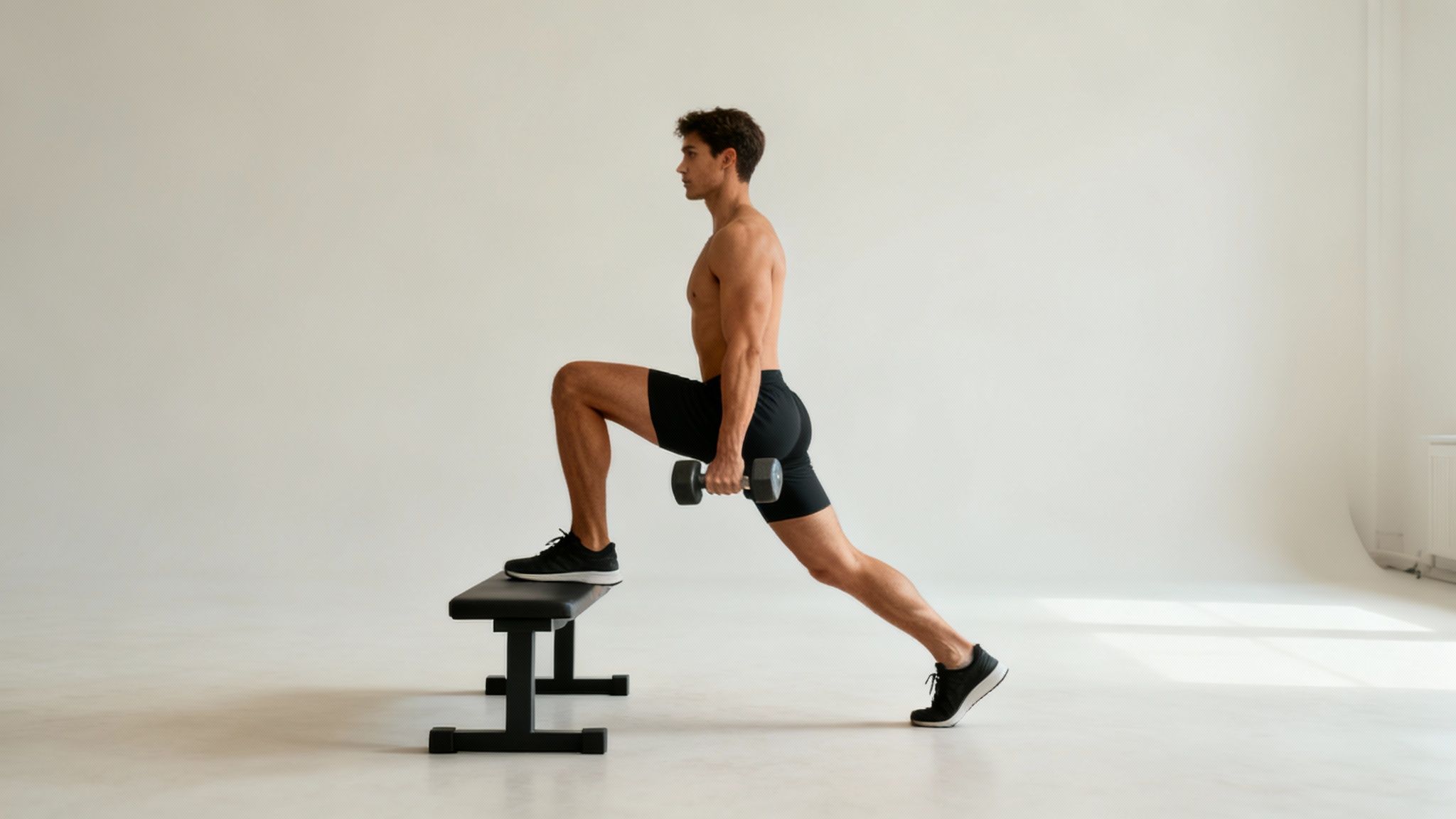
The crucial advantage of RDLs for a round butt is the so-called "stretch-mediated hypertrophy" effect. By lengthening the gluteal muscles under load, you create a powerful stimulus for muscle growth. This not only shapes the butt but also creates the aesthetically important transition from the butt to the thighs.
How to perform Romanian Deadlifts correctly:
- Starting Position: Stand about hip-width apart and hold a barbell, dumbbells, or a kettlebell in front of your body. Your knees are only slightly bent and remain in this position throughout the entire exercise.
- The Movement: Begin by pushing your hips backward as if you wanted to touch a wall behind you. Your upper body will lean forward with a straight back. Guide the weight close to your legs as you lower it.
- The Stretch: Lower the weight until you feel a significant stretch in your hamstrings and glutes. Stop the movement before your lower back rounds.
- The Ascent: Squeeze your glutes tightly and powerfully push your hips forward to return to the upright starting position.
Pro Tip: Focus on the eccentric phase, i.e., the downward movement. Lower the weight slowly and controllably over three to four seconds. This emphasis on the negative phase intensifies the muscle stimulus and greatly promotes the growth of your gluteal muscles.
Variations for more variety
- Single-Leg RDLs: An excellent exercise to improve stability, correct imbalances, and challenge each gluteal muscle in isolation.
- RDLs with Dumbbells: Offer more freedom of movement and are often gentler on the joints than the barbell version. Ideal for beginners.
- Trap-Bar RDLs: The special barbell (trap bar) reduces the load on the lower back and makes it easier to maintain correct posture.
Effective round butt exercises like RDLs challenge your body significantly. To ensure your muscles get the building blocks they need to grow, proper nutrition is essential. Learn more here about how you can support your muscle building with the right nutrition.
3. Bulgarian Split Squats: The Single-Leg Challenge
Bulgarian Split Squats are a true secret weapon when it comes to shaping the glutes and simultaneously improving stability and balance. This unilateral (single-leg) exercise places an extreme focus on the gluteal muscles of the front standing leg and mercilessly exposes muscular imbalances. This squat variation is now an integral part of effective training plans for a round butt.
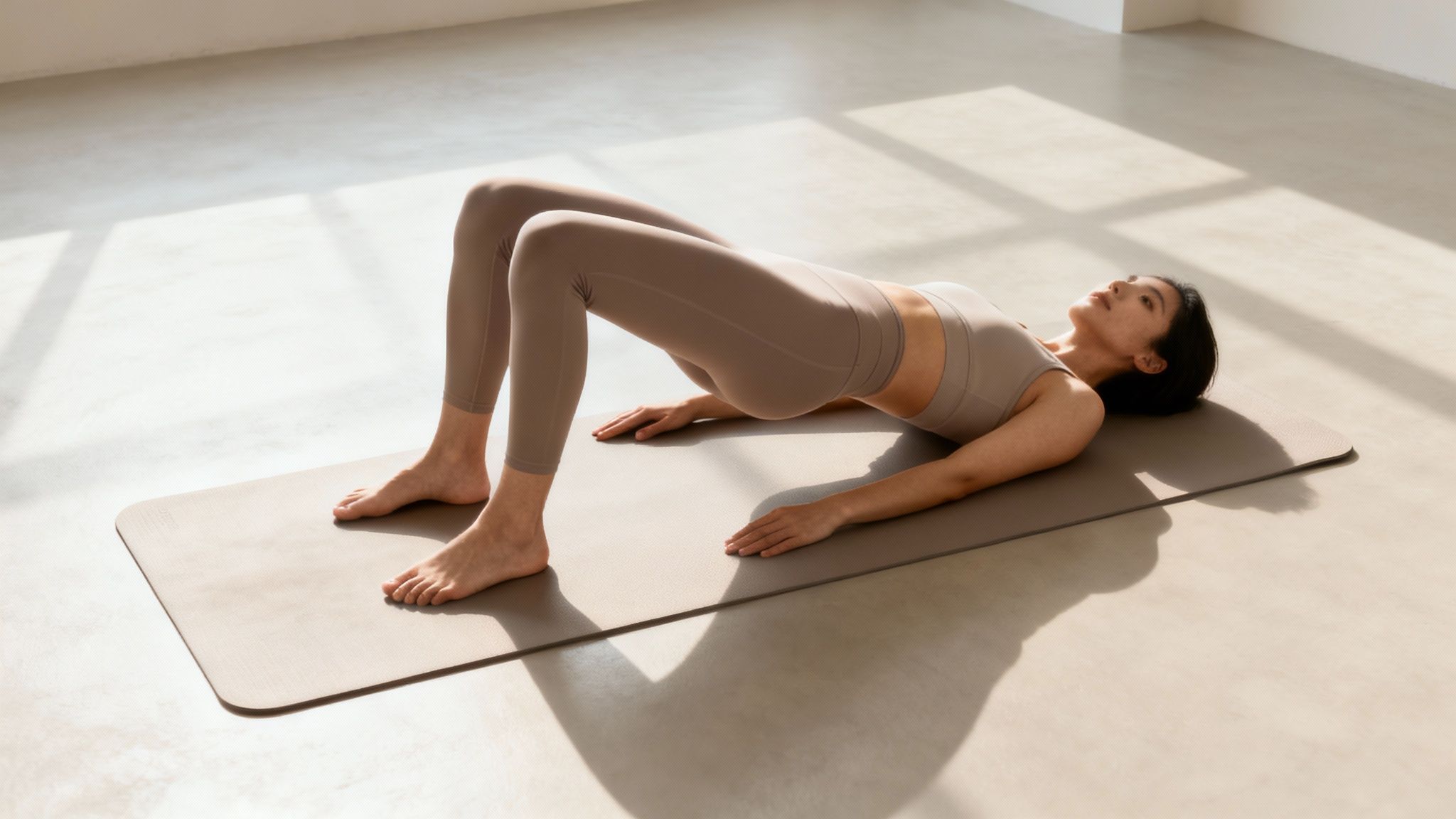
The crucial advantage of this exercise lies in the strong stretch of the gluteus that you achieve in the lowest position. This increased range of motion intensely stimulates the muscle, making it one of the most challenging, but also most effective, round butt exercises. You train not only strength but also coordination and balance.
How to perform Bulgarian Split Squats correctly:
- The Position: Stand with your back to a bench or other stable elevation (approx. 30-45 cm high). Place the instep of your back foot on the bench. Take a sufficiently large step forward with your front foot.
- The Movement: Bend your front knee and lower your hips in a controlled manner until your front thigh is roughly parallel to the floor. Keep your upper body as upright as possible.
- The Push: Powerfully push yourself back up to the starting position using the heel of your front foot. Consciously squeeze your glutes at the highest point.
- The Balance: Focus on a fixed point in front of you to maintain balance. Perform all repetitions on one side before switching legs.
Pro Tip: To put even more focus on the glutes, lean your upper body slightly forward during the downward movement. Make sure your back remains straight. This small adjustment changes the angle and intensifies the stimulus on the gluteal muscles.
Variations for more variety
- With Dumbbells: Hold a dumbbell in each hand to increase resistance and intensify the exercise.
- Deficit Variation: Place your front foot on a slight elevation (e.g., a weight plate) to further increase the range of motion during the downward movement.
- Paused Repetitions: Hold the lowest position for 2-3 seconds to maximize time under tension and boost muscle growth.
Such complex strength exercises are not only excellent for muscle building but also boost metabolism. They are an important building block if your goal is body toning. Learn more here about how strength training can help women lose weight.
4. Glute Bridges: The Perfect Basic Exercise
The Glute Bridge is the ideal entry into targeted glute training and a fantastic exercise you can do anywhere. Unlike the Hip Thrust, your upper back remains on the floor, making the exercise more stable and accessible. It is a fundamental building block for learning how to activate the gluteal muscles and creating a solid foundation for more complex movements.
The main advantage of the Glute Bridge lies in its simplicity and effectiveness, allowing you to build a strong mind-muscle connection. You learn to consciously engage your gluteal muscles without overly stressing the hamstrings or lower back. This makes it one of the most important round butt exercises for beginners and advanced athletes alike.
How to perform Glute Bridges correctly:
- The Position: Lie flat on your back on the floor. Place your feet hip-width apart, with your knees bent at a 90-degree angle. Your arms rest relaxed by your sides.
- The Movement: Push firmly through your heels into the floor and lift your hips until your body forms a straight line from your shoulders to your knees. The movement comes exclusively from the glutes.
- The Squeeze: At the highest point, squeeze your glute muscles as hard as possible. Hold this maximum contraction for one to two seconds.
- The Lowering: Slowly and controllably lower your hips back down, just before they touch the floor, to maintain tension, and begin the next repetition.
Pro Tip: For even more intense activation, try paused Glute Bridges. Hold the top position for three to five seconds and fully focus on the tension in your glutes. This isometric hold greatly promotes muscle strength.
Variations for more variety
- Single-Leg Glute Bridges: Lift one leg extended and perform the exercise only with the standing leg. Ideal for correcting imbalances.
- Weighted Glute Bridges: Place a weight plate or dumbbell on your hips to increase resistance and promote muscle growth.
- Glute Bridges with Resistance Band: Place a band just above your knees and actively push them outward throughout the movement to strengthen the gluteus medius.
Targeted training alone will not lead to the desired results if nutrition is not right. To optimally supply your muscles after an intense workout and support the development of a round butt, a protein-rich meal is crucial. A high-quality post-workout shake can help you quickly provide your muscles with the necessary building blocks for growth and regeneration.
5. Sumo Deadlifts: The Powerhouse for Glutes and Legs
Sumo deadlifts are a powerful variation of traditional deadlifts and a real insider tip for anyone serious about building a strong, round butt. The name comes from the wide stance, reminiscent of a sumo wrestler. This position shifts the focus of the exercise and forces your gluteal muscles as well as the inner thighs (adductors) to work maximally.
In contrast to conventional deadlifts, which primarily target the spinal erectors, the sumo stance allows for a more upright torso. This engages the hips more in the movement, making sumo deadlifts one of the most effective round butt exercises for building strength and mass. This exercise is not only popular in strength sports but also a favorite among those who specifically want to strengthen the hip muscles.
How to perform Sumo Deadlifts correctly:
- The Position: Stand with a very wide stance in front of a barbell, about 1.5 times your shoulder width. Your feet should be turned outwards by about 30-45 degrees, so your knees point in the direction of your toes when bending.
- The Grip: Grip the barbell inside your legs, about shoulder-width apart. Keep your back straight, chest proudly forward, and gaze forward. Your hips should be lower than your shoulders.
- The Movement: Begin the lift by powerfully pushing your feet into the ground, as if trying to push the floor away. Simultaneously extend your hips and knees to stand upright. The barbell should be kept close to your body.
- The Squeeze: At the top of the movement, push your hips forward and squeeze your glutes tightly. Your shoulders should be pulled back.
- The Lowering: Lower the weight in a controlled manner by first pushing your hips back and then bending your knees until the barbell is back on the floor.
Pro Tip: To further increase glute activation, focus on actively pushing your knees outwards throughout the entire movement. This maximizes tension on the lateral gluteal muscles and promotes stable, safe execution.
Variations for more variety
- Tempo Sumo Deadlifts: Perform the downward movement extra slowly (e.g., over 3-4 seconds). This increases time under tension and provides an intense muscle stimulus.
- Pause Sumo Deadlifts: Hold the weight just below the knees for 1-2 seconds before completing the movement. This improves strength from the most difficult position.
- Kettlebell Sumo Deadlifts: An excellent variation for beginners or for home workouts to learn the movement technique.
Since sumo deadlifts are a challenging full-body exercise, sufficient energy supply before training is crucial to perform at your best.
6. Leg Press: The Powerful Alternative for Maximum Load
The leg press is often considered a pure exercise for the quadriceps, but with a small adjustment, it becomes a highly effective exercise for the glutes. By changing your foot position on the platform, you can specifically focus on your gluteal muscles and work with heavy weights that often pose a greater stability challenge in free exercises.
The decisive advantage of the leg press is that it stabilizes the back and allows you to concentrate fully on the work of your leg and gluteal muscles. This makes it an excellent addition to your training plan to challenge the gluteus with heavy loads and thus stimulate muscle growth. Clean execution is key here for round butt exercises with maximum success.
How to perform the Leg Press correctly for the glutes:
- The Position: Sit in the leg press and place your feet high and relatively wide apart on the platform. A higher foot position shifts the load more from the thighs to the gluteal muscles and hamstrings.
- The Movement: Release the safety and slowly and controllably lower the weight until your knees reach approximately a 90-degree angle. Make sure your lower back and glutes remain firmly against the pad.
- The Push: Powerfully push the platform back to the starting position using your heels. Focus on generating power primarily from your glutes.
- The End Position: Do not fully extend your legs at the highest point to protect your joints and maintain tension on the muscles.
Pro Tip: For even more intense activation, try the single-leg leg press. This not only challenges the target muscles more but also improves your stability and helps to correct muscular imbalances between the two halves of the body.
Variations for more variety
- Paused Reps: Hold the bottom position for 2-3 seconds to maximize time under tension and enhance muscle stimulus.
- "21s" Sets: Perform 7 reps in the bottom third of the movement, then 7 in the top third, and finally 7 through the full range of motion.
- Slow Negative Reps: Lower the weight extremely slowly (e.g., over 4-5 seconds) and push it up explosively.
Intense leg press training requires a lot of energy and a solid nutritional foundation to build muscle while simultaneously reducing fat. A well-thought-out nutrition plan is essential for this. Learn more about how to optimally design your nutrition plan for fat loss and muscle building.
7. Cable Kickbacks: For the Perfect Form
If you're looking for an exercise that specifically shapes and isolates your gluteal muscles, cable kickbacks are the answer. This cable machine exercise is a favorite among fitness enthusiasts because it maintains constant tension on the gluteus maximus throughout the entire movement. Unlike many other exercises, kickbacks minimize the involvement of other muscle groups, allowing you to fully concentrate on contracting your glutes.
The crucial advantage of cable kickbacks is the continuous load. The cable machine ensures that the muscle is under tension from the beginning to the end of the movement. This leads to an intense muscle stimulus and makes them one of the most effective round butt exercises for specifically working on shape and definition.
How to perform cable kickbacks correctly:
- The Position: Attach an ankle strap to the bottom of a cable machine and secure it around your ankle. Stand facing the tower, hold onto the machine for stabilization, and step back a few paces to create tension in the cable. Keep your upper body upright and your core engaged.
- The Movement: Control the leg with the strap, extending it straight back and up. The movement should originate solely from the hip, without using momentum from your back.
- The Contraction: At the highest point of the movement, consciously and maximally contract your glutes for 1-2 seconds. Your hip should be fully extended.
- The Return: Slowly and controlled return your leg to the starting position, without losing tension on the cable.
Tip for Pros: Focus on the "mind-muscle connection." With each repetition, imagine how your gluteal muscle is working and contracting. This improves activation and leads to better results. Place one hand on the working glute to feel the contraction.
Variations for More Variety
- Quadruped Kickbacks: Perform the exercise kneeling on a mat to increase core stability and further emphasize the glutes.
- Cable Abduction (Side Kickbacks): Instead of moving your leg backward, move it sideways away from your body to specifically train the gluteus medius, the side glute muscle.
- Rope Handle Kickbacks: Instead of an ankle strap, you can use a rope and hold it with your foot to slightly change the angle and feel of the movement.
8. Step-ups: The Practical Strength Exercise
Step-ups are a functional and extremely effective exercise that is often underestimated. They mimic an everyday movement – climbing stairs – and transform it into a powerful tool for building strong and round glutes. In this unilateral (one-legged) exercise, the power from one leg is specifically used, which not only challenges the gluteus maximus but also the stabilizing lateral gluteal muscles.
The great advantage of step-ups lies in the combination of strength and coordination. Each time you push yourself up with your front leg, your gluteal muscles and thighs have to work hard to extend your hip and lift your body. This makes step-ups an excellent exercise for correcting muscular imbalances and building even strength in both legs.
How to perform step-ups correctly:
- The Position: Stand in front of a stable elevation such as a box, a weight bench, or a stair step (approx. 30-45 cm high). Keep your upper body upright and your abdominal muscles engaged.
- The Movement: Place one foot firmly on the platform. Push yourself powerfully upwards through the heel of this foot until your standing leg is fully extended. Try to keep momentum from the back leg as minimal as possible.
- The Contraction: Consciously contract your glutes at the highest point. Your body should have a straight, upright posture.
- The Lowering: Slowly and controlled step down with the same leg that just went up. Perform all repetitions on one side before switching legs.
Tip for Pros: Focus on a slow, controlled downward movement (eccentric phase). By lowering yourself for three to four seconds, you increase time under tension and create a more intense growth stimulus for your gluteal muscles.
Variations for more variety
- Step-ups with Added Weight: Hold dumbbells in both hands or place a barbell on your shoulders to increase resistance and maximize muscle growth.
- Box Jump Step-ups: A plyometric variation where you jump explosively upwards to additionally train your explosive power.
- Deficit Step-ups: Choose a higher platform to increase the range of motion and create a deeper stretch in the glutes.
Step-ups not only train the muscles but also significantly raise your heart rate. They are thus an ideal combination of strength and endurance training. If you want to learn more about how to effectively use cardio for weight loss, you can find valuable tips here.
Your Plan for the Perfect Glutes: Training, Nutrition, and the Right Support
Now you have the map to your goal: you know the eight most effective exercises for strong, round glutes, from hip thrusts to cable kickbacks. You know that correct technique is not only crucial for success but also prevents injuries. The path to dream glutes is not a sprint, but a marathon consisting of consistency, patience, and the right strategy.
Simply knowing the round butt exercises is the first step. The second, crucial step is implementation. It's about integrating these exercises into a well-thought-out plan that fits your life and motivates you to stay on track.
Key takeaways for your success
Remember that your body is a complete work of art. Isolated glute training is good, but a holistic approach is better. Strong glutes stabilize your pelvis and spine, giving you more strength in everyday life and can even help you counteract many complaints like back pain.
- Consistency is King: Train your gluteal muscles 2-3 times a week. Regularity trumps intensity when it comes to long-term results.
- Progressive Overload: Constantly challenge your muscles. Gradually increase weight, repetitions, or set numbers to stimulate growth.
- Mind-Muscle Connection: Focus entirely on the target muscle with each repetition. Feel how your glutes are working – that's the difference between a movement and an effective exercise.
- Nutrition as the Foundation: Muscles don't grow in the gym, but in the kitchen and during sleep. A protein-rich diet is essential to repair and build muscle fibers after training.
Your body can only build what you give it the building blocks for. Intense training without proper nutrition is like trying to build a house without bricks.
This article has given you the tools – now it's up to you to use them. Start by choosing three to four of the presented exercises and incorporating them into your routine. Observe your progress, listen to your body, and don't hesitate to try variations. Every body is different, and the perfect plan is the one you can consistently stick to. Your dream of firm, round glutes is absolutely achievable. With the right knowledge, the appropriate strategy, and a pinch of discipline, you will not only reach but exceed your goals.
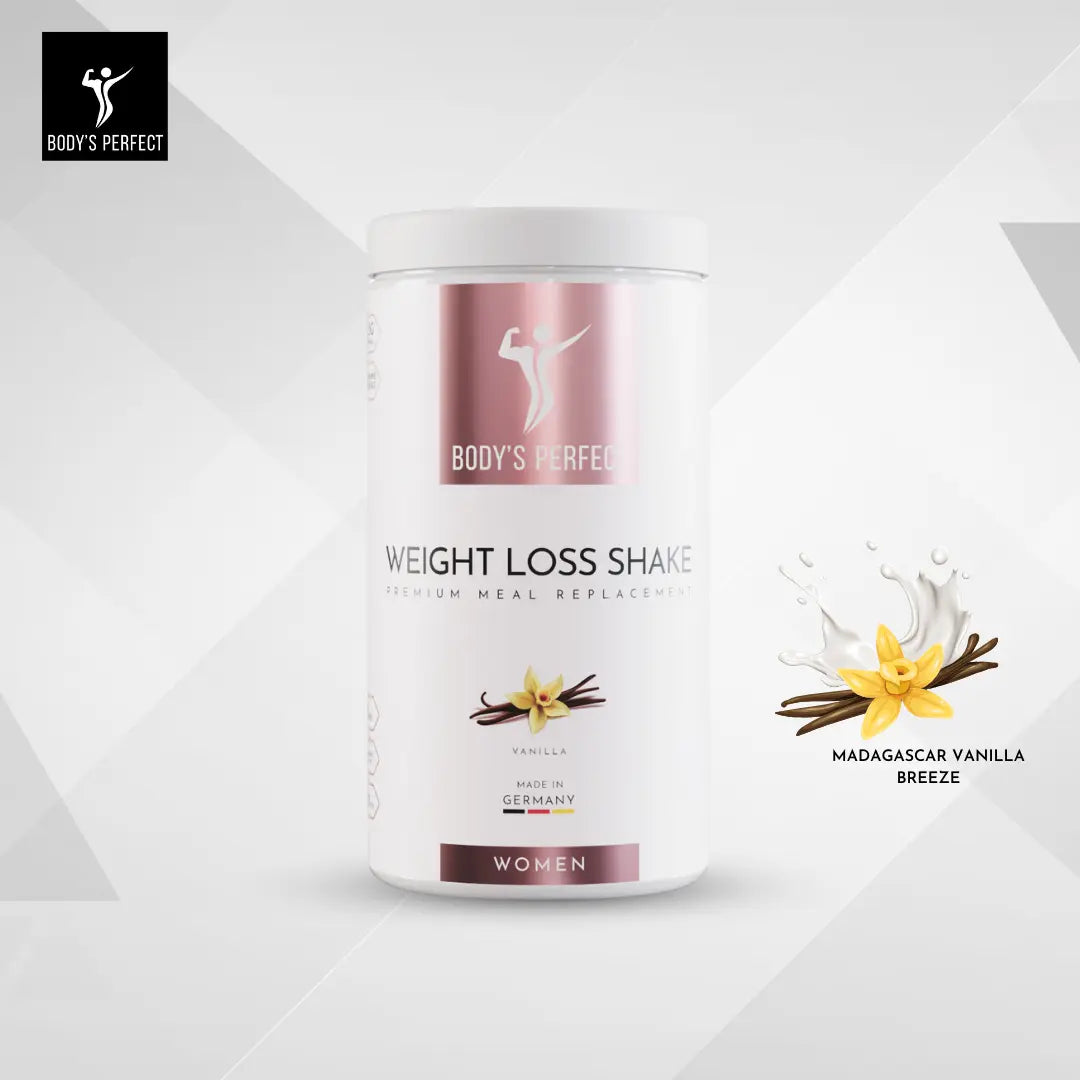
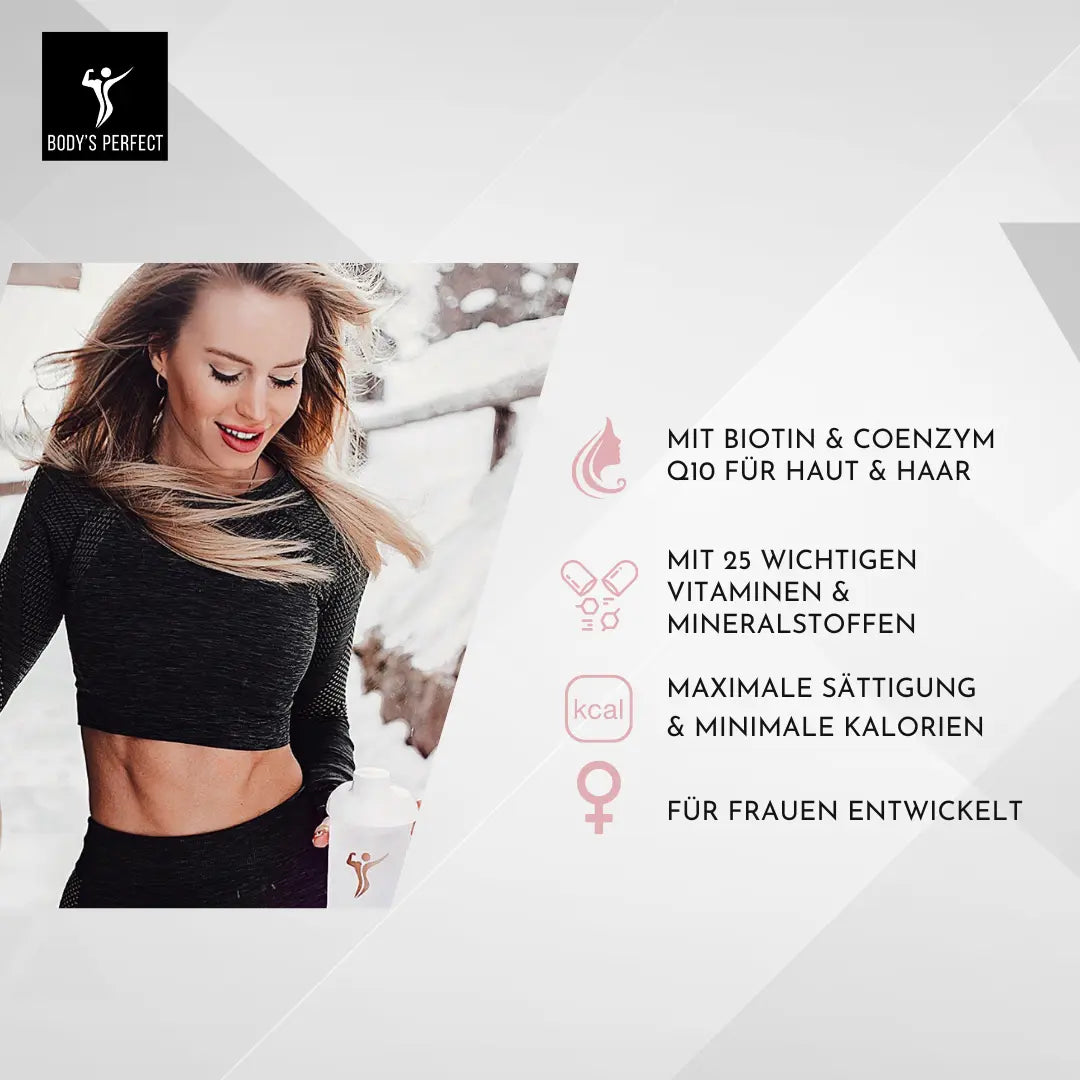
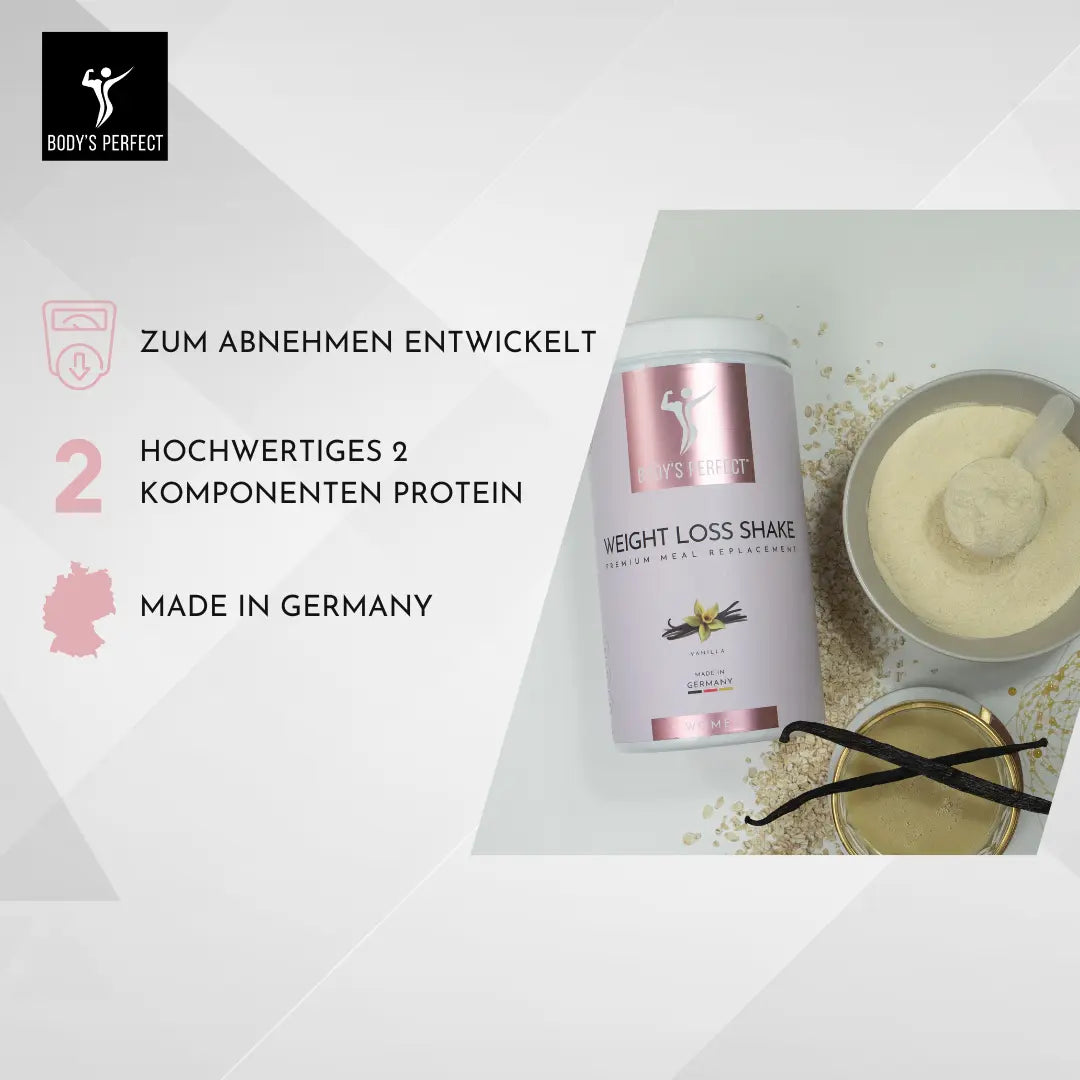
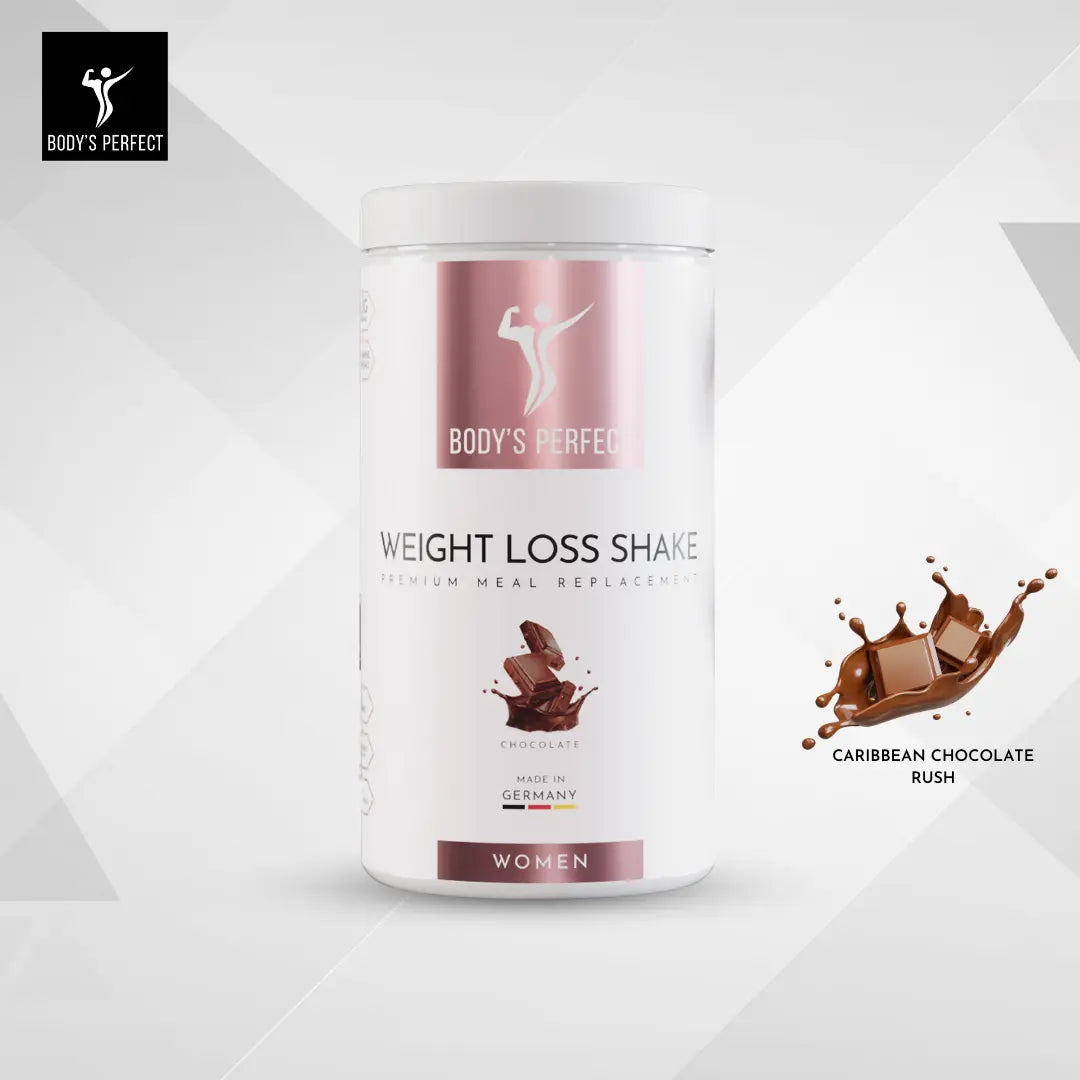
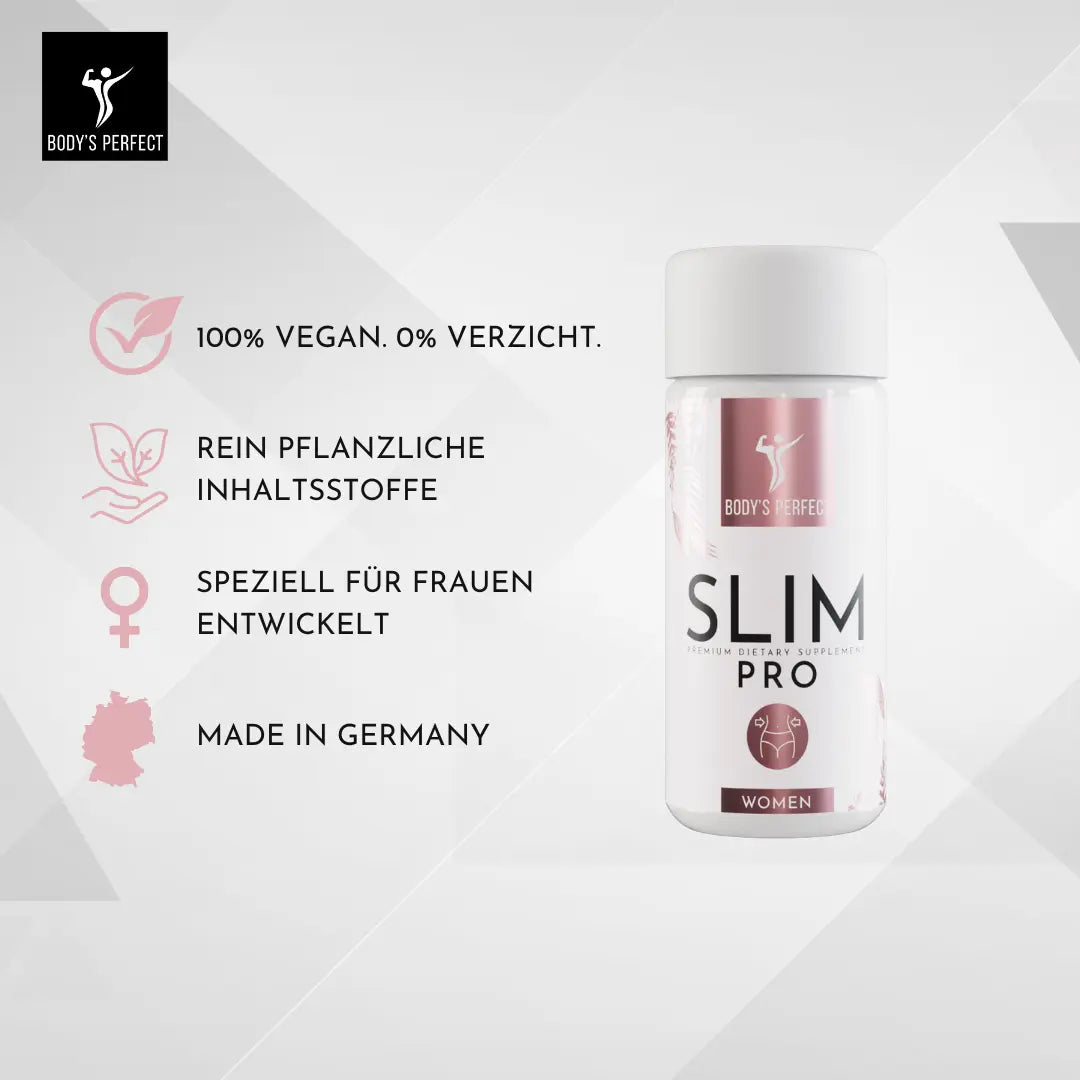
Are you ready to give your body the optimal support it deserves after a hard workout? BODY'S PERFECT high-quality products are designed to support your fitness goals and optimize your recovery. Discover at BODY'S PERFECT how you can perfectly supplement your training with the right nutrition.


Share:
How to lose weight without exercise: This is how it really works
Creatine Effects: How to Effectively Boost Your Performance