

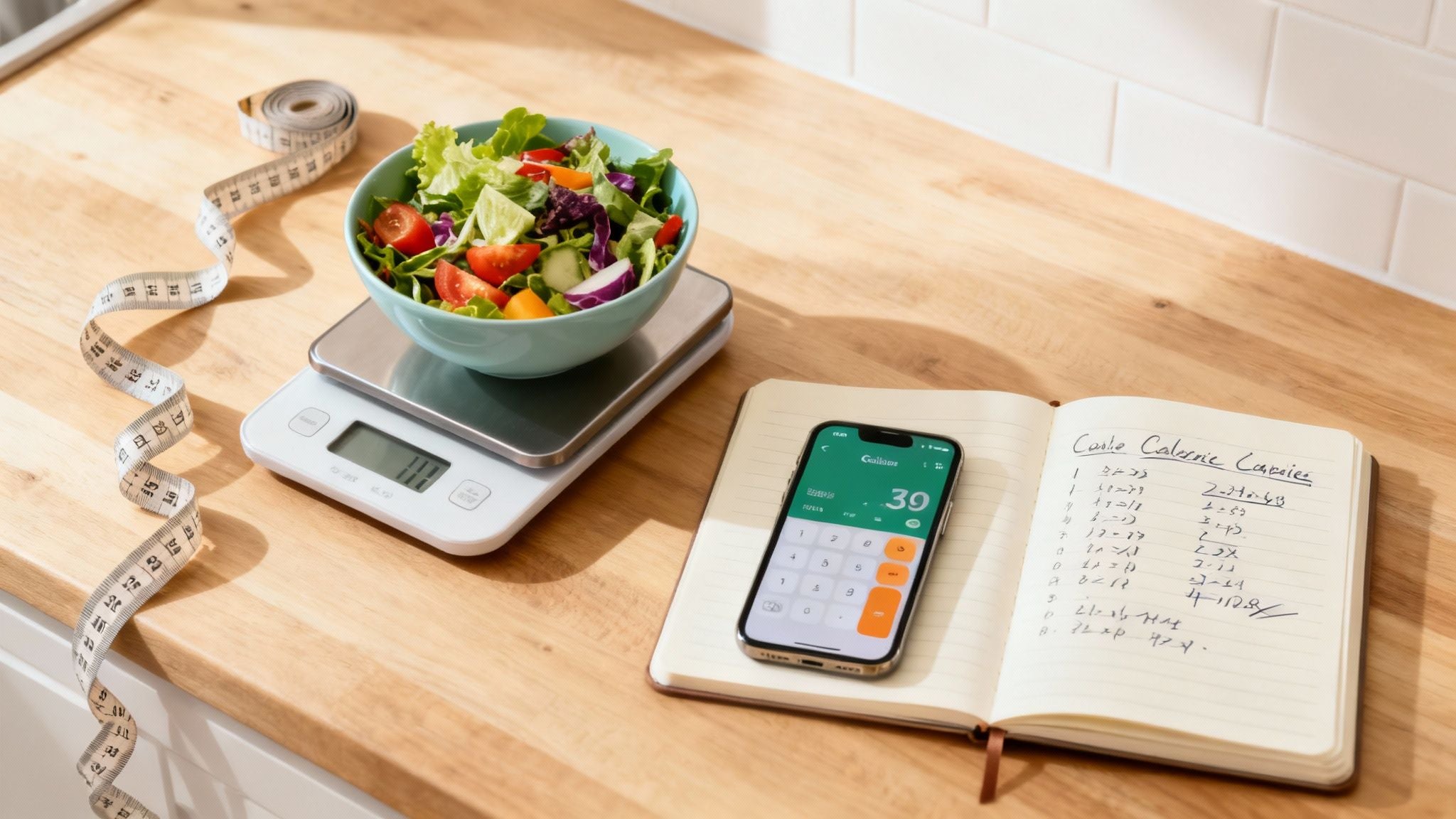
Welcome to the most important step on your journey to a healthy weight: understanding your personal caloric needs. To lose weight successfully and, above all, healthily, you need to internalize a simple principle: you must consume fewer calories than your body uses throughout the day. This deficit is called a calorie deficit. Sounds simple, doesn't it? But the devil is in the details.
Why your personal calorie requirement is crucial

Does this sound familiar? You've firmly resolved to lose a few pounds, but the scale simply isn't moving? Often, the mistake lies in blanket advice. Perhaps you've heard of the famous 2,000-calorie rule – but unfortunately, that's just a rough average value that really only suits a few people.
Your body is unique. That's why general diet plans simply cannot work. They ignore the most important factor in the whole equation: yourself. Your personal calorie requirement for weight loss is as individual as your fingerprint.
Your body is not a machine
Imagine your body as a power plant. Even if you spend a relaxed day on the couch, it's working at full throttle to keep all vital processes running. This energy, which it burns solely at rest, is called your basal metabolic rate.
The basal metabolic rate is the basic energy your body needs for absolutely everything:
- Breathing and heartbeat
- Regulating your body temperature
- Cell repair and organ functions
But of course, that's only half the battle. As soon as you get up, move, go to work, or exercise, your performance metabolic rate is added. This is the additional energy you burn for any form of physical activity.
Your total calorie requirement is therefore the sum of your basal metabolic rate and your performance metabolic rate. Only when you know this personal number can you set an effective and healthy calorie deficit that truly helps you reach your goal – without cravings and frustration.
What really influences your calorie needs
The widespread assumption of fixed calorie values fails because our energy consumption depends on an incredible number of factors. Average values are a good first starting point, but nothing more. For example, the daily energy requirement for men between 25 and 51 years is around 2,400 kcal, and for women it is about 1,900 kcal. These figures help with orientation, but your personal value can deviate significantly from them.
This table shows you at a glance which personal factors influence your daily calorie needs and why an individual calculation is so important.
These factors influence your calorie needs
| Factor | Description and impact on calorie needs |
|---|---|
| Age | Over the years, metabolism naturally slows down. A 25-year-old therefore generally burns more calories than a 55-year-old with the same activity level. |
| Gender | Men naturally tend to have a higher muscle mass than women. Since muscles consume more energy than fat, their basal metabolic rate is often higher. |
| Weight & Height | The more body mass you have, the more energy your body needs to maintain itself and move. A larger, heavier body has a higher basal metabolic rate. |
| Body composition | This is where it gets interesting: one kilo of muscle burns significantly more calories at rest than one kilo of fat. More muscle mass therefore means higher calorie consumption, even when watching TV. |
| Daily activity | Your job and lifestyle are crucial. Someone who works in construction has a much higher performance metabolic rate than someone with an office job. |
| Metabolic type | Each of us has a genetic predisposition. Some people are "good food processors" and naturally burn calories faster than others. |
As you can see, it's a combination of many small puzzle pieces. Your individual metabolism also plays a big role. If you want to delve deeper, in our article we explain how you can determine your personal metabolic type.
At the end of the day, understanding your own body is the key to success. It protects you from radical diets that do more harm than good to your metabolism, and gives you back control over your journey.
Easily calculate your calorie needs yourself
So, now that you know the theory, it's time for practice. Don't worry, it's not rocket science and you don't need a calculator with a diploma. Determining your calorie needs for weight loss is really simpler than you might think. We'll do this together now, in a relaxed way.
What do you need? Just a few key facts about yourself: your current weight, your height, your age, and your gender. These are the building blocks for your personalized plan.
Basal Metabolic Rate: Your engine at idle
The first and most important value is your basal metabolic rate – often called BMR (Basal Metabolic Rate). This is the energy your body consumes when you do absolutely nothing. Imagine lying in bed for 24 hours straight. Your body is still working hard to keep your heart beating, you breathing, and your body temperature stable. That's exactly what the basal metabolic rate is.
To calculate it, we'll use one of the most proven formulas: the Mifflin-St Jeor formula. It is considered very reliable by experts.
For men, the formula is:
(10 × weight in kg) + (6.25 × height in cm) – (5 × age in years) + 5
And for women:
(10 × weight in kg) + (6.25 × height in cm) – (5 × age in years) – 161
Let's use an example. Let's take Anna: She is 35 years old, 168 cm tall, and weighs 75 kg. Her calculation looks like this:
(10 × 75) + (6.25 × 168) – (5 × 35) – 161 = 750 + 1050 – 175 – 161 = **1,464 kcal**
Anna's basal metabolic rate is therefore 1,464 kcal. This is the absolute base her body needs every day, without her lifting a finger.
Performance Metabolic Rate: Your daily life makes the difference
Now it gets interesting, because now your daily life comes into play. Hardly any of us just lie around all day. Every single movement, from getting up to going to work to exercising in the evening, costs extra energy. We call this energy the performance metabolic rate.
To determine this, we use the so-called PAL factor (Physical Activity Level). This is a simple multiplier that describes how active you are on average.
Be absolutely honest with yourself here. A realistic assessment is essential. From experience, we know: many tend to overestimate their daily activity. The result is then an over-estimated calorie requirement, which naturally slows down weight loss.
Here are the common PAL values for orientation:
- 1.2: You almost only sit, even in your free time. A classic office job without much movement afterward.
- 1.4 – 1.5: You sit a lot, but you walk in between or take regular strolls.
- 1.6 – 1.7: Your job requires you to stand or walk a lot, for example, in sales or in a trade.
- 1.8 – 1.9: You have a physically very demanding job, such as in construction or agriculture.
- 2.0 – 2.4: You perform extremely heavy physical work or are a competitive athlete.
The following infographic shows you at a glance how simple the logic behind it is:
 Your total requirement is ultimately nothing more than the sum of the energy for "idle" and the energy for your daily activities.
Your total calorie requirement: The number that matters
Now we just need to add things up. To determine your daily total calorie requirement – that is, the amount with which you would maintain your current weight – you simply calculate:
Basal metabolic rate × PAL factor = Daily total calorie requirement
Let's look at Anna again. She has an office job but likes to go for a walk after work. She therefore estimates her PAL factor to be 1.4.
1,464 kcal (basal metabolic rate) × 1.4 (PAL factor) = **2,050 kcal**
So, Anna's body consumes approximately 2,050 calories on a normal day. If you want to delve deeper into this topic, feel free to check out our guide on calculating total energy expenditure, where you'll find even more details.
The calorie deficit: The key to weight loss success
To lose weight, the principle is simple: you must consume less energy than you expend. Precisely this "minus" in your calorie account is the crucial calorie deficit. For starters, a moderate, manageable deficit of 300 to 500 calories per day is ideal.
For Anna, this means specifically:
2,050 kcal (total requirement) – 500 kcal (deficit) = **1,550 kcal**
So, Anna's goal is around 1,550 calories per day. This is a great value that will help her lose weight without constantly feeling hungry or sluggish. Studies also confirm that a daily calorie deficit of about 400–600 kcal, combined with exercise, leads to particularly sustainable success.
Implementing the right calorie deficit in everyday life
Knowing the number from the calculator is the first important step, no question. But honestly: the real work is just beginning. How do you manage to reach your goal of, say, 1,550 calories every day without your life revolving solely around deprivation and hunger?
That's exactly what we're going to look at now. It's about integrating your personal calorie deficit into your daily life in such a way that it feels completely normal and effortless. Your calorie requirement for weight loss is not a rigid corset. Think of it more as a flexible framework that you can fill with the right strategies.
Moderate or aggressive: Which deficit suits you?
The first and perhaps most important decision is the size of your deficit. There are basically two paths you can take.
A moderate deficit of about 300 to 500 calories below your total requirement is the path we would recommend to most people. Why? Because it's sustainable. A gentle deficit leads to steady but healthy weight loss of about 0.5 kg per week. This may sound slow, but it's the safest way to avoid the dreaded yo-yo effect. Your body doesn't panic, your metabolism stays active, and you have enough energy for everyday life.
A larger deficit of more than 500 calories can bring faster results in the short term, but it carries risks. It increases the likelihood of nutrient deficiencies, muscle loss, and nasty cravings. This tactic is only sensible in exceptional cases and ideally with professional guidance. For most of us, the moderate path is the golden mean.
Small reminder: Weight loss is not a sprint, but a marathon. A gentle calorie deficit protects your body, preserves your muscle mass, and ensures that you stay on track in the long term.
Practical tips against hunger and for more satiety
Hunger is the biggest enemy on the way to a healthy weight. So the goal is not to ignore it, but to cleverly outsmart it. With the right foods and a few simple habits, you can greatly improve your feeling of fullness.
1. Focus on protein and fiber These two are your best friends, really! Proteins take longer to digest and therefore keep you full for hours. Fiber from vegetables, whole grains, and legumes fills the stomach and keeps blood sugar levels stable – bye-bye, cravings!
- Top protein sources: Lean meat, fish, eggs, low-fat quark, lentils, or chickpeas.
- Strong fiber heroes: Broccoli, oats, berries, whole-grain bread, and flaxseeds.
2. Drink enough water A classic, but so effective: The body often confuses thirst with hunger. Before you reach for a snack, drink a large glass of water and wait 15 minutes. You'll be surprised how often the "hunger feeling" simply disappears afterward.
3. Plan your meals in advance (Meal Prep) When hunger suddenly strikes, we often reach for what's quickly available – and that's rarely the best choice. By pre-cooking your meals for a few days, you always have a healthy, delicious option ready. This not only saves calories but also time and a lot of stress.
Smart helpers for your success
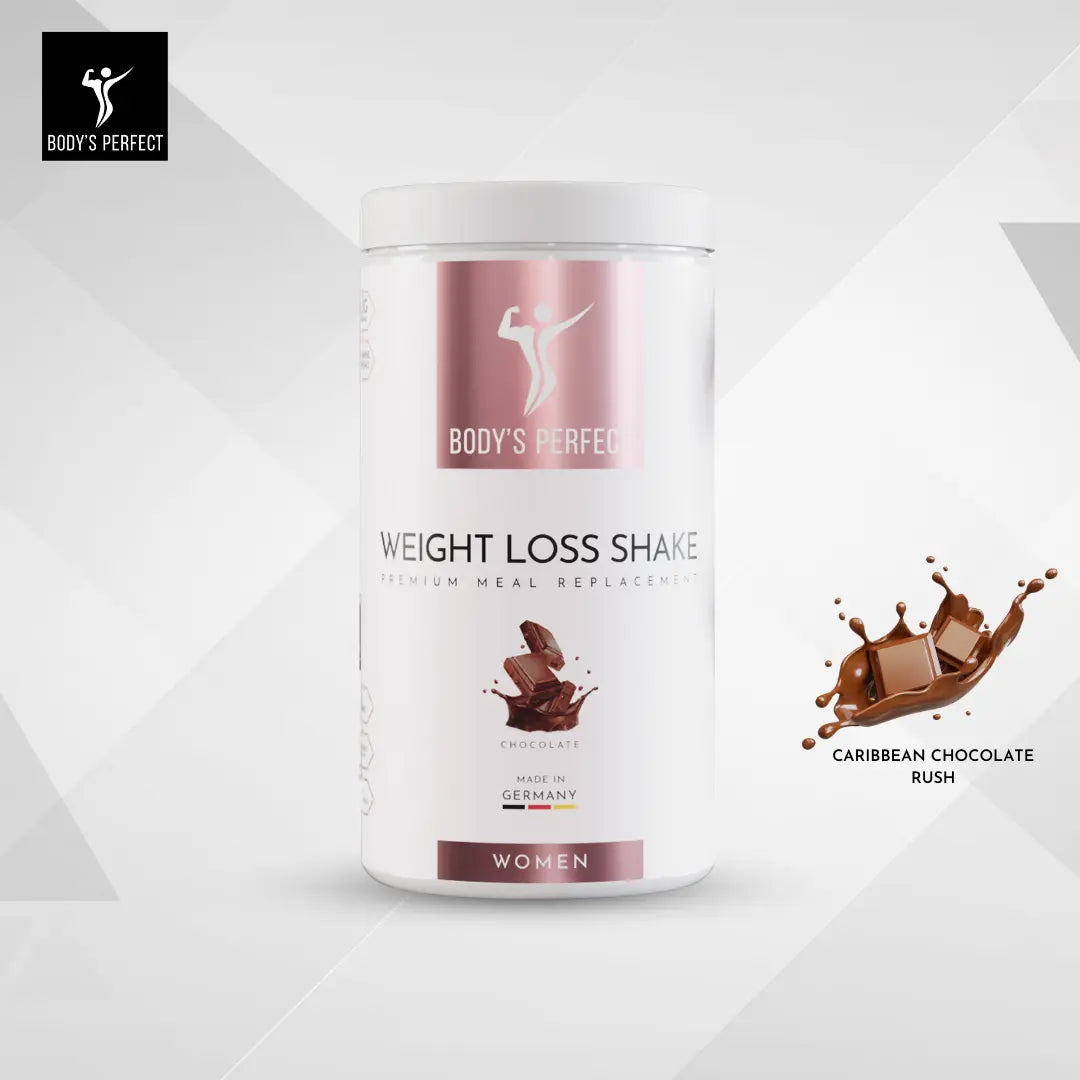
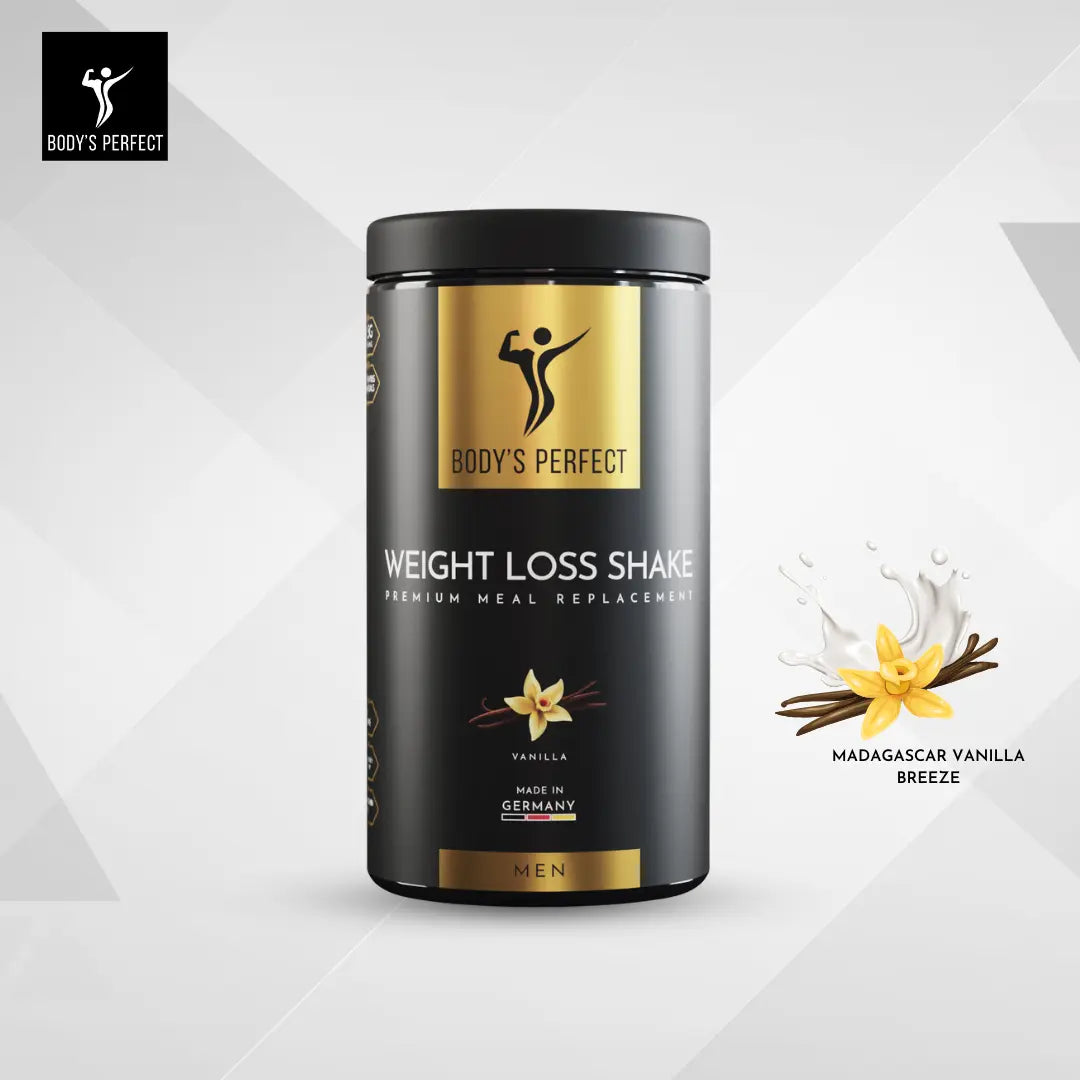
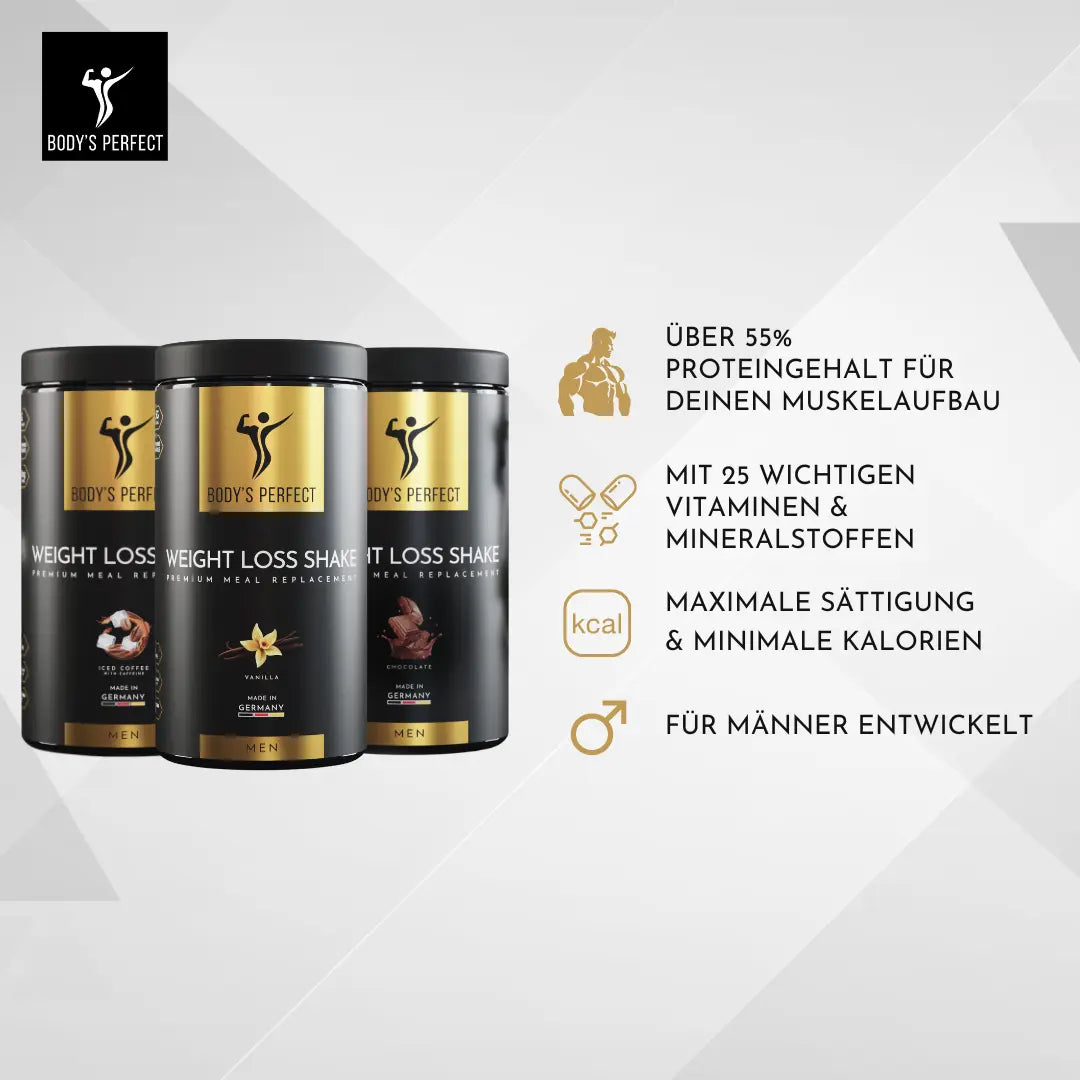
Sometimes everyday life is simply hectic, and there's hardly any time for a balanced meal. This is exactly where high-quality products can cleverly support you. A creamy protein shake, for example, is a great solution to quickly and easily replace a satisfying, protein-rich meal that provides you with everything important.
Our BODY'S PERFECT Shakes have been developed precisely for this purpose. They help you effortlessly reach your daily protein goal and keep you full for a long time, while simultaneously saving calories. A shake can replace a complete meal and fits perfectly into a busy schedule. This way, your calorie deficit doesn't become a burden, but a fixed part of your new, healthy lifestyle.
It is crucial, by the way, to find a diet that does not leave you hungry. If you want to learn more about this, we have collected many more valuable tips for you in our article on losing weight without hunger.
Listen to your body
Calorie counting is a fantastic tool at first to get a feel for quantities and nutritional values. But don't forget to listen to your body's signals amidst all the numbers. Eat slowly and mindfully to feel when you are truly full.
Some days you may be hungrier than others – that's completely normal. Be flexible and adjust your calorie intake slightly. If you eat a little more one day, you can compensate the next day with more exercise or a lighter meal. Perfection is not the goal. Consistency is.
Why nutrients and exercise make the difference
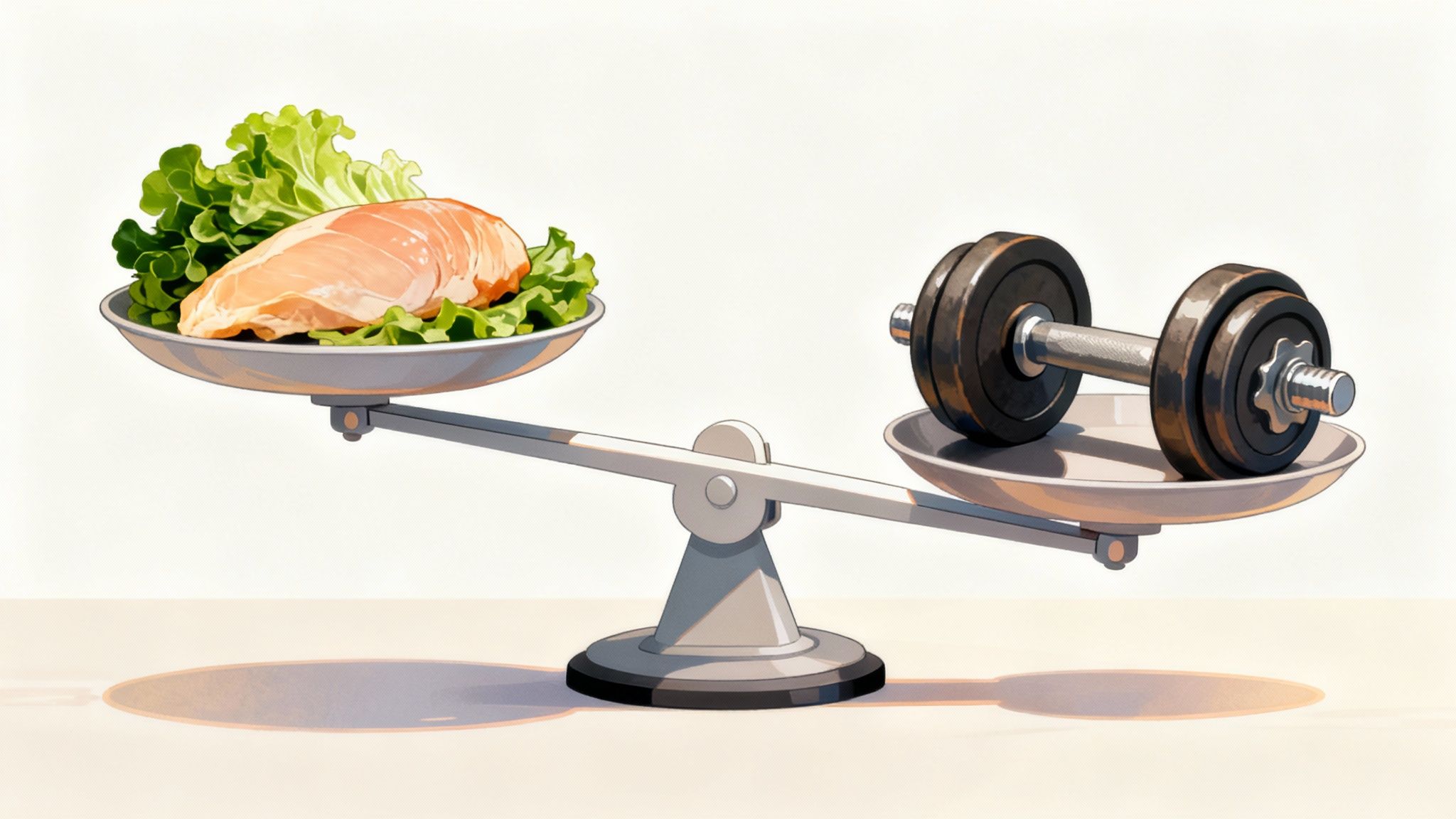
Great, you now know your personal calorie count to reach your goal. That's a huge step! But – and this is important to understand – it's only half the battle. Losing weight is so much more than just counting calories.
Imagine eating your 1,500 calories a day only in the form of gummy bears. Mathematically, you'd be in a deficit, no question. But would you feel good, fit, and energized doing that? Probably not.
Your body needs the right building blocks to stay healthy and efficient. A truly successful path to your feel-good weight therefore pays attention not only to the quantity, but above all to the quality of what lands on your plate.
The power of macronutrients
Macronutrients are the main actors in your diet. There are three of them: proteins, fats, and carbohydrates. Each one fulfills crucial tasks in the body, and their correct distribution can massively influence your weight loss success.
Proteins: Your best friend for weight loss If there's one nutrient you should keep an eye on when losing weight, it's protein. Proteins are true all-rounders and support you in several ways.
- Make you feel really full: Proteins are significantly more satiating and keep you full longer than carbohydrates or fats. A protein-rich meal can curb cravings and help you easily maintain your calorie deficit.
- Protect your muscles: In a calorie deficit, the body not only uses fat reserves but unfortunately also valuable muscle mass. Enough protein protects your muscles from this and ensures that you really lose fat.
- Boost metabolism: Your body uses more energy to digest protein than other nutrients. Up to 30% of the calories from protein are burned directly – a small but effective metabolic boost!
If you want to delve deeper into the topic, check out our guide "How can I boost my metabolism". There you will find even more valuable tips.
Fats: Don't be afraid of the right fats Fat has long had an undeserved bad reputation. Yet healthy fats are vital for your body, for example, for hormone production and the absorption of certain vitamins.
The key lies in the choice:
- Good fats: Opt for unsaturated fatty acids from avocados, nuts, seeds (like chia or flaxseeds), and high-quality oils like olive or flaxseed oil.
- Bad fats: Trans fats, often hidden in ready meals, fried foods, and pastries, should be avoided as much as possible.
Carbohydrates: The smart energy providers Completely cutting out carbohydrates is neither necessary nor sustainable for most people. They are the most important source of energy for your brain and muscles. It simply comes down to choosing the right ones.
Choose complex carbohydrates such as whole grains, oats, potatoes, or quinoa. They provide long-lasting energy and valuable fiber that also keeps you feeling full. Simple carbohydrates from sugar and white flour, on the other hand, make your blood sugar levels rollercoaster – often leading to new hunger.
Exercise: The engine for your success
Good nutrition is the foundation. Exercise is the turbo that shapes your body and boosts your calorie consumption. Sport not only helps you achieve a larger deficit but also makes you fitter, stronger, and healthier.
The smartest strategy? A combination of strength and endurance training.
Strength training: Your metabolism upgrade Muscles are your most metabolically active tissue. More muscle mass means you burn more calories – even at rest on the sofa. Strength training is therefore essential to tone your body and increase your basal metabolic rate in the long term.
- Effective exercises for home: Squats, lunges, push-ups, and planks are perfect. They train large muscle groups and are extremely effective.
- As a rule of thumb: Two to three strength training sessions per week are an ideal start.
Endurance training: Your calorie killer Cardio training such as running, cycling, or swimming is perfect for burning calories and strengthening your cardiovascular system. Even a 30-minute jogging session can easily burn 300 calories or more, depending on pace and weight.
- Pro tip for everyday life: Never underestimate your everyday movement (NEAT). Take the stairs instead of the elevator, walk to the shops, or get off one stop earlier. These small things add up and make a huge difference to your calorie needs for weight loss.
Nutrition and exercise are not adversaries but the perfect team. While nutrition creates the basis, exercise shapes and accelerates your progress. Together, they make you not only lighter but above all healthier, fitter, and more satisfied.
Avoiding common mistakes and breaking through plateaus
You probably know the feeling: In the beginning, everything went smoothly, the pounds just melted away, and then – a standstill. The scales simply aren't moving anymore. Welcome to the dreaded weight loss plateau. This is frustrating but absolutely normal. Your body is clever and has adapted to the lower calorie intake.
But don't worry, that doesn't mean you're stuck. Often, it's just a few small, unconscious mistakes that slow down your success. Let's take an honest look at where the stumbling blocks might be and how you can get back on track. Your calorie needs for weight loss are key, but only if you know the typical pitfalls.
The hidden calorie bombs in everyday life
Mostly, it's not the big sins, but the small, inconspicuous habits that add up on the calorie account. Here are the most common mistakes that can trigger a plateau.
- Liquid calories: The latte macchiato in the morning, the freshly squeezed orange juice, or the soda in the afternoon – we often don't perceive all of this as a proper meal. Yet these drinks can quickly contain hundreds of calories.
- Inaccurate tracking: Do you really weigh your food or do you rely on your eye? The small difference between an estimated and a weighed tablespoon of olive oil can easily amount to 100 calories. Be super honest with yourself here, it's worth it.
- Less everyday movement (NEAT): If you eat less, your body has less energy. This often unconsciously leads to us moving less – we take the elevator instead of the stairs or fidget less while sitting. This decrease in "Non-Exercise Activity Thermogenesis" (NEAT) can significantly reduce your daily consumption.
A plateau is not a failure. It's simply a sign from your body that it's time for a small course correction. See it as an opportunity to refine your habits and better understand what your body needs.
Strategies to reignite your metabolism
When nothing else works, it's time to trick your body a little. You need to break out of the routine and show your metabolism that there's no famine.
An extremely effective method is targeted refeed days. One to two days a week, you consciously eat more – roughly as many calories as you need to maintain your weight. Replenish your stores mainly with good, complex carbohydrates. This gives you new energy for training and signals to your metabolism that it can shift up a gear again.
Another important adjustment screw is your training. If you have only done endurance sports so far, definitely incorporate two strength units per week. Muscles are your most metabolically active tissue and burn calories even at rest, which increases your basal metabolic rate. Also, constantly vary the exercises and intensity so that your body doesn't get used to anything.
Obesity is a huge issue in Germany. Current statistics on obesity on marcusknispel.com show that more than half of adults are considered overweight. This clarifies the importance of well-thought-out weight loss strategies. Experts agree: A cleverly planned calorie deficit, combined with regular exercise, is the best way to lose weight in the long term and healthily.
Sometimes, however, a plateau has deeper reasons. If you don't make progress despite all adjustments, a closer look is worthwhile. In our guide "Why am I not losing weight despite a calorie deficit", we discuss further possible causes and solutions.
Ultimately, however, the mental attitude is also crucial. Be patient and not too strict with yourself. Setbacks and plateaus are part of the process. Analyze the situation objectively, adjust your plan, and just keep at it. Often, it's the small adjustments that ultimately make the biggest difference.
Typical questions about calorie needs that keep coming up
Finally, we want to address the questions we are asked almost daily in consultations. Here you get honest and practical answers to the typical uncertainties that arise with the topic of calorie needs for weight loss. This way, you are well prepared and can confidently start your project.
How quickly can I lose weight healthily?
A realistic and, above all, healthy speed is about 0.5 to 1 kilogram per week. This is a good pace that you can achieve with a moderate daily calorie deficit of 500 to 1,000 calories.
Sure, losing weight faster sounds great, but that usually comes at the expense of valuable muscle mass and is often just lost water. To avoid the notorious yo-yo effect and achieve truly lasting success, patience is your best friend. Slow but steady wins the race here.
Do I have to count calories forever now?
No, absolutely not! View calorie counting more as a tool for the beginning – a kind of jump start. It trains your eye and gives you a much better feel for portion sizes and how much energy is in which foods.
The real goal is to eat intuitively and balanced again. Once you have developed a feeling for what your body really needs, you can rely more and more on your natural hunger and satiety cues. Lifelong counting is neither necessary nor desirable.
If you notice that you can accurately assess your meals and their effect on your body, you can slowly scale back detailed tracking. Just listen more to your inner signals again.
What do I do if I'm not losing weight despite a calorie deficit?
This is a point that can be extremely frustrating. But before you throw in the towel: There is usually a very logical explanation for it. Honestly review these points for yourself:
- Are you really 100% honest with your tracking? Often, it's the small, inconspicuous things that add up throughout the day. The splash of oil in the pan, the syrup in the coffee, or the handful of nuts on the side. Be super meticulous for a few days and really record everything.
- How active are you in everyday life? Sometimes the body unconsciously reduces movement to save energy. Try to consciously add more steps to your day. Take the stairs instead of the elevator, go for a walk around the block during your lunch break. That makes a huge difference.
- Set a new stimulus! If you've been in a deficit for a while, it can help to specifically boost your metabolism again. A so-called "refeed day," on which you consciously consume more calories (especially from carbohydrates), can work wonders and break the plateau.
Just be patient and see the whole thing as a learning process. Often, it's just small adjustments to your strategy that get you back on the right track.
To support you as best as possible on your journey and prevent cravings from even having a chance, BODY'S PERFECT has developed special weight loss shakes. They provide you with high-quality protein, keep you full for a long time, and make it super easy to maintain your calorie deficit. Find the perfect support for your goals now at https://bodysperfect.com.































Share:
8 Quick Dishes for Weight Loss: Your Success in Under 30 Minutes
Weight Loss with Protein Powder: How to Succeed and What Matters